A Guide to the Ancient Ring Forts and Stone Circles of Iveragh
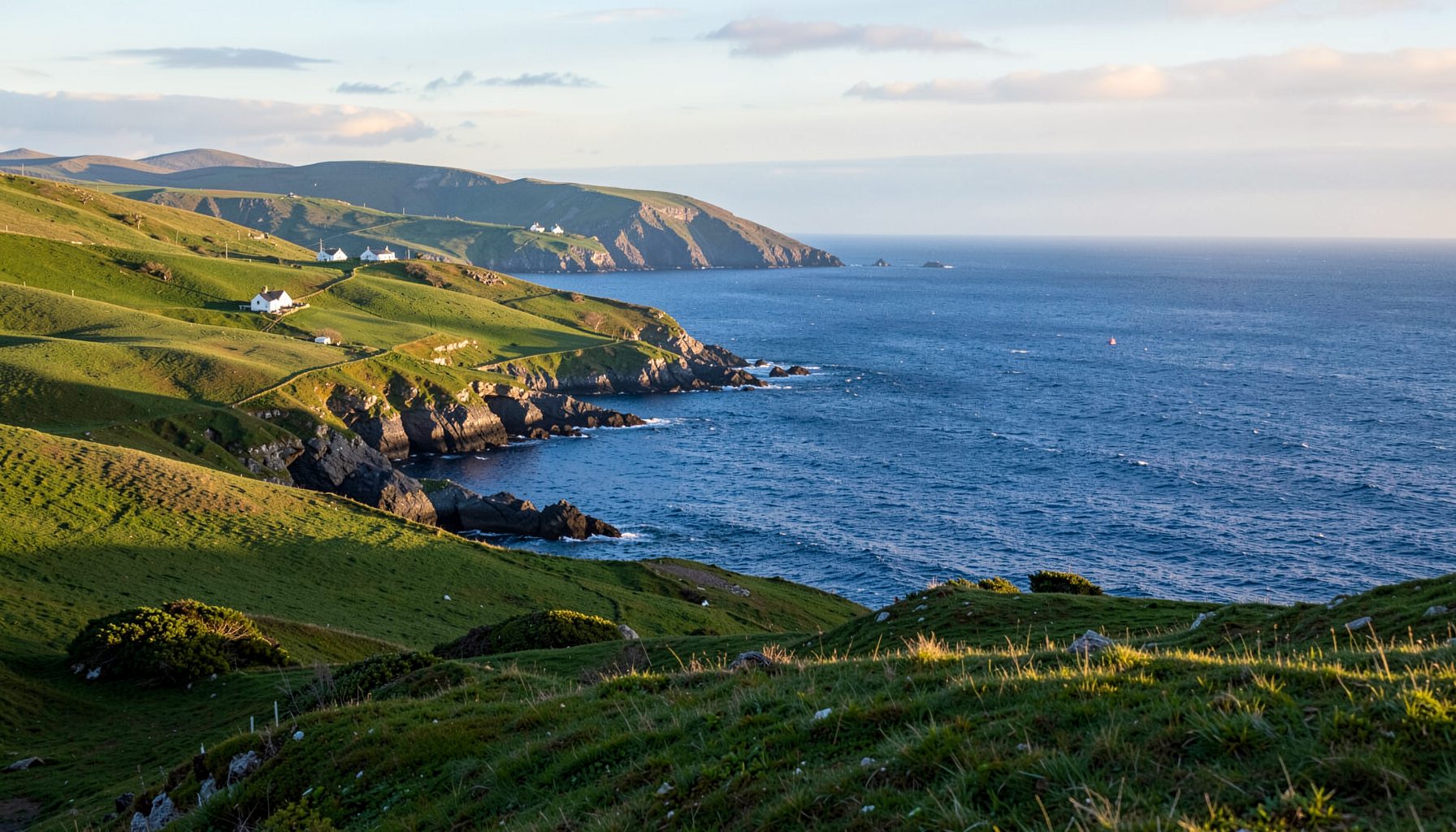
The Skellig Coast on Ireland's Iveragh Peninsula holds one of the densest concentrations of prehistoric monuments in western Europe. From clifftop cashels to weathered stone circles facing the Atlantic, the landscape whispers of communities who built, worshipped, and farmed here long before the medieval era. Visitors tracing the Ring of Kerry between Kells and Castlecove will find themselves walking through a living archaeological tapestry, where every valley seems to guard another ruin.
For travellers arriving from Australia, the journey across the world only deepens the sense of stepping into deep time. Crossing several time zones and roughly seventeen thousand kilometres, a Sydneysider or Melburnian arrives on the opposite side of the planet, where sunrise over Valentia Island meets the same ocean that pounds the cliffs of the Great Ocean Road. The contrast between Australia's ancient Aboriginal rock art sites and Ireland's megalithic traditions makes the Skellig Coast a particularly rewarding stop for those interested in global heritage landscapes.
The Prehistoric Landscape of the Iveragh Peninsula
The Iveragh Peninsula is dominated by a spine of rugged hills, glacial valleys, and a coastline battered by Atlantic weather. This combination of defensible high ground, fertile pockets of land, and access to sea routes shaped where early communities chose to build. Ring forts and stone circles were not randomly scattered but carefully sited to command views, mark territorial boundaries, or align with celestial events.
Many of the monuments date to the Late Bronze Age and Iron Age, roughly 1200 BCE to 500 CE, though some standing stones may be considerably older. The Kerry climate, mild and wet, has preserved drystone walls and stone alignments far better than more exposed regions. As a result, visitors can often trace the original footprint of a fort, including entrance passages, terraced platforms, and adjoining field systems, with little imagination required.
The terrain around each monument shapes the experience of visiting it. Hilltop sites reward those willing to climb with sweeping sea views, while valley-floor circles invite quieter contemplation among grazing sheep. Modern ordnance survey maps mark each site with the word "rath" or "caher," giving visitors a useful vocabulary long before they arrive at the stones themselves.
Iconic Ring Forts and Cashels to Visit
The word "cashel" comes from the Irish caiseal, meaning stone fort, and the Iveragh Peninsula is rich with examples. Staigue Fort, near Sneem, is perhaps the most celebrated, with its near-perfect circular wall rising over five metres high and eighteen metres in diameter. Built without mortar, the drystone construction has withstood more than a thousand Irish winters, a feat that any tradie in Brisbane or Adelaide would recognise as serious craftsmanship.
Closer to the coast, Cahergal Stone Fort and Leacanabuaile Stone Fort sit near Kells and offer a more intimate experience. Cahergal features a striking stairway leading to upper wall walkways, while Leacanabuaile, set on a rocky outcrop, offers sweeping views over Hog's Head and the sea. Both are free to access and require only sturdy footwear, much like the bushwalking gear recommended for the trails of Tasmania's Cradle Mountain.
Further west, the lesser-known Loher Stone Fort near Caherdaniel feels wonderfully remote. Its walls still climb over three metres in places, and the internal chambers and clochán beehive cells hint at a long history of reuse, from Iron Age stronghold to early medieval shelter.
The Stone Circles of Kerry
While ring forts often steal the spotlight, the stone circles of Iveragh are equally compelling. Unlike the famous circles of the Boyne Valley, Kerry's examples tend to be smaller, often axial rather than radial, and frequently paired with standing stones or boulder burials. The Eightercua Stone Circle, near Waterville, consists of four tall stones aligned with the setting sun at the winter solstice, a subtle but precise piece of astronomical engineering.
Another intriguing site is the Derrynablaha boulder circle in the foothills south of Killorglin, accessible only on foot. Its massive granite slabs appear to have been gathered rather than quarried, leading some archaeologists to suggest they served as boundary markers between ancient túath, or tribal territories. Visitors who have spent time exploring the Budj Bim Cultural Landscape in Victoria will recognise the same impulse: using stone to draw meaningful lines across country.
Several of the peninsula's smaller stone rows remain poorly mapped, partly because farmland has grown up around them for centuries. Walking the boreens around Ballinskelligs or Valentia often reveals lone standing stones half-swallowed by hedgerows, a reminder that the Iveragh landscape holds far more archaeology than any guidebook can capture.
Sacred Sites and Ritual Landscapes
Across the Skellig Coast, ring forts and stone circles rarely stand alone. They cluster around holy wells, early Christian hermitage sites, and sometimes ogham-inscribed stones, creating ritual landscapes where pagan and Christian traditions overlap. The famous Skellig Michael monastery, accessible only by boat, sits within this same broader cultural geography and was founded by monks who sought solitude on the very edges of the known world.
Walking between a Bronze Age stone circle and a sixth-century beehive hut, a traveller begins to sense how continuous the human story on this peninsula truly is. It is a quality that resonates strongly with Australian heritage practice, where places such as the Budj Bim eel traps or Uluru carry tens of thousands of years of unbroken cultural meaning. Ireland's equivalent timeline may be shorter, but it feels just as layered when you stand among the stones.
Ogham stones add another layer of mystery. These early medieval inscriptions, scored along the edges of standing stones, are sometimes found reused as gateposts or lintels on the peninsula, a fate not unlike that of repurposed Aboriginal stone tools occasionally uncovered on Australian pastoral stations.
How to Reach the Sites from Australia
Getting to Iveragh from Australia typically means flying into Dublin or Cork via London, Dubai, or Doha. Qantas and Emirates both run reliable one-stop services from Sydney and Melbourne, and the Dublin–Kerry route is served by several short regional flights. Most visitors then hire a car in Cork or Killarney, as public transport across the peninsula is infrequent outside the main towns.
Australian travellers should remember that Ireland drives on the left, a small adjustment that catches out many first-time visitors from Perth or Brisbane. Renting a compact manual car is usually cheaper and better suited to the narrow boreens that lead to many of the forts. Those with an International Driving Permit issued under Australian state regulations should carry it alongside their home licence, a detail worth sorting before leaving home.
Allowing at least four full days on the peninsula is wise, as the winding roads and tempting detours can quickly absorb time. Travellers flying home from Dublin often build in a night in the capital before their return flight, a chance to decompress in a city whose cafés feel comfortably familiar to anyone raised on Melbourne's coffee scene.
Reading the Stones: Archaeology and Folklore
Modern scholarship on the Skellig Coast monuments draws on survey work by the National Monuments Service and the Royal Irish Academy, alongside ongoing excavations by University College Cork. Yet folklore continues to colour how locals experience the sites. Names like "The Black Fort," "The Giant's Grave," or "The Children's Cemetery" hint at stories once told around firesides, and many of these tales preserve fragments of older belief systems.
For a taste of the latest field discoveries and community heritage projects along the peninsula, the Skellig Coast news page offers regular updates from local historians and archaeologists. Following such updates before travelling helps visitors catch seasonal openings, guided walks, and any newly accessible sites that may not yet appear in printed guidebooks.
Guided walks led by local historians remain one of the best ways to engage with both the archaeology and the folklore. Several villages along the coast, including Cahersiveen and Portmagee, run summer tours that braid hard science with old tales of fairies, saints, and sea monsters.
Practical Tips for Exploring the Skellig Coast
Weather on the Atlantic edge of Kerry changes quickly, so layered clothing and waterproof jackets are essential, even in July and August. Several of the cashels sit on exposed ridges, and the slip of wet grass on a sloped wall can be treacherous. A reasonable level of fitness is helpful, particularly for sites like Staigue or Loher, which involve short but steep climbs.
Respect for the monuments themselves matters as well. Ireland protects all archaeological sites under the National Monuments Acts, and visitors from Australia may notice parallels with the protections offered to Aboriginal heritage sites under state and federal law here. Climbing on inner wall faces, removing stones, or flying drones over the forts without permission is strictly discouraged. With a little care, the ring forts and stone circles of Iveragh reward visitors with quiet, deeply human encounters that linger long after the flight home.
Pairing the forts with a broader Skellig Coast itinerary is straightforward. A morning among the stones of Eightercua can lead naturally to an afternoon boat trip to Skellig Michael, while an evening meal in Kenmare offers a chance to swap stories with locals who have spent a lifetime walking these same fields.
Plan your visit for late spring or early autumn, when the light slants low across the fields and the crowds have thinned. Bring a torch for the darker stone passages, a notebook for the ogham inscriptions you will likely encounter, and a healthy appetite for seafood chowder in the villages of Portmagee and Knightstown. The Skellig Coast has guarded these stones for millennia, and it welcomes those who come to listen.