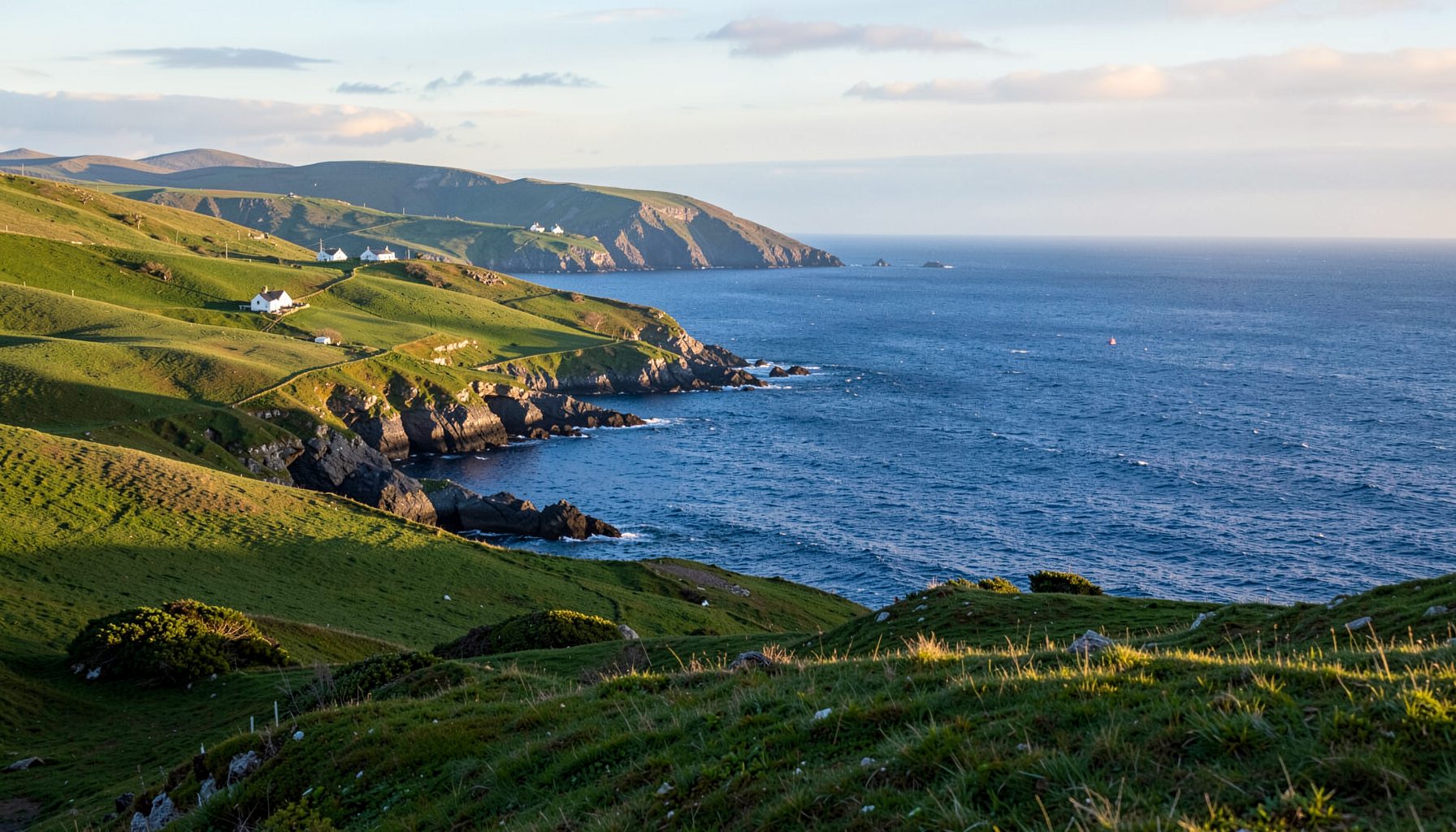
Wildflowers and Birdlife Along the Skellig Coast Cliffs
The cliffs of Ireland’s Skellig Coast are shaped by wind, salt, rain, and constant movement. From rocky headlands near Ballinskelligs and Portmagee to the rugged shores around Valentia Island and Castlecove, narrow ledges and grassy slopes support a surprising variety of coastal plants. These same cliffs provide nesting, feeding, and resting places for seabirds moving through the Atlantic edge.
A walk along this coastline can reveal much more than dramatic scenery. Sea pink brightens exposed turf, thrift flowers appear in dense cushions, and sea campion grows from cracks in the rock. Above the waves, fulmars glide with stiff-winged purpose, while gulls, choughs, ravens, and passing gannets add movement to the open sky.
The most rewarding wildlife experiences come from slowing down and observing the habitats rather than searching for a single rare sighting. A quiet path, a sheltered cove, or a viewpoint away from nesting areas may offer an excellent glimpse of the Skellig Coast’s natural heritage.
A coastline shaped by Atlantic weather
The cliffs between Kells and Castlecove contain several overlapping habitats. Exposed grassland covers the upper slopes, where low-growing plants withstand strong winds and grazing. Lower ledges are influenced by sea spray, while damp hollows and freshwater runnels provide conditions for mosses, rushes, ferns, and moisture-loving flowers.
Rock type and exposure create further variation. Some sections have broad grassy shelves, while others fall almost vertically into the sea. Headlands facing the full Atlantic swell tend to have sparse vegetation, with plants growing in compact forms close to the ground. More sheltered slopes can support taller grasses, foxgloves, heathers, and a richer mixture of coastal herbs.
Weather is a central part of the wildlife story. A sunny morning may bring butterflies and bees to flowering thrift, while a passing shower can send birds inland and make the cliffs seem empty. The apparent quiet of a misty day does not mean that the habitat is inactive; many species simply become less visible.
Flowers of the cliff grassland
Thrift, also known as sea pink, is among the most recognisable plants of the Atlantic coast. Its rounded pink flower heads rise above narrow leaves, often forming vivid patches on rocky turf. It is well adapted to salt-laden wind and shallow soil, making it a familiar feature of exposed headlands and cliff paths.
Sea campion produces pale, inflated flowers and can be found in rock crevices, grassy banks, and sandy coastal places. Kidney vetch, with its small yellow flower clusters and woolly leaves, may appear in short turf. Birds-foot trefoil adds yellow to the summer vegetation, while red campion, foxglove, and yarrow bring colour to more sheltered ground.
Heather and bell heather are especially important later in the season. Their flowers provide nectar for insects when some spring blooms have faded. The coastal plant community also includes sorrel, ribwort plantain, scurvy grass, wild carrot, and various grasses whose forms change with altitude, soil depth, and grazing pressure.
These plants are easy to overlook when the sea and islands dominate the view. Looking closely reveals miniature landscapes: lichen-covered stones, wind-pruned leaves, tiny seed heads, and flowers growing in spaces that seem too exposed to support life. Visitors should avoid picking flowers, since many grow slowly in fragile cliff turf.
Seabirds above the Atlantic edge
The Skellig Coast lies within a wider marine environment used by many seabirds. Fulmars may patrol the cliffs and ocean surface, gliding without frequent wingbeats. Their long, narrow wings and stiff flight distinguish them from many gulls, while their presence often signals the connection between cliff habitat and offshore feeding grounds.
Gannets are among the most spectacular birds to see from coastal viewpoints. Adults appear bright white with black wing tips and golden colouring around the head. They can pass high overhead or plunge dramatically into the sea farther offshore. Sightings are more likely during periods of active feeding, when shoals of fish bring seabirds closer to the coast.
Guillemots and razorbills are associated with rocky seabird colonies, particularly during the breeding season. Guillemots are generally slimmer, with pale underparts and dark backs, while razorbills have a heavier bill marked with white. Their numbers and visibility vary according to the cliff face, sea conditions, and time of year.
Kittiwakes may be recognised by their clean grey-and-white plumage and distinctive calls. Herring gulls, great black-backed gulls, shags, and cormorants also use the coastline. A careful observer may notice birds resting on offshore rocks, carrying nesting material, or commuting between the cliffs and feeding waters.
Land birds on the cliff tops
The upper cliff grasslands belong to land birds as much as seabirds. Meadow pipits are common in open coastal country, rising in fluttering display flights before descending with a characteristic song. Skylarks may sing above broader stretches of rough grassland, although they can be difficult to locate once they have risen high into the air.
Ravens are a regular presence on rugged headlands. Their deep calls and powerful, deliberate flight make them easy to distinguish from smaller corvids. Choughs, where present, are particularly exciting to see. Their curved red bills, red legs, and buoyant flight set them apart from rooks and crows, but their distribution is local and sightings should be treated as a fortunate encounter rather than an expectation.
Stonechats often perch on gorse, fence posts, or exposed stems, showing a dark head, pale collar, and warm chest. Wheatears may pass through during migration or appear in open rocky areas. Peregrine falcons can also occur along suitable cliffs, where they use height and speed to hunt other birds.
The best way to identify cliff-top birds is to watch behaviour as well as colour. A bird repeatedly returning to the same post, hovering over grass, or flying low along a wall offers useful clues. Binoculars allow visitors to observe from a safe distance without approaching nesting sites.
| Habitat | Plants and flowers to notice | Birds often associated with it | Useful observation approach |
|---|---|---|---|
| Exposed cliff turf | Thrift, sea campion, kidney vetch, scurvy grass | Meadow pipit, skylark, wheatear | Scan low vegetation and watch the open sky |
| Sheltered grassy slopes | Foxglove, red campion, yarrow, birds-foot trefoil | Stonechat, dunnock, wren | Pause near hedges, gorse, and fence posts |
| Rocky ledges and sea stacks | Lichens, mosses, sea beet, small ferns | Guillemot, razorbill, fulmar | Use binoculars from marked viewpoints |
| Coastal heath | Heather, bell heather, gorse, tormentil | Kestrel, raven, meadow pipit | Listen for calls and watch the skyline |
| Shoreline and offshore waters | Sea kale, rock samphire, bladderwrack | Gannet, cormorant, shag, gulls | Look beyond the breakers during calm conditions |
Seasonal changes in colour and sound
Spring brings fresh growth to the cliff tops and the return of many migrant birds. Thrift begins to colour rocky turf, while skylarks and meadow pipits become more noticeable as they establish territories. Fulmars, gulls, and other seabirds become increasingly active around breeding areas, so paths and viewpoints should be used with particular care.
Summer offers the richest display of flowers. Foxgloves rise above grass, heathers begin to bloom, and insects move between sheltered patches of vegetation. This is also a busy period for seabird colonies. Adults may be carrying food, and young birds can be present on ledges or in crevices. Even a well-intentioned approach can cause disturbance, especially where the cliff edge is narrow.
Autumn brings changing light, seed heads, and migration. Wheatears and other passage birds may appear briefly, while gannets can remain visible offshore. Winter has its own appeal: low sunlight highlights the structure of the cliffs, ravens are conspicuous against the sky, and storm-driven seabirds may pass close to land. Winter walks require extra caution because rain, wind, and unstable ground can change conditions quickly.
A small notebook or phone record can help build a personal seasonal picture. Note the date, location, weather, habitat, and behaviour rather than relying on uncertain identifications. Local biodiversity groups, schools, and community learning hubs may also share seasonal observations and nature activities.
Seeing wildlife without disturbing it
Cliff wildlife depends on distance. Birds may abandon a ledge temporarily when people approach too closely, exposing eggs or young to cold and predators. Dogs should be kept under close control near nesting areas, and visitors should stay on established paths wherever possible. The cliff edge itself can crumble, particularly after heavy rain or prolonged wet weather.
Binoculars are more useful than getting nearer. A modest pair can reveal the shape and behaviour of a bird while leaving the colony undisturbed. Avoid playing bird calls, climbing onto ledges, or lingering beneath active nesting sites. Drones should not be flown near cliffs, seabird colonies, or protected landscapes.
Flowers need care as well. Coastal turf may take years to recover from repeated trampling, and a narrow path can widen rapidly when visitors step around puddles or move closer to a viewpoint. Leave stones, shells, feathers, nests, and plants where they are. Taking photographs from the path records the experience without removing part of the habitat.
Practical habits for a responsible visit:
- Check weather, tide, and path conditions before setting out.
- Carry binoculars, a field guide, water, and suitable footwear.
- Keep a safe distance from cliff edges, nesting birds, and grazing animals.
- Stay on marked routes and close gates behind you.
- Record sightings carefully and share unusual observations with local biodiversity projects.
Connecting nature with local heritage
The cliffs are part of a cultural landscape shaped by fishing, farming, pilgrimage, transport, and settlement. The same headlands that now attract wildlife watchers have long served as points of orientation for coastal communities. Views towards the Skellig Islands connect the flower-rich land above the sea with a wider history of monastic life, seafaring, and Atlantic travel.
Skellig Michael is widely known as a UNESCO World Heritage Site and as a filming location for Star Wars, yet its significance extends beyond screen and landmark appeal. The islands and surrounding waters form part of a living ecological setting. From the mainland, visitors can appreciate this relationship without entering sensitive nesting areas or relying on close access to the island.
Local villages, heritage groups, outdoor programmes, and community events can add depth to a coastal walk. A guided nature outing may reveal how grazing, weather, geology, and conservation influence the landscape. Community knowledge often supplies details that a general field guide cannot: where spring flowers appear first, when migrant birds are usually noticed, or how a familiar headland has changed over time.
Exploring the Skellig Coast through its wildflowers and birdlife encourages a slower form of tourism. It supports attention, respect, and a stronger connection with the places between Kells, Portmagee, Valentia, Ballinskelligs, and Castlecove. Plan a responsible visit, use local information resources, and share the coast with care so its cliffs remain a refuge for plants, birds, and communities.