Visiting the Skellig Heritage Centre in Cahersiveen
The Skellig Heritage Centre in Cahersiveen offers a useful way to understand the islands, coast, and communities of south-west Kerry before setting out to explore them. Its displays place Skellig Michael within a much wider story involving early Christianity, seafaring, lighthouse engineering, wildlife, archaeology, and the people who have lived around the Iveragh Peninsula for generations.
Cahersiveen is a natural base for learning about the Skellig Coast. The town lies close to Valentia Island, Portmagee, Ballinskelligs, and the routes leading towards the Wild Atlantic Way. A visit to the centre can add context to a day trip, particularly when rough seas, seasonal restrictions, or limited boat availability make the islands inaccessible.
The experience is best approached as a heritage visit rather than a substitute for travelling to Skellig Michael. Exhibits, models, images, and interpretation can explain the landscape and its history, while a journey to the rock itself remains a demanding and tightly managed experience. Together, they create a fuller picture of one of Ireland’s most distinctive cultural landscapes.
What The Centre Helps You Understand
The Skellig story begins with the dramatic rocks rising from the Atlantic, but it does not end there. Skellig Michael became famous for its early monastic settlement, including the beehive-shaped stone cells associated with the monks who lived in an exposed and remote environment. The centre helps visitors consider why such a place was chosen and how people may have survived there.
The displays also connect the island to later maritime activity. Lighthouse keepers, boats, navigational routes, and rescue work all form part of the modern history of the Skelligs. This wider perspective is valuable because it moves beyond the familiar image of stone cells and presents the islands as a changing working environment.
Natural history is another important element. The waters around the Skelligs support seabirds and marine life, while the cliffs provide nesting sites for species that visitors may see from a boat. Understanding the ecology makes a later coastal walk or boat excursion more rewarding, since the rocks are recognised as a living habitat rather than simply a scenic backdrop.
Planning A Visit In Cahersiveen
Allow enough time to explore the displays without rushing. A short stop may provide the main background, but a longer visit gives visitors space to read the interpretation, examine visual material, and connect the information with places they may be visiting later in the day. Families and school groups can benefit from the explanatory format because the subject combines history, geography, archaeology, and wildlife.
Opening times and seasonal arrangements can change, particularly outside the main visitor season. Check current details before travelling, and allow time for parking, finding the entrance, and exploring Cahersiveen itself. Local cafés, shops, and heritage sites can turn a visit to the centre into part of a broader town itinerary.
Weather should influence the day’s plans. The Skellig Coast can experience wind, rain, mist, and sudden changes in visibility even during summer. A museum-based visit provides a dependable activity when outdoor plans change, while the information gained indoors can help visitors make safer and more informed decisions about cliffs, beaches, and boat travel.
From The Exhibition To The Atlantic Landscape
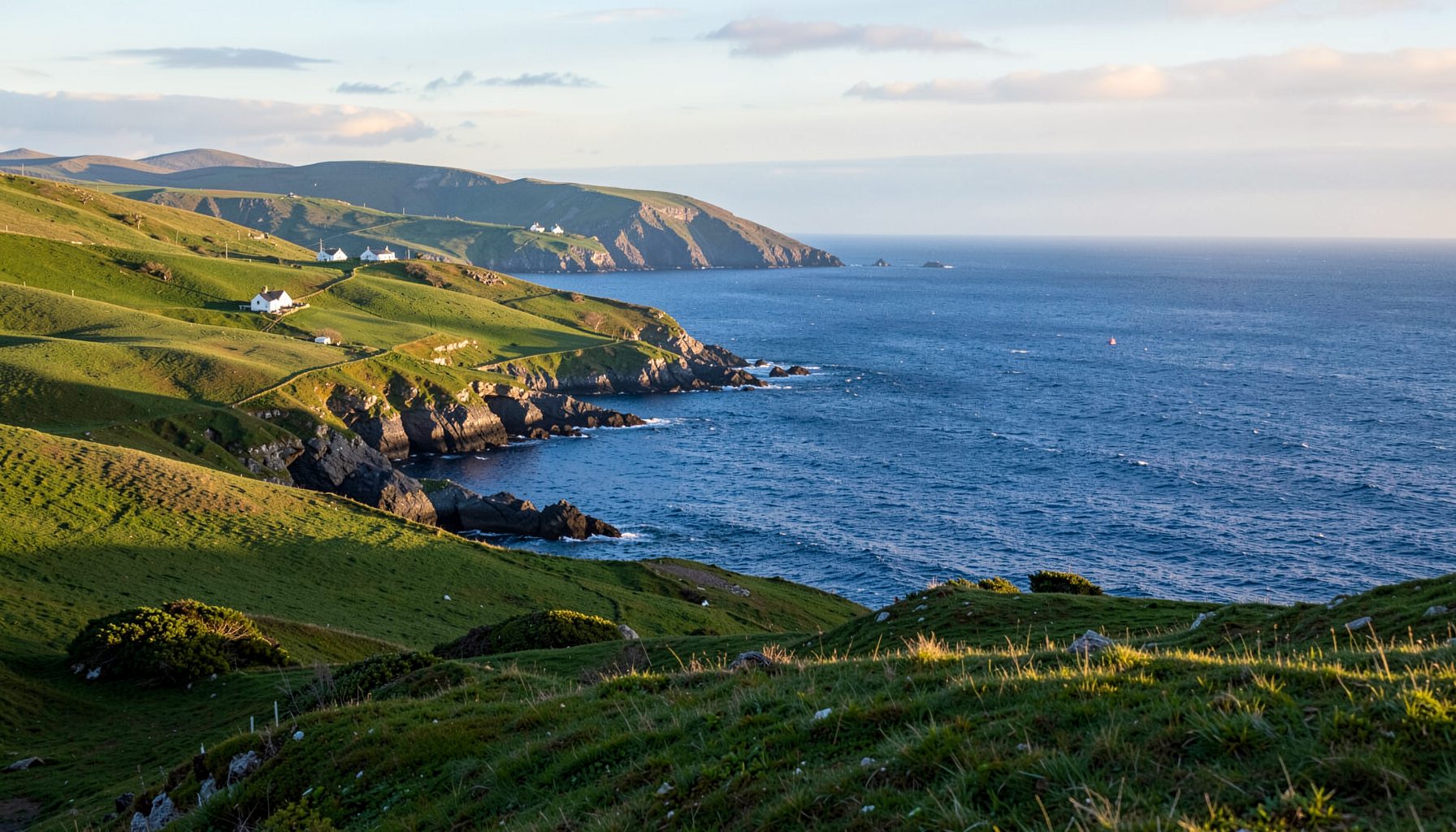
The centre is especially useful before visiting nearby viewpoints and coastal locations. It gives meaning to the silhouettes seen across the water and explains how the mainland, Valentia Island, the Skelligs, and the surrounding bays fit together. Looking at a map after seeing the displays can clarify distances that are difficult to judge from the shore.
Visitors who enjoy walking can pair the heritage visit with a marked route or a short coastal outing. The Kerry cliffs and headlands offer powerful views, but paths may include uneven ground, exposed edges, and wet surfaces. A practical guide to the Kerry cliffs near Ballynahow can help place a nearby walk within the wider landscape while encouraging sensible preparation.
The centre also provides useful context for places such as Valentia Island, Portmagee, and Ballinskelligs. Each community has its own relationship with the sea and with Skellig Michael. Treating the coast as a connected cultural region, rather than a series of isolated attractions, makes a visit more meaningful and supports local heritage awareness.
| What to explore | Why it matters | Useful planning note |
|---|---|---|
| Early monastic history | Explains the settlement on Skellig Michael and the lives of the monks | Read the interpretation before viewing the island from the mainland |
| Lighthouse and maritime history | Shows how the Skelligs remained important after the monastic period | Connect the displays with coastal viewpoints and boat routes |
| Wildlife and seabirds | Places the islands within a protected Atlantic ecosystem | Bring binoculars outdoors and keep distance from nesting areas |
| Local communities | Links Cahersiveen and neighbouring villages to the wider Skellig Coast | Allow time for local shops, cafés, and other heritage sites |
| Film and popular culture | Explains the islands’ modern international profile | Treat film associations as one part of a much older story |
Skellig Michael Beyond The Screen
The Skelligs gained a new audience when Skellig Michael appeared in the Star Wars films. The recognisable landscape attracted global attention, yet its importance predates cinema by many centuries. The centre helps visitors place the filming location within the island’s archaeological and environmental history rather than allowing popular culture to dominate the visit.
This distinction matters when planning a trip. Skellig Michael is a UNESCO World Heritage Site with fragile monuments, restricted access, and demanding steps. Boat landings depend on sea conditions, operators follow seasonal and conservation requirements, and places may be limited. A ticket or planned excursion cannot guarantee that weather will allow a landing.
Those who cannot travel to the island can still gain a substantial understanding of it through interpretation on the mainland. The centre offers a responsible alternative for people with limited mobility, young children, little time, or concerns about open-water travel. It also gives returning visitors a chance to discover details they may have missed during a first boat excursion.
Making The Visit Work For Different Travellers
Families may find it helpful to discuss the journey of the monks, the work of lighthouse keepers, and the seabirds of the Atlantic before arriving. Children often respond well to questions about how people built on a steep rock, stored supplies, or travelled between the island and the mainland. Keeping the visit connected to real places and practical problems can make the history easier to remember.
For walkers and photographers, the centre works well as a planning stop. It can encourage visitors to consider tide, forecast, daylight, footwear, and exposure before heading onto the coast. Dramatic photographs should never require standing close to an unprotected cliff edge, and drone use or access to sensitive areas may be restricted.
Visitors with access requirements should check current arrangements in advance rather than relying on general assumptions. Historic and coastal attractions can vary in their surfaces, entrances, seating, and toilet facilities. Staff or local visitor information services may be able to explain the practical details that are most relevant to an individual itinerary.
Practical Recommendations For A Responsible Visit
A thoughtful visit supports both the heritage site and the communities around it. The Skellig Coast is a living region, not a backdrop reserved for a single day trip. Spending time in Cahersiveen and nearby villages, following local guidance, and treating archaeological remains carefully all contribute to the long-term value of the area.
Use the centre as a starting point for wider discovery, while keeping expectations realistic about weather and access. The following habits can make the experience more comfortable and respectful:
- Check current opening information, admission details, and seasonal arrangements before travelling.
- Allow extra time for Cahersiveen rather than treating the centre as a rushed stop between activities.
- Wear sturdy footwear and bring waterproof layers for coastal viewpoints and walking routes.
- Follow conservation guidance around monuments, cliffs, seabird colonies, and marine environments.
- Plan a mainland alternative in case rough seas prevent a boat landing at Skellig Michael.
The most rewarding visits combine curiosity with patience. Read the displays, look closely at maps and images, and then notice how the history appears in the surrounding landscape. A church ruin, harbour, headland, or island view may carry more significance after the wider story has been explained.
A visit to the Skellig Heritage Centre can therefore anchor a full Cahersiveen itinerary. Begin with the exhibition, continue through the town and its local heritage, and then explore the coast according to the conditions on the day. Use the centre’s knowledge to travel more safely, see more carefully, and appreciate the Skellig Coast as a place where community, nature, and history remain closely connected.