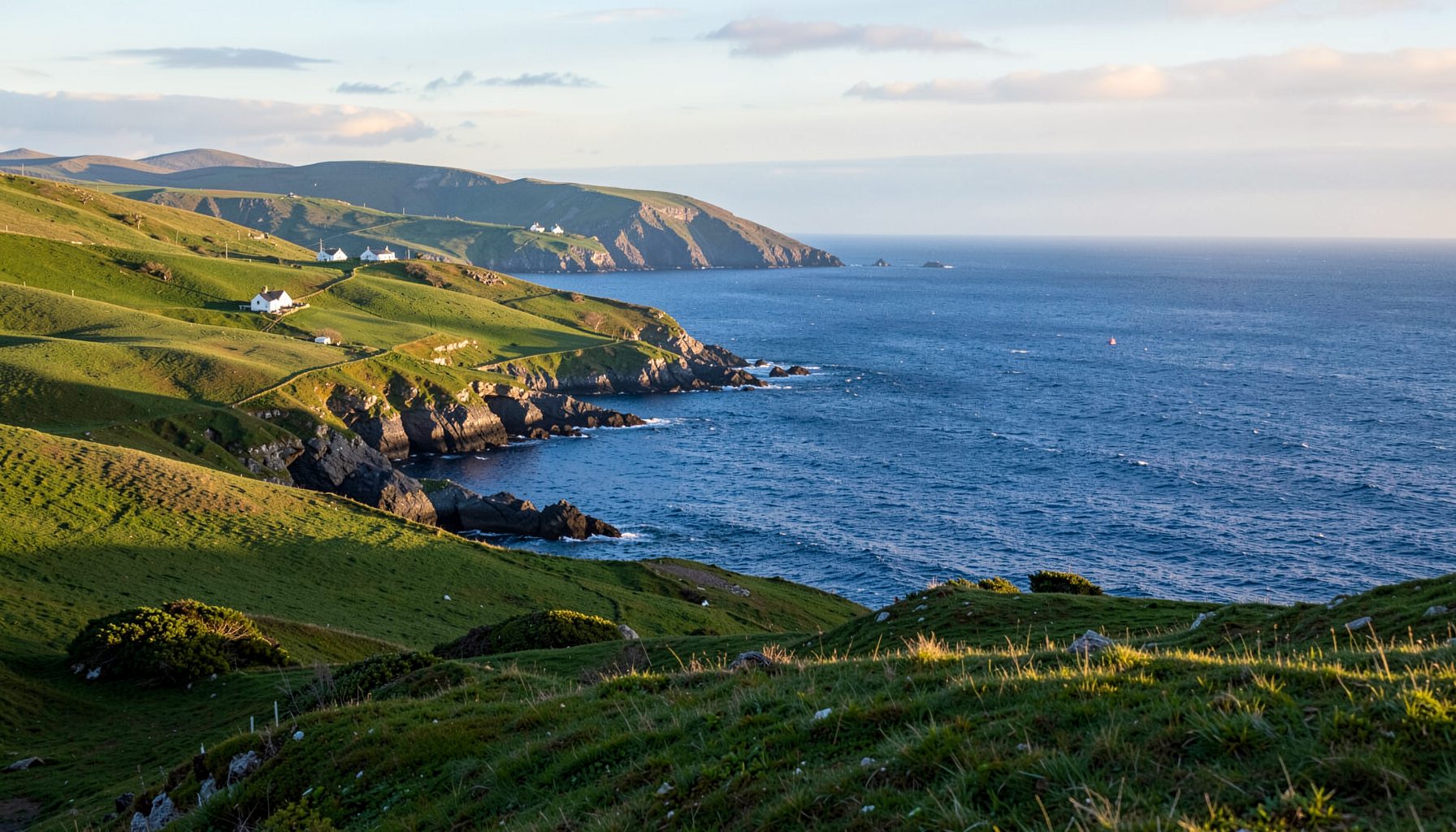
A Living Tradition at St. Crohy’s Well
On Ireland’s Iveragh Peninsula, a holy well can be much more than a source of water. It may mark an old route, preserve the memory of a saint, gather neighbours on a summer day, and connect present-day communities with customs that predate written records. St. Crohy’s Well belongs to this landscape of sacred places, where devotion and local identity have long been closely linked.
The annual pattern day associated with the well reflects an enduring Irish tradition. People once travelled from nearby townlands to honour the patron saint, pray for health, meet friends, and take part in familiar rituals. The gathering had a religious purpose, yet it also served as a social occasion shaped by music, conversation, seasonal work, and hospitality.
The precise details of a pattern could change over time. Dates might shift, prayers could be shortened, and some customs might survive only in the memories of older residents. That flexibility is part of the tradition’s character: a pattern day is a living expression of community heritage rather than a performance fixed in the past.
What A Pattern Day Meant
The word “pattern” comes from “patron”, referring to the saint associated with a church, well, or local place of devotion. On the appointed feast day, households would make their way to the site, sometimes walking considerable distances. The journey itself formed part of the observance, especially when people travelled along old paths linking scattered farms and coastal settlements.
At the well, the gathering could include prayers, the making of rounds, the drinking or carrying of holy water, and the tying of tokens to a nearby bush or tree. These actions varied from place to place. Some were formal elements of Catholic devotion, while others belonged to folk practice and the inherited customs of individual families.
Pattern days also created a rare opportunity for wider social contact. Rural communities were often dispersed, and ordinary work left little time for large gatherings. A saint’s day brought relatives, neighbours, and visitors together in a shared setting. The well became a point of memory, exchange, and local recognition.
The Sacred Landscape Around The Well
Holy wells are often situated where natural features, old pathways, and remembered stories meet. A spring may have been valued before the arrival of Christianity, then placed within the story of a saint or associated with a local church. The water, the surrounding ground, and the saint’s name formed a sacred geography that was understood through use as much as through maps.
St. Crohy’s Well should therefore be viewed within the broader cultural landscape of the Skellig Coast. The area’s heritage includes early Christian sites, monastic remains, townland boundaries, seafaring traditions, famine-era memories, and a strong awareness of place. A small well can carry those layers in a concentrated form.
The name of the well is equally important. Place-names often preserve pronunciations, family traditions, and versions of history that may not appear in official documents. Spelling can vary in local speech and written sources, while the story attached to a site may be carried by generations of residents. Recording these variations helps protect the well’s cultural meaning.
Prayer, Healing, And Protection
Holy wells were frequently visited for concerns that remain recognisable today: illness, pain, fertility, safe childbirth, protection of children, and the wellbeing of animals. Water was taken home, used in private prayers, or applied to a troubled part of the body. Such practices reflected a religious worldview in which physical health, spiritual care, and the natural world were closely connected.
The pattern day gave these personal hopes a communal setting. A visitor did not have to face illness or uncertainty alone. The prayers of many people, the presence of neighbours, and the repetition of an established custom could offer reassurance during difficult times.
In coastal Kerry, where communities historically lived with isolation, harsh weather, and limited access to medical care, sacred places could have particular importance. They did not replace practical remedies or professional treatment, but they provided a framework for seeking comfort and expressing hope. Stories of healing should be treated respectfully as part of local belief and oral history, without presenting them as medical evidence.
Memory Of Epidemics And Local Belief
The history of holy wells is also connected with memories of disease. Epidemics could leave a deep mark on a district, especially when families had few effective treatments and travel between communities was difficult. Accounts of sickness often became woven into stories about particular roads, houses, burial grounds, and places of prayer.
The 1832 cholera outbreak is one example of the historical background against which local traditions can be understood. The cholera folklore surrounding that crisis shows how communities remembered fear, loss, protection, and survival through storytelling. Such folklore should not automatically be taken as a literal record of every event, but it offers insight into how people made sense of catastrophe.
This context helps explain why a holy well might remain significant long after the original pattern day had declined. The site could represent continuity in a world marked by sudden loss. A visit offered a way to honour the past, seek protection for the present, and maintain a relationship with the local landscape.
| Element Of The Tradition | Cultural Meaning | How It May Be Remembered Today |
|---|---|---|
| The saint’s name | Connects the well with a patron and a local devotional history | Place-names, family accounts, and parish records |
| The annual feast | Creates a recurring focus for prayer and community life | A pattern gathering, commemorative visit, or heritage event |
| Rounds around the well | Gives structure to devotion and marks the sacred space | Quiet personal observance or guided interpretation |
| Holy water | Represents blessing, healing, and protection | Respectful use or explanation of the custom |
| Meeting neighbours | Reinforces local bonds and shared identity | Community conversation, research, and storytelling |
| Oral tradition | Preserves details absent from formal archives | Interviews, recordings, and local history projects |
The Social Life Of The Gathering
A pattern day was never limited to silent prayer. Once people had completed their devotions, the surrounding area could become lively with talk and informal celebration. Visitors might exchange news, arrange family visits, discuss farming matters, or meet people from neighbouring townlands. Young people, in particular, could experience the day as an important social occasion.
Food and hospitality were part of this wider pattern. Families might prepare more than usual, offer refreshments to visitors, or continue the gathering at home. In some places, musicians, stalls, dancing, or sports became associated with the feast. The balance between religious observance and recreation differed according to local custom and changing attitudes.
This social dimension matters when interpreting the tradition today. The well was not an isolated religious object. It was a community meeting point, and its value came from repeated human use. Protecting the physical spring while forgetting the stories, relationships, and seasonal habits connected with it would preserve only part of the heritage.
How The Custom Changed
Many pattern days declined during the twentieth century. Changes in religious practice, transport, employment, rural population, and parish organisation all affected attendance. Some gatherings became smaller, while others disappeared from the calendar. In certain places, the custom survived through a handful of families who continued to visit the well privately.
Decline does not mean that the tradition ceased to matter. Even when no formal ceremony took place, people could still remember the date, the route, or the names of those who once attended. A grandparent’s account of walking to the well, or a local description of the prayers and rounds, may preserve details that would otherwise be lost.
Renewed interest in local history has created opportunities to document these memories carefully. Researchers and community groups can consult newspapers, parish materials, maps, folklore collections, graveyards, and oral testimony. Each source has limitations, so comparing them is essential. A story may contain symbolic elements while still preserving a valuable truth about how the community understood its past.
Visiting With Care And Respect
Anyone visiting St. Crohy’s Well should approach it as a heritage place and a living part of the local environment. A well may be on private land, beside a working road, or within a fragile natural setting. Permission, safe parking, and consideration for residents should come before photography or exploration.
The customs connected with the site also deserve care. Visitors should avoid removing stones, disturbing offerings, damaging vegetation, or treating devotional objects as curiosities. If water quality is unknown, it should not be consumed. The purpose of a respectful visit is to learn about the place without erasing the evidence of the people who continue to value it.
- Check access arrangements and respect private property.
- Leave the spring, stones, trees, and surrounding ground undisturbed.
- Record local stories with permission and identify speakers accurately.
- Compare oral accounts with maps, archives, and published local history.
- Share photographs and research in ways that protect the site’s dignity.
Keeping The Pattern In Living Memory
The tradition associated with St. Crohy’s Well offers a valuable way to understand the Skellig Coast beyond its best-known monuments. It brings together belief, landscape, family memory, public health history, and the everyday social life of rural communities. Its importance lies in the connections it reveals between a small place and a much larger regional story.
A heritage project, school visit, parish record, or community event can help keep those connections visible. The aim need not be to recreate an old pattern day exactly. Careful interpretation may be more meaningful: explaining the saint’s association, mapping former routes, recording local memories, and showing how the well fitted into the lives of those who visited it.
Explore the stories, places, and community heritage of the Skellig Coast through local archives, walking routes, and shared memories. By learning about St. Crohy’s Well and other sacred sites along Iveragh, visitors and residents can help ensure that these quiet landmarks remain understood, respected, and part of the region’s living cultural landscape.