The Story of St Michael’s Well and Its Pilgrimage
Along the Skellig Coast, sacred places are often modest in scale. A spring beside a lane, a ruined chapel, a standing stone, or a path across rough ground can carry memories that reach back through generations. St Michael’s Well belongs to this landscape of local devotion, where Christian belief, older customs, family stories, and the natural world meet.
The well is associated with St Michael the Archangel, a powerful figure in Irish religious tradition and a fitting patron for a coast shaped by cliffs, islands, storms, and long journeys. Its pilgrimage reflects the character of the Iveragh Peninsula: rooted in faith, but also connected to place, seasonal work, community relationships, and the wider heritage of the Skellig region.
The exact details of the well’s earliest history are difficult to establish. Much of its story has been preserved through oral tradition rather than continuous written records. That does not make the tradition less valuable. It shows how local people have remembered, visited, and interpreted the site over time.
A Sacred Spring On The Skellig Coast
Holy wells are among Ireland’s most enduring religious landmarks. Many are linked to saints, angels, healing, or moments when the sacred is believed to have entered the landscape. Their water might be used for blessing, washing, drinking, or carrying home in a small container.
St Michael’s Well is understood through this wider tradition of sacred springs. Its importance comes from the combination of the water source and the devotion attached to it. The well is not simply an old feature in the countryside; it is a place where people have expressed hope, gratitude, remembrance, and concern for the health of loved ones.
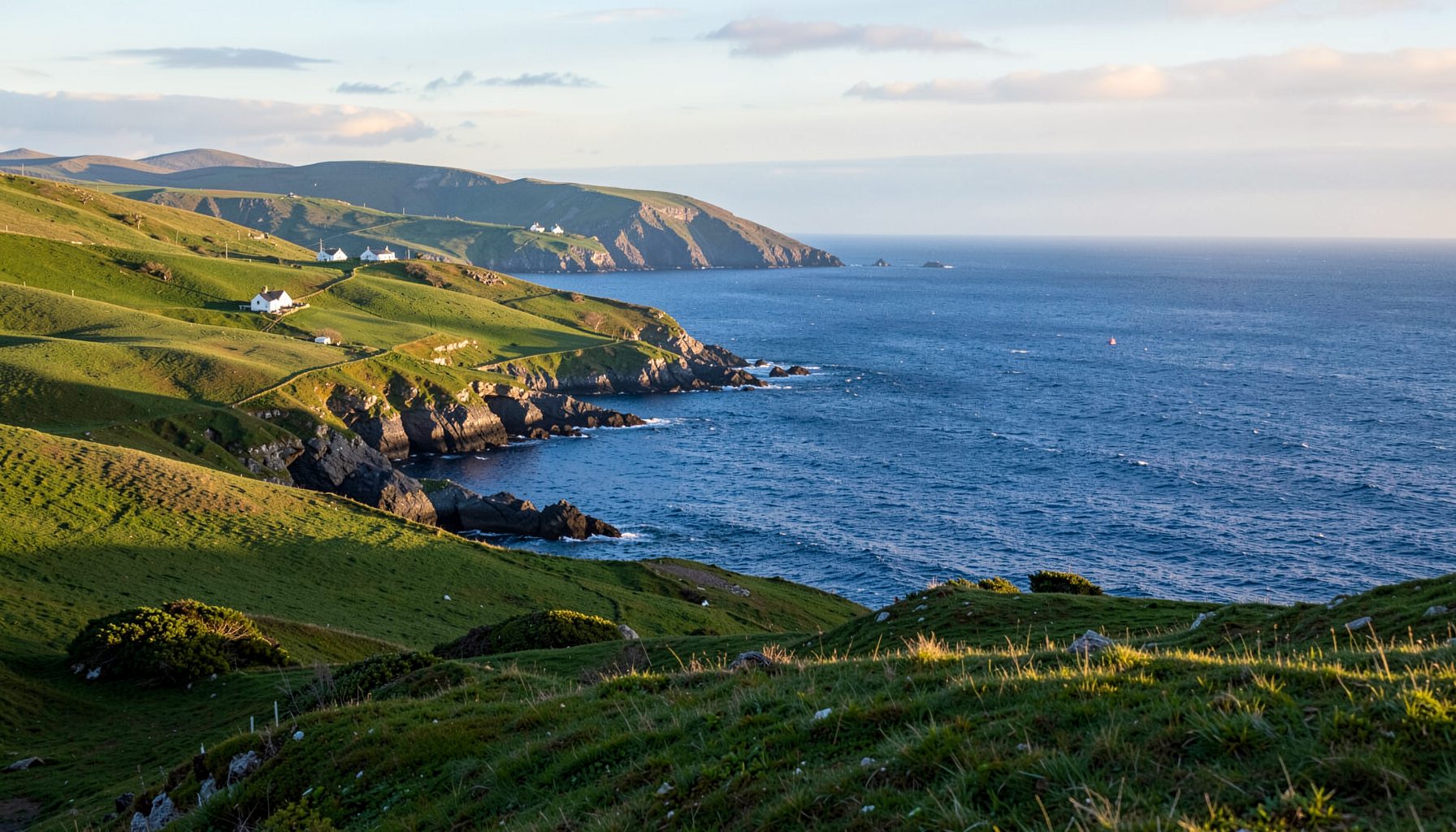
The setting is equally important. Across the coast from Kells towards Castlecove, the landscape is marked by exposed hills, Atlantic weather, narrow roads, and views towards offshore islands. A pilgrimage to a well is therefore also a journey through the distinctive environment of the Ring of Kerry.
The Meaning Of St Michael
St Michael is traditionally regarded as a defender against evil and a protector of the faithful. In Ireland, churches, wells, mountains, and other places have been placed under his patronage. His feast day is observed on 29 September, close to the seasonal turning from summer into autumn.
That timing gives the pilgrimage a particular character. The feast of Michaelmas was once an important point in the rural calendar, associated with harvest work, rents, contracts, livestock, and changes in employment. A devotion connected with St Michael could therefore carry both spiritual and practical meaning for farming and coastal communities.
The archangel’s identity as a protector may also have resonated strongly in an exposed Atlantic district. Families facing illness, difficult weather, dangerous crossings, or uncertain harvests could find reassurance in a place dedicated to a heavenly guardian. The well offered a local focus for that devotion rather than requiring people to travel to a distant shrine.
Pilgrimage, Prayer, And The Pattern Tradition
A pilgrimage to an Irish holy well was often made according to a customary sequence known as a pattern. The word can refer to the feast or gathering associated with a patron saint, as well as to the devotional practices carried out at the site. These practices differed from one well to another.
Visitors might walk around the well, say prayers, make the sign of the cross, leave a small offering, or take water for someone unable to make the journey. In some traditions, the movement around the well followed a particular direction and number of turns. The purpose was not performance but prayerful attention, with the repeated actions helping pilgrims concentrate on their intentions.
At St Michael’s Well, the remembered pilgrimage should be treated as a living local tradition rather than a fixed ceremony with one universally documented form. Accounts can vary between families and generations. Some people may remember a formal religious observance, while others recall quiet individual visits, especially during times of illness or personal difficulty.
A Meeting Place For Older And Newer Beliefs
Many holy wells occupy sites that may have had significance before Christianity. Water itself held a special place in pre-Christian Irish culture, and springs were natural points of gathering in a landscape where reliable water mattered. When Christianity spread, older sacred places were sometimes reinterpreted through the lives of saints or the protection of angels.
It is not always possible to prove a direct link between a named well and an earlier pre-Christian shrine. Responsible local history should distinguish between evidence, probability, and storytelling. Even so, the persistence of reverence around springs reveals a long-standing respect for water, healing, and the unseen character of particular places.
St Michael’s Well can therefore be understood on several levels. It is a Christian devotional site, a local heritage feature, part of the folklore of the peninsula, and a reminder of how communities adapt older relationships with the landscape. These meanings do not have to compete. Together, they explain why such a small place can remain memorable.
What The Evidence Can Tell Us
The story of the well is likely to survive in several forms: spoken recollections, field names, church records, old maps, photographs, newspaper reports, and personal accounts. Each source has strengths and limitations. An oral history may preserve details absent from official records, while a written source may confirm a date without explaining what the pilgrimage meant to local families.
| Source or tradition | What it may reveal | What to treat carefully |
|---|---|---|
| Local family memories | Visiting customs, prayers, healing stories, and seasonal use | Memories can differ across generations |
| Church records | Feast-day observance, clergy involvement, or nearby religious activity | Records may omit informal visits |
| Historic maps and field names | The location and long-term recognition of the site | A map name does not explain the well’s meaning |
| Archaeological context | Relationship to settlement, roads, or older landscape features | A nearby feature is not proof of direct connection |
| Folklore and legend | Symbolic meaning and community imagination | Stories may change as they are retold |
| Modern heritage work | Conservation concerns and renewed public interest | Current interpretation may simplify a complex past |
This kind of evidence is especially valuable on the Skellig Coast, where many heritage stories are held locally. Community groups, schools, historical societies, and cultural initiatives can help bring different memories together without forcing them into a single version.
The absence of a detailed written record should not be taken as evidence that the pilgrimage was unimportant. Rural religious practice was often private, seasonal, and conducted by people whose everyday lives were rarely documented.
Healing Water And Personal Devotion
Healing is one of the most common themes associated with holy wells throughout Ireland. Visitors might pray for relief from illness, seek protection for a child, or bring water to a relative at home. Some traditions distinguish between different ailments or prescribe particular actions, though these customs are often remembered in varied ways.
The water at a holy well also has emotional significance. A person may visit after bereavement, before a major life event, or in fulfilment of a promise made during a crisis. The journey itself can be part of the devotion. Walking to the well creates time for silence, reflection, and prayer away from ordinary routines.
Modern visitors may approach the site through history, spirituality, family research, or an interest in local folklore. Those different motivations can coexist respectfully. The well’s meaning is not limited to one period, and its value does not depend on every visitor sharing the same beliefs.
Caring For A Living Heritage Site
Holy wells can be vulnerable. Vegetation, erosion, road changes, damaged stonework, litter, and careless collecting of water may gradually affect their condition. A small site can also be harmed when increased attention brings visitors without clear information about access or respectful behaviour.
Anyone visiting should remain on appropriate paths, avoid disturbing stones or surrounding ground, and leave no offerings that could damage the setting. Candles, plastic objects, coins, and non-native flowers can create hazards or alter the character of the place. Water should never be assumed to be safe to drink unless it has been formally tested.
Local knowledge is essential to good stewardship. Residents can explain access arrangements, seasonal customs, and the difference between a public heritage place and land that remains privately owned. Recording memories, photographing changes responsibly, and sharing verified information can help protect the well without turning it into a staged attraction.
Ways To Approach The Pilgrimage Today
A respectful visit can be simple. The purpose is to notice the landscape, understand the tradition, and avoid treating the well as a backdrop detached from its community. Consider these principles:
- Learn the location, access arrangements, and local customs before setting out.
- Read the story alongside other Skellig Coast heritage, including nearby churches, archaeological sites, and coastal routes.
- Keep the site clean and intact by taking away all personal items and avoiding damage to the spring or surrounding ground.
- Record family memories or local accounts with permission, naming the source and distinguishing fact from legend.
- Support community-led heritage work, educational programmes, and responsible interpretation of the area.
The pilgrimage associated with St Michael’s Well offers a different way to understand the Skellig Coast. It draws attention away from headline attractions alone and towards the smaller places where belief and memory have been carried through ordinary lives. A spring can preserve the history of a family, a parish, or an entire district without possessing a grand building or formal monument.
Its story also adds depth to the wider heritage of the Iveragh Peninsula. Visitors who come for Skellig Michael, the Wild Atlantic Way, or the Ring of Kerry can discover a cultural landscape made up of many connected layers: monastic history, folklore, farming, fishing, language, devotional practice, and community memory.
Explore the Skellig Coast with care by learning about its holy wells, local traditions, and heritage places through community knowledge. Share the story of St Michael’s Well accurately and respectfully, so that this small sacred site remains part of the living history of the coast.