The Story of the Skellig Michael Beehive Huts
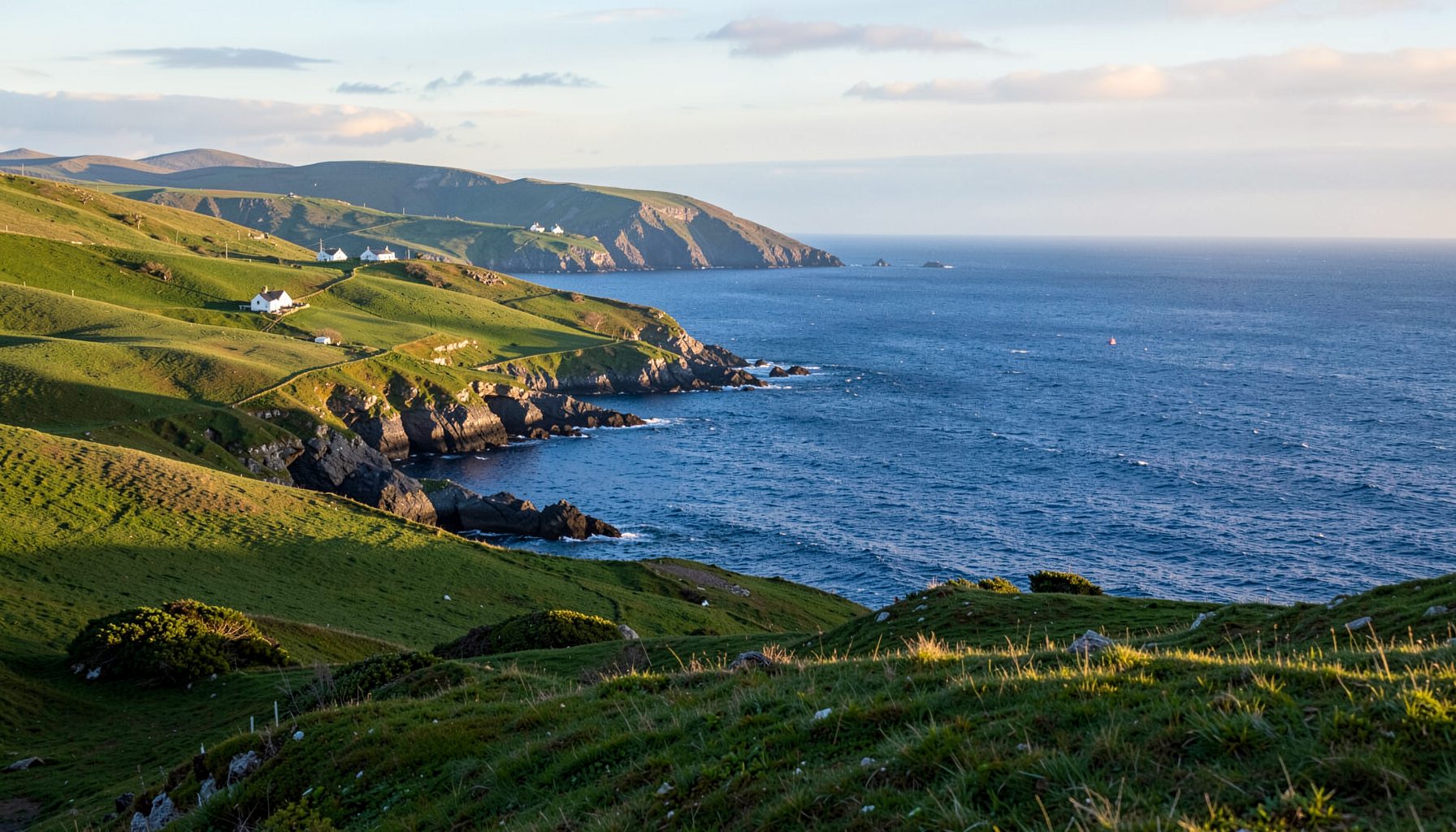
Rising from the Atlantic beside the Skellig Coast, Skellig Michael is known for its steep cliffs, exposed landscape, and remarkably preserved monastic settlement. Among its most recognisable features are the beehive huts, or clocháin: small, round stone buildings with roofs that curve inward until they meet at the top.
These structures appear simple from a distance, yet their design reflects careful planning, skilled masonry, and a deep understanding of the island’s severe weather. Built without mortar, the huts have endured salt winds, heavy rain, and centuries of isolation. Their survival is one reason the island remains such an important part of Ireland’s early medieval heritage.
The settlement is associated with Christian monks who sought a remote place for prayer and disciplined community life. The exact dates and daily routines remain subjects of scholarly study, but the stone buildings offer a tangible connection to a period when Skellig Michael stood at the edge of the known Atlantic world.
A Monastic Settlement In The Atlantic
Skellig Michael lies around 12 kilometres off the coast of the Iveragh Peninsula, beyond Portmagee and the mainland communities of the Skellig Coast. Its isolation would have appealed to monks pursuing a life of prayer, fasting, study, and manual work. Reaching the island required a demanding sea journey, followed by a steep climb across rough ground.
The monastery was probably established between the sixth and eighth centuries, although its exact foundation date is uncertain. Early Christian communities often selected remote locations for solitude and spiritual discipline. Skellig Michael offered dramatic separation from ordinary settlement, while its ledges and terraces provided limited spaces where buildings could be constructed.
The monks created a small settlement rather than a large religious complex. The surviving structures include several beehive huts, a church, crosses, burial grounds, retaining walls, and other stone features. Together, they show how a small community adapted its religious and practical needs to an exceptionally difficult environment.
How The Beehive Huts Were Built
A beehive hut is formed from carefully placed stones arranged in a circular or oval plan. Each course projects slightly inward from the one below it, producing a corbelled roof. The stones eventually meet near the top, often leaving a small opening that could be closed with a final slab or used for limited ventilation.
The walls were built using dry-stone masonry, meaning that no mortar held the stones together. This method depended on selecting stones of suitable shape and fitting them tightly. A well-built wall distributed weight down and outward, allowing the structure to remain stable while also shedding rainwater.
The huts are usually described as beehive-shaped because their profile resembles the rounded form of a traditional straw skep. Their appearance is also a direct response to available materials. On Skellig Michael, stone was abundant, while timber and other building resources would have been difficult to transport or replace.
Small doorways helped limit exposure to wind and rain. Some entrances have sloping or carefully fitted stones that protect the interior from direct weather. The huts were compact, but their thick walls offered insulation and shelter in a place where Atlantic storms could arrive with little warning.
Daily Life Within The Stone Cells
The beehive huts may have served several purposes, and it is difficult to assign a single use to every surviving building. Some could have been sleeping cells, while others may have supported shared work, storage, prayer, or other activities connected with monastic life. The settlement’s size suggests a community of modest scale rather than a large monastery.
A monk living on Skellig Michael would have faced a demanding routine. Food had to be grown in limited soil or brought by boat, water had to be collected, and movement around the island required care. Terraces and garden areas indicate that the community made practical use of every available patch of land.
The huts should therefore be understood as part of a wider system. Their walls, doorways, terraces, steps, and nearby religious monuments worked together to create a functioning settlement. The buildings were shaped by faith, but also by the everyday realities of weather, food, water, maintenance, and access.
The island’s architecture also reflects a particular form of early Irish monasticism. Rather than a grand church surrounded by extensive halls, Skellig Michael presents a concentrated group of humble structures. Their modest scale makes the achievement of building and maintaining them in such a remote location even more striking.
Reading The Evidence In The Huts
The stonework provides clues about construction, but it does not answer every question. Written records about the island are limited, and later traditions have sometimes blended with archaeological evidence. Researchers must compare the buildings with similar early medieval sites across Ireland while allowing for Skellig Michael’s unusual setting.
| Feature | What Can Be Observed | What It May Indicate |
|---|---|---|
| Corbelled stone roof | Courses of stone lean inward without timber support | Skilled dry-stone construction and protection from Atlantic weather |
| Compact circular plan | Thick walls surround a small interior space | Efficient shelter where building materials and level ground were limited |
| Narrow entrance | Doorways are small and carefully formed | Reduced exposure to wind and improved structural strength |
| Terraced position | Buildings stand on prepared ledges | Careful use of scarce level ground and control of erosion |
| Nearby crosses and church | Religious monuments occur within the settlement | A community organised around prayer, ritual, and burial |
| Dry-stone retaining walls | Stonework supports paths and cultivated areas | Practical engineering alongside spiritual activity |
Archaeologists also consider repairs and alterations. A building may have been used for longer than its original purpose, and later occupants could have modified entrances, floors, or surrounding walls. This means the settlement is best viewed as a record of changing use rather than a frozen snapshot of one moment.
The huts’ preservation can create a misleading impression that life on the island was unchanged for centuries. In reality, communities maintain, rebuild, abandon, and reuse structures. The visible stones represent many stages of occupation, weathering, repair, and conservation.
An Island Shaped By Pilgrimage And Memory
Skellig Michael remained an important religious site after the earliest monastic period. Medieval pilgrimage traditions connected the island with spiritual devotion, and its dramatic location helped preserve its reputation as a place apart. Even after the monastic community declined, the buildings continued to attract interest because of their unusual form and setting.
The island’s later history also includes lighthouse construction and maritime activity. These newer layers of use sit alongside the monastery, creating a complex historical landscape. The beehive huts are the best-known features, but they make sense only when considered with the island’s later role in navigation and coastal life.
For communities on the mainland, Skellig Michael is part of a living regional story. Portmagee, Valentia Island, Ballinskelligs, and other places along the coast have long been connected with fishing, boat work, pilgrimage, tourism, music, and storytelling. The island is remote, yet it remains closely tied to the people and traditions of the Iveragh Peninsula.
That connection can be felt in the wider cultural life of the area, including local music sessions where oral tradition, community gathering, and regional identity continue in a different setting. The silence of the monastery and the lively sound of mainland gatherings are distinct experiences, but both belong to the cultural landscape of the Skellig Coast.
Protecting A Fragile Heritage Site
The huts have survived remarkably well, but their condition cannot be taken for granted. Dry-stone buildings are vulnerable to movement, water penetration, frost, erosion, and accidental damage. The narrow paths and steep terraces also make the site difficult to manage, especially during wet or windy weather.
Skellig Michael is a UNESCO World Heritage Site, and its protection involves careful monitoring, conservation work, visitor management, and archaeological research. Every intervention must respect the original stonework while addressing modern safety and preservation needs. Moving a single stone can affect the balance of an entire wall.
Visitors play an important role in protecting the settlement. Staying on marked routes prevents damage to fragile ground and archaeological remains. Touching walls, climbing structures, or entering restricted areas can weaken surfaces that have already endured centuries of exposure. Quiet, attentive visits also help preserve the atmosphere of the site.
Access to the island is weather-dependent, and landing is never guaranteed. The sea crossing and climb demand physical care, while rough conditions can change quickly. These limitations are part of the island’s character and help reduce pressure on a place whose meaning depends partly on its remoteness.
Understanding The Huts Today
The beehive huts are often presented as symbols of early Irish spirituality, but they also represent practical intelligence. Their design solved several problems at once: how to build with local stone, how to create shelter without timber, and how to establish a stable settlement on steep Atlantic terrain.
Their cultural importance reaches beyond architecture. The huts connect archaeology, religious history, landscape studies, conservation, and the identity of the Skellig Coast. They also encourage a more careful understanding of early medieval Ireland, where small communities could create highly durable structures in places that appear almost impossible to inhabit.
For anyone studying the site, several principles help keep the story grounded:
- Treat the huts as part of a complete monastic landscape rather than isolated buildings.
- Distinguish archaeological evidence from later legend and modern speculation.
- Notice the relationship between stonework, terraces, paths, crosses, and the sea.
- Respect access rules and conservation barriers during any visit.
- Learn about mainland communities as well as the offshore monument.
The huts endure because of sound construction, favourable conditions in some locations, and generations of care. Their rounded walls may seem timeless, but they are the result of human decisions made in a particular historical setting. Understanding those decisions brings the settlement closer than simply admiring its striking outline.
The story of Skellig Michael’s beehive huts continues wherever the island is studied, visited, described, or remembered. Explore the heritage of the Skellig Coast, learn about the communities connected to the island, and approach this extraordinary monument with the patience and respect its stones deserve.