Ghostly Lights And Phantom Ships Along The Skellig Coast
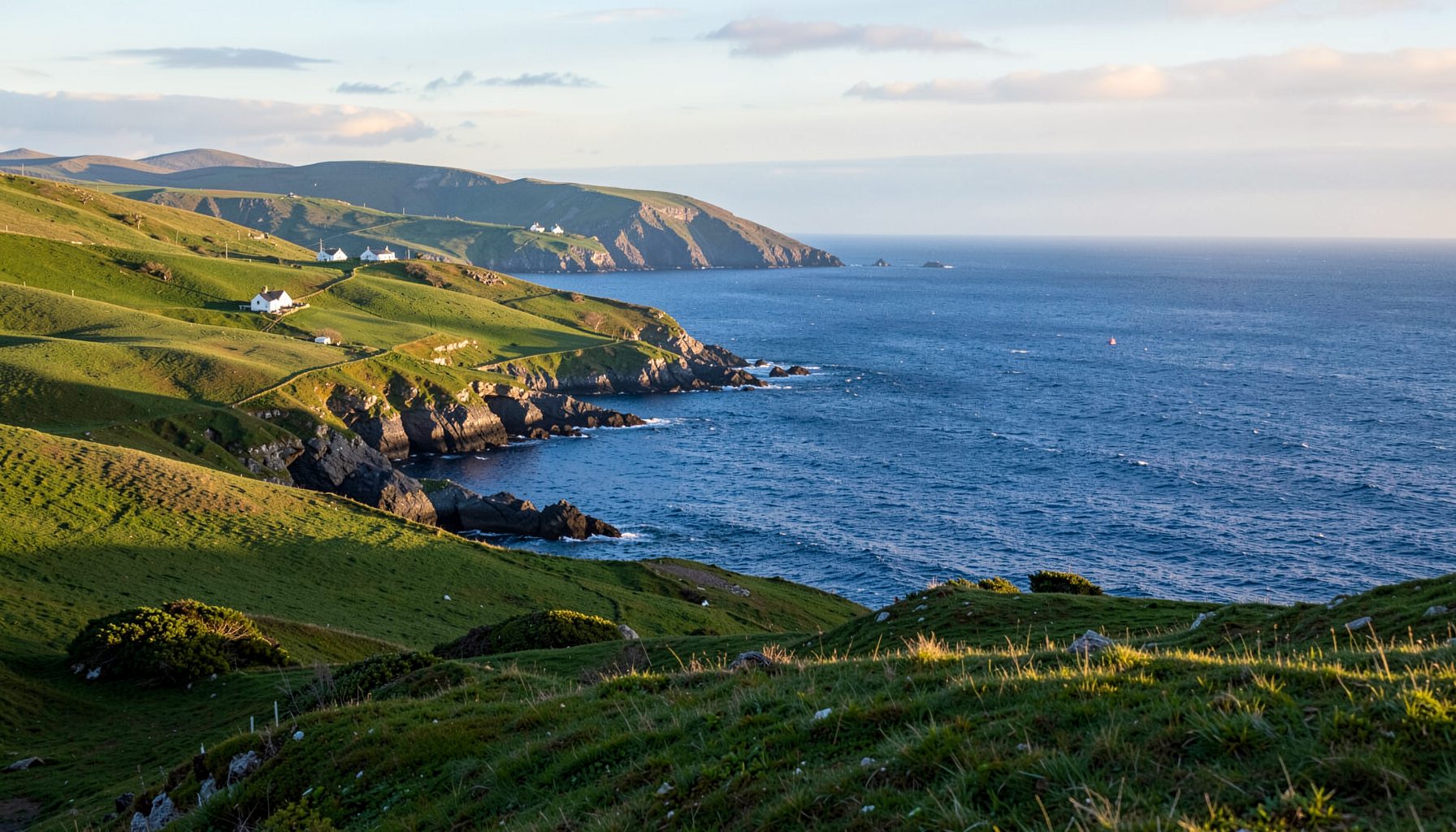
After sunset, the Skellig Coast changes character. The Atlantic darkens beyond the headlands, cottage windows become small points of warmth, and the silhouettes of the Skellig Islands seem to float between sea and sky. In such conditions, an ordinary light can look mysterious, while a distant vessel may appear to hover, vanish, or sail above the horizon.
From Kells to Castlecove, stories of strange glows, phantom boats, and unaccountable movements belong to a long coastal tradition. Fishermen, islanders, lighthouse keepers, and travellers learned to interpret a difficult sea through observation, memory, and storytelling. Some accounts may preserve genuine maritime events; others may reflect optical effects, weather, or the imaginative power of a remote landscape.
The legends remain valuable because they reveal how local people understood their surroundings. They also invite a second look at natural phenomena that can still be witnessed today, from St Elmo’s fire and phosphorescent surf to mirages created by layers of cool Atlantic air.
A Coast Made For Maritime Legends
The Iveragh Peninsula has all the ingredients needed for tales of supernatural navigation. Deep bays open into exposed Atlantic water, while rocky promontories interrupt the horizon. At night, a boat moving behind a headland can disappear in seconds, then reappear far from the point where it was last seen.
The Skelligs add a striking visual focus. Skellig Michael rises steeply from the ocean, and Little Skellig is crowned by a dense colony of seabirds. In daylight, their outlines are unmistakable. In mist, rain, or twilight, the islands can seem to shift position. A cloud bank may conceal their lower slopes, leaving the summits suspended like dark ships.
This landscape also carries centuries of religious and seafaring history. The monastic settlement on Skellig Michael, old routes around Valentia and Portmagee, and the fishing communities of the coast all contribute to a layered sense of place. A light seen offshore could belong to a boat, a dwelling, a lighthouse, or a memory handed down through generations.
Phantom Ships In Coastal Memory
Phantom ships are common figures in Atlantic folklore. They are often described as vessels that appear without sound, travel against the wind, or vanish before reaching shore. Some are linked to tragedies at sea, while others represent warnings, lost sailors, or ships that were believed to have gone down long ago.
On the Skellig Coast, such stories gain force from the region’s history of dangerous passages. Strong currents, hidden reefs, sudden squalls, and limited visibility made every voyage uncertain. Before modern navigation systems, a boat could be lost from view even in familiar waters. A remembered sail on the horizon might later become a spectral vessel, especially if a local disaster gave the tale an emotional centre.
These accounts should not be dismissed as simple superstition. Oral history often preserves practical knowledge inside a dramatic story. A warning about a ghostly boat may recall a reef, a treacherous tide, or a particular weather pattern. The supernatural language gave the lesson a form people could remember and repeat.
Community life on land is part of this maritime story too. Local gardens, school projects, and food-sharing schemes show how coastal communities continue to connect memory with everyday place-making. The record of community food projects offers a modern example of local knowledge being sustained through shared activity.
When The Sea Seems To Glow
One explanation for ghostly lights is bioluminescence. Tiny marine organisms can produce flashes of blue-green light when disturbed by waves, fish, or a moving boat. On a dark night, breaking surf may appear to sparkle, and the wake of a vessel can look like a luminous trail stretching across the water.
The effect is especially memorable when there is little artificial light. A person watching from a cliff might see a few pale bursts below, then lose them among the waves. From a distance, the pattern can resemble lanterns carried by invisible figures or a boat illuminated from within. The sea itself seems to be sending a signal.
Another natural phenomenon is St Elmo’s fire, a faint electrical glow that can form around pointed objects during stormy conditions. Historically, sailors associated it with masts, rigging, and religious signs. On a rugged coast, similar glimmers may be observed around aerials, poles, or exposed rock, particularly when the atmosphere is electrically charged.
These explanations do not erase the wonder of the sight. They add detail to it. Knowing that a glow may come from marine organisms or atmospheric electricity makes the event part of the coast’s natural history, while the old interpretation preserves its emotional power.
The Tricks Of Light And Weather
A temperature inversion can create a superior mirage, sometimes called a fata morgana. This happens when layers of air at different temperatures bend light in unusual ways. A distant object may appear stretched, raised, duplicated, or separated from the sea. A real boat can look like a flying ship, while landforms may seem to float above the horizon.
Mist produces a different kind of uncertainty. It softens edges and scatters light, making a small lamp appear larger than it is. A light on shore may seem to move because the observer’s viewpoint changes, or because veils of fog pass between the source and the eye. Reflections on wet rock can create a second point of light that looks detached from the original.
The Skellig Coast has many locations where these effects can be appreciated safely from land. Headlands, piers, roads near the shoreline, and elevated viewpoints create changing angles across the water. The same lighthouse or village light may look entirely different from one evening to the next, depending on humidity, cloud, tide, and the observer’s position.
| Apparition In The Story | Possible Natural Explanation | What To Observe |
|---|---|---|
| A blue or green glow in breaking surf | Bioluminescent marine organisms | Wave movement, season, and water temperature |
| A light around a mast or aerial | St Elmo’s fire or electrical discharge | Thunderstorms, strong winds, and charged air |
| A ship floating above the horizon | Superior mirage or temperature inversion | Clear distant horizons and unusual air layers |
| A boat that vanishes near land | Headland, fog bank, or changing viewpoint | Shoreline angles and visibility |
| Several lights moving together | Fishing vessels, seabirds, or reflected lamps | Pattern, speed, and relation to the tide |
Reading The Coast With Care
The best way to explore these stories is to combine imagination with patient observation. A notebook can record the time, weather, tide, direction of the sighting, and apparent movement. Over several observations, patterns may emerge. A light seen only during certain weather may have an atmospheric explanation; one that follows a regular route may belong to a working boat.
Local knowledge is equally important. Residents may recognise the difference between a fishing vessel, a navigation light, and a lamp on a distant shore. They may also know which bays collect fog, where seabirds gather after dark, and how waves reflect light beneath particular cliffs. A visitor’s first impression becomes more meaningful when placed alongside community experience.
Night observation should be approached responsibly. Cliffs, rocky beaches, and narrow roads can become hazardous in darkness, especially during rain or high wind. People should remain on safe public routes, avoid trespassing, keep clear of unstable edges, and use a low, shielded light so that others can maintain their night vision.
The same care applies to the stories themselves. A dramatic account should be attributed to its source when possible, rather than presented as verified fact. Recording names, places, dates, and family connections helps preserve oral history without turning local tradition into an invented spectacle.
From Folklore To Shared Heritage
Ghost stories often survive because they provide a vivid way to discuss change. A phantom ship may stand for a vanished industry, an absent neighbour, or a generation whose working life depended on the sea. A strange light may recall the arrival of electricity, the building of a lighthouse, or a night when a vessel was overdue.
Schools, libraries, heritage groups, and community events can give these traditions a new setting. Children might compare old descriptions of sea lights with observations of bioluminescence. A local archive could collect memories of storms and ship sightings. Artists and writers can interpret the tales while making clear where documented history ends and imaginative reconstruction begins.
This approach also connects the supernatural with the wider heritage of the Skellig Coast. The region’s monastic remains, maritime routes, vernacular buildings, environmental projects, and cultural initiatives all tell stories about people responding to a demanding landscape. The phantom ship is one strand in a much larger record of coastal life.
Visitors can contribute by listening respectfully and supporting local interpretation. A guided heritage walk, a community exhibition, or a public talk may offer more insight than a hurried search for an unexplained light. The aim is to encounter the coast as a living place, not as a backdrop for a manufactured mystery.
Ways To Explore The Stories Responsibly
- Visit a recognised viewpoint before nightfall and learn the safe route back in advance.
- Keep a simple observation log covering weather, tide, visibility, direction, and the movement of any lights.
- Ask local heritage groups or libraries about recorded maritime legends and oral history projects.
- Protect dark skies by limiting torch use, avoiding unnecessary vehicle lights, and leaving wildlife undisturbed.
- Treat unexplained sightings as opportunities for careful investigation rather than proof of a supernatural event.
The ghostly lights and phantom ships of the Skellig Coast endure because they sit between fact, perception, and memory. A green flash in the surf may be plankton; a hovering vessel may be a mirage; a recurring tale may preserve the warning of an old sailor. Each possibility deepens the character of the place.
As you explore the communities and heritage of the coast, make space for both evidence and wonder. Share responsibly recorded stories with local archives, attend community heritage events, and help keep the Skellig Coast’s maritime imagination alive for those who will look out across its dark waters next.