O’Shea Whiskey Heritage Along The Cahersiveen Coast
The Story of the O’Shea Family and Their Distillery in Cahersiveen belongs to a wider history of work, land, trade and hospitality on Ireland’s Iveragh Peninsula. In this part of County Kerry, family names are closely tied to townlands, farms, public houses and businesses that have served local communities across generations.
Cahersiveen has long occupied an important position on the Skellig Coast. Set between the mountains and the Atlantic, it connected inland settlements with Valentia Island, Portmagee, Waterville and the wider Ring of Kerry. A local distillery therefore formed part of a larger social and economic landscape rather than standing apart from it.
The O’Shea name is associated with the resourcefulness that shaped rural Kerry. Their distilling story reflects the value of local knowledge: an understanding of grain, water, weather, storage and patient maturation, along with the hospitality needed to share a drink and a story.
A Family Rooted In Iveragh
The O’Shea family name is found throughout Kerry and has deep associations with the province’s Gaelic past. In Cahersiveen and its surrounding townlands, family identity has traditionally been linked to place. A surname could indicate a network of relatives, neighbours and shared obligations as much as an individual household.
That connection with the land matters when considering the family’s distilling heritage. Before whiskey became a branded product sold to visitors, it was part of a rural economy based on agriculture, seasonal labour and local exchange. Barley, water and fuel were practical resources, while skills were passed informally through families and working communities.
Cahersiveen’s position also encouraged contact with the outside world. Traders, fishermen, farmers, emigrants and returning residents all contributed to the town’s character. A spirit made locally could carry the identity of the district while moving through a much wider network of people.
Distilling In A Changing Ireland
Irish distilling has never been a simple story of uninterrupted production. Laws, taxation and licensing changed the way spirits were made and sold. At different times, small-scale production operated in a legal grey area, while licensed distilleries faced considerable costs and regulation.
This background helps explain why family distilling stories often survive through memory, photographs, business records and references in local conversation. The word “distillery” may describe a formal commercial enterprise, an earlier licensed operation or a family connection to spirit-making that developed within a particular historical period.
For the O’Shea family, the distillery story can be read as part of this national shift. Local initiative had to meet changing standards, markets and expectations. The work involved more than producing a drink. It required equipment, dependable supplies, knowledge of safe production and an ability to respond when the Irish whiskey industry changed direction.
The history also reflects a familiar Kerry pattern: people adapting to limited opportunities at home while maintaining strong links abroad. Local enterprise, emigration and tourism all influenced the commercial life of Cahersiveen.
The Character Of A Cahersiveen Spirit
A distillery’s sense of place begins with its raw materials, but it does not end there. Water, grain, cask selection and maturation influence the final character of whiskey. So do the people who oversee each stage and the conditions in which the spirit rests.
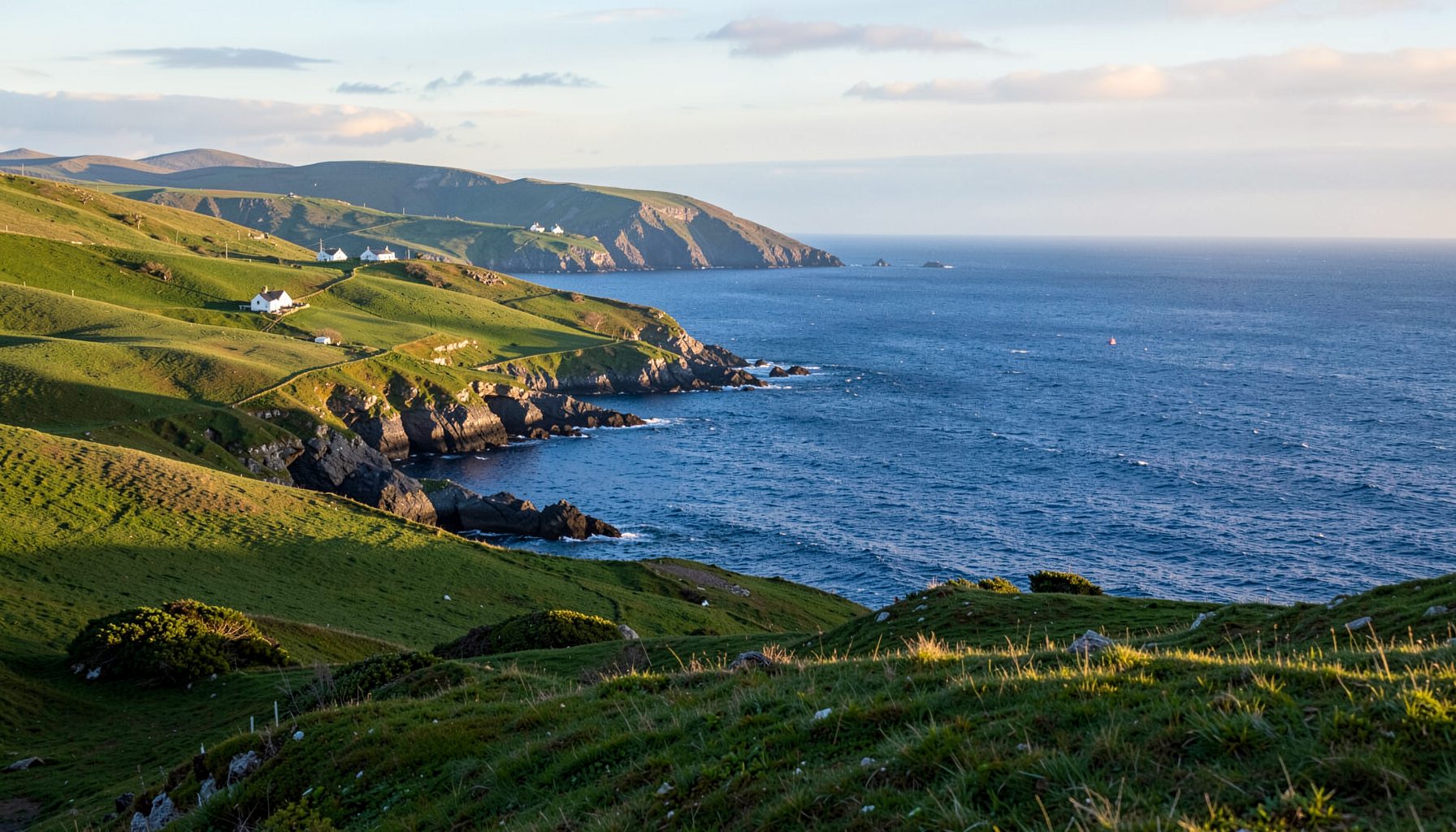
For a producer connected with Cahersiveen, the landscape provides a strong cultural setting. The Skellig Coast is shaped by exposed Atlantic weather, rocky hills, old farmsteads and views towards islands and headlands. These features do not automatically define flavour, yet they give the spirit a powerful story and a recognisable regional identity.
The O’Shea name adds another layer. Family distilleries are often valued because they make production feel personal. Visitors and residents can connect the bottle with a place, a surname and a continuity of work. That connection is especially meaningful in communities where local businesses preserve knowledge that might otherwise disappear.
Whiskey also creates a bridge between generations. Older residents may remember earlier forms of production or family involvement, while younger people encounter the heritage through tasting events, tourism, local research or renewed interest in Irish craft spirits.
| Element | Importance to the O’Shea distilling story | Wider Cahersiveen connection |
|---|---|---|
| Family name | Gives the enterprise a personal and intergenerational identity | Reflects the importance of kinship in rural Kerry |
| Local setting | Places the spirit within the landscape of Iveragh | Links production with the Skellig Coast and Ring of Kerry |
| Distilling knowledge | Connects practical skill with inherited tradition | Shows how specialist work supported local enterprise |
| Whiskey maturation | Adds time, patience and craft to the process | Mirrors the long historical development of the town |
| Visitor interest | Makes heritage accessible beyond the family | Supports cultural tourism and community storytelling |
From Local Enterprise To Cultural Heritage
The value of the O’Shea distillery is not measured only by its output. Its significance lies in what it reveals about Cahersiveen as a working town. Local industry has always depended on people who recognised an opportunity and built something that could serve both residents and visitors.
That role has become increasingly important as the Skellig Coast attracts attention for its scenery and heritage. Travellers come for Skellig Michael, the Kerry Cliffs, Valentia Island and the Wild Atlantic Way, but the character of the region is also found in its family businesses, community halls, workshops and stories.
A distillery can help widen the visitor experience. It gives people a reason to look beyond a scenic viewpoint and consider how residents made a living, preserved traditions and responded to economic change. When presented responsibly, whiskey heritage complements the area’s archaeological and maritime history rather than competing with it.
The story also belongs to local education. Schools, heritage groups and learning hubs can use family enterprises to explore themes such as rural economy, emigration, changing technology and the relationship between food, drink and culture. A distillery becomes a useful doorway into the history of a whole community.
What Makes The Story Worth Preserving
Family histories are often vulnerable to gaps. Business records may be scattered, buildings may change use and memories may differ between generations. Preserving the O’Shea story therefore involves careful attention to names, dates, locations and the language used by those who remember it.
Oral history is particularly valuable. A former worker may recall production methods, while a neighbour remembers deliveries, celebrations or changes to the premises. These details can reveal the everyday reality behind a business name. They should be recorded alongside photographs, newspaper reports, licence documents and other reliable sources.
There is also a responsibility to separate documented fact from family tradition. Both have value, but they should not be presented in the same way. Clear labels such as “according to local memory” or “recorded in family material” allow readers to appreciate the story without losing historical accuracy.
The result is a richer account of Cahersiveen. The O’Shea distillery is part of a living heritage in which work, family, place and memory overlap. Preserving that heritage helps future generations understand that regional history is made through ordinary enterprises as much as through famous monuments.
Finding The Story On The Skellig Coast
People interested in the O’Shea family’s connection with distilling can place it within a broader visit to Cahersiveen. The town’s streets, churches, harbour connections and nearby historic sites help explain how the community developed. The surrounding landscape adds the geographical context that shaped transport, farming and trade.
A thoughtful heritage visit should allow time for local interpretation. Community exhibitions, talks, archives and cultural events can provide details that are not visible from the road. They also give residents an opportunity to present their own history rather than leaving the region’s identity to outside descriptions.
Useful ways to engage with the story include:
- Read local histories and family records alongside national accounts of Irish whiskey.
- Visit Cahersiveen’s heritage sites to understand the town’s social and commercial setting.
- Look for community talks, exhibitions and cultural events connected with Iveragh history.
- Treat oral tradition as an important source while checking dates and claims against documents.
- Explore the wider Skellig Coast to see how landscape, travel and enterprise shaped one another.
The O’Shea family distillery story is therefore more than a note in the history of Irish spirits. It is a window into Cahersiveen’s working identity and into the persistence of local enterprise on the Atlantic edge of Kerry.
As the Skellig Coast continues to welcome visitors, stories such as this deserve careful attention. Explore Cahersiveen through its people, places and family traditions, and discover how the O’Shea legacy adds another distinctive thread to the heritage of Iveragh.