Skate And Ray Species In The Coastal Waters Around Valentia
The waters around Valentia Island sit at an important meeting point between sheltered coastal habitats and the open Atlantic. Rocky shores, sandy bays, gravelly ground, kelp beds and deeper channels create a varied marine landscape for fish and invertebrates. Among the most distinctive animals living here are skates and rays, close relatives of sharks with flattened bodies and broad, wing-like fins.
These fish are easy to confuse, yet each species has its own pattern, shape and preferred habitat. Some spend much of their time resting on the seabed, while others move across sand and mud in search of crabs, prawns, small fish and shellfish. Their presence adds an important layer to the natural story of Valentia Harbour, the Portmagee Channel and the wider Iveragh coastline.
Sightings may come from anglers, shore observers, divers, wildlife surveys and boats working in coastal waters. Records change with season, water depth and local conditions, so a fish seen near Valentia cannot always be identified confidently from a quick glimpse. Careful observation and photographs taken without handling the animal provide the most useful information.
A Coastal Landscape Suited To Bottom-Dwelling Fish
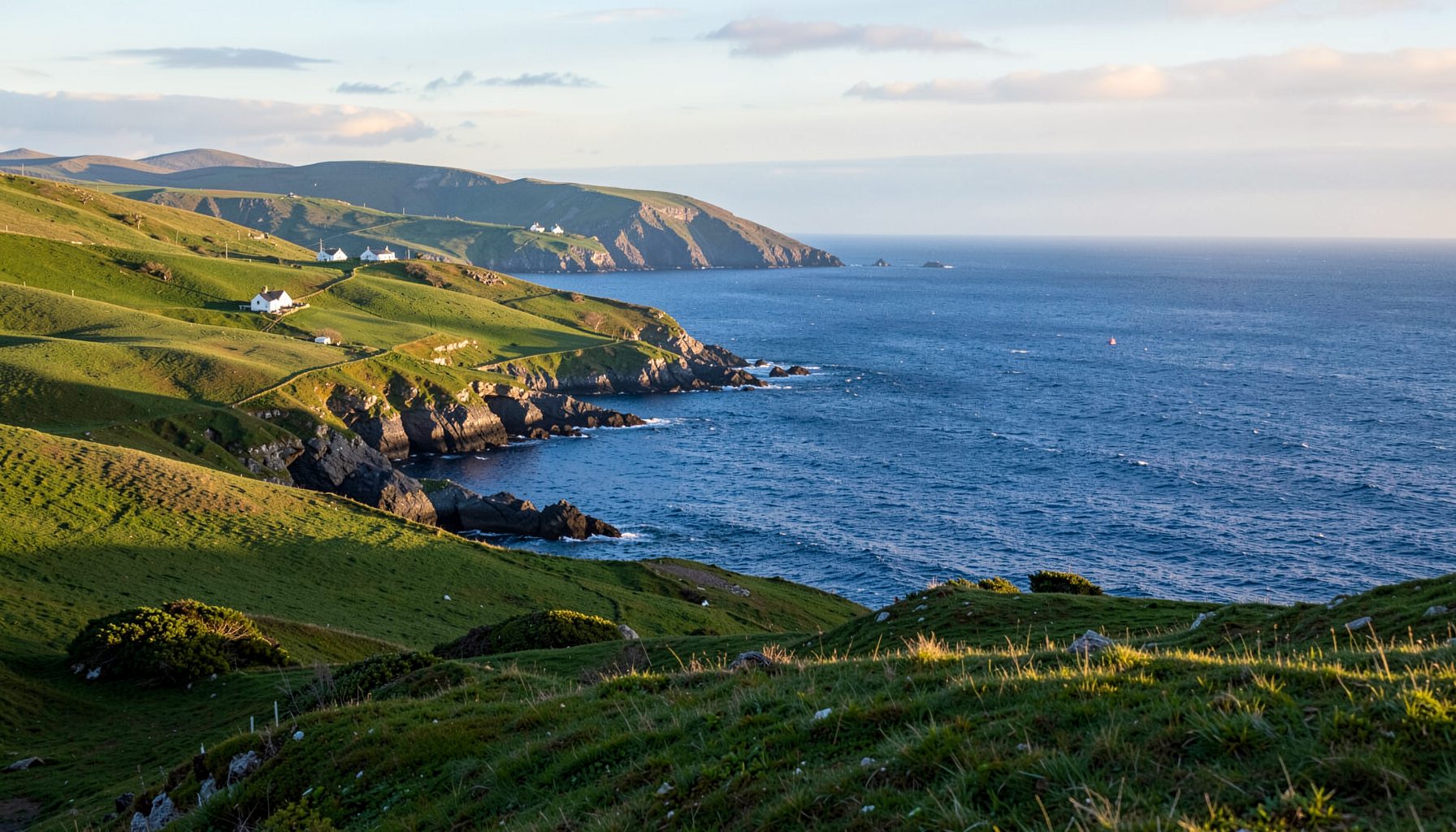
Valentia’s position on the western edge of the Iveragh Peninsula gives nearby marine habitats a strong Atlantic character. The island’s coastline includes exposed headlands, narrow channels, sheltered inlets and beaches where wave action constantly moves sand and small stones. These conditions support a mixture of seabed communities rather than a single uniform environment.
Many skates and rays are associated with the sea floor. They may settle on clean sand, muddy sand, gravel or mixed ground, using their flattened bodies to remain inconspicuous. Their colouring often resembles the seabed above them, which helps them avoid predators and approach prey. A ray can appear motionless before suddenly lifting its pectoral fins and gliding away.
Depth is another important factor. Some species are regularly found in shallow water, while others are more likely in deeper channels or offshore grounds. Tidal movement around Valentia and the neighbouring islands also affects where food collects. A sheltered bay can provide feeding habitat at one stage of the tide, while stronger currents may bring different species closer to a channel or reef edge.
Recognising Common Skates And Rays
The word “skate” is used for several members of the ray family, and local names can vary. In biological terms, skates generally have a more angular body, a pointed snout and two dorsal fins near the tail. Rays often have a smoother outline and may possess a venomous spine, although the exact differences are more complex than a simple visual rule.
The thornback ray is among the most familiar species in Irish coastal waters. It has a broad, angular disc, a pointed snout and rows of sharp spines along its back and tail. Its upper surface may show darker patches or mottling, while the underside is pale. Thornback rays often occur over sandy or mixed seabeds and can be encountered around shallow coastal ground.
Other species have more distinctive markings. A spotted ray may show small dark spots across its back, while a cuckoo ray is recognised by eye-like markings and a relatively compact shape. Blonde rays are larger and often have a smooth, sandy or yellow-brown appearance. Undulate rays carry wavy lines and darker patterns, though colour can vary according to age, habitat and the condition of the animal.
| Species | Useful Identifying Features | Typical Habitat Clues |
|---|---|---|
| Thornback Ray | Angular disc, pointed snout, prominent spines | Sandy, muddy and mixed seabeds |
| Spotted Ray | Rounded markings or spots on the upper surface | Shallow coastal waters and sandy ground |
| Cuckoo Ray | Eye-like spots and compact body shape | Sand, gravel and coastal seabeds |
| Blonde Ray | Broad body, pale brown or sandy colouring | Deeper sand and mixed sediments |
| Undulate Ray | Wavy lines and dark, irregular patterns | Sandy bays and offshore coastal ground |
| Small-Eyed Ray | Small eyes, narrow snout and subtle markings | Sand and gravel, often in deeper water |
Identification should always be treated as provisional when the animal is seen briefly or from a distance. Colour patterns can fade after capture, and several species change appearance as they grow. A clear image of the back, head and tail is more valuable than a general description such as “large brown ray.”
What Skates And Rays Eat
Skates and rays are predators adapted to life close to the seabed. Their mouths and jaws are suited to taking crustaceans, worms, molluscs and small fish. Thornback rays, for example, can crush hard-shelled prey with strong dental plates. Their feeding activity helps connect sandy and muddy habitats with the wider coastal food web.
A ray may use its broad body to disturb the seabed and expose hidden prey. Sensitive organs around the head can detect movement and weak electrical signals produced by animals buried in sediment. This ability is especially useful in water where visibility is limited, during night-time feeding or beneath a layer of sand.
Young skates and rays require suitable nursery habitat with plentiful food and shelter. Shallow bays, estuaries and protected coastal areas can offer these conditions. The health of such places depends on water quality, seabed structure and the availability of small fish and invertebrates. Protecting the lower levels of the food chain benefits the larger species that depend on them.
Where They May Be Seen Around Valentia
Most people are unlikely to see a skate or ray clearly from an ordinary shoreline walk. The fish may remain beneath the surface, blend into the seabed or move through deeper water. Divers and snorkellers have better opportunities in calm, clear conditions, particularly over sand beside rocky habitat, but encounters are never guaranteed.
Anglers may encounter rays from piers, beaches or boats, depending on local conditions and the type of ground being fished. A hooked fish should be brought in carefully and kept in the water wherever possible. Photographs can be taken beside the water before release, avoiding pressure on the body or contact with the eyes and gill openings.
Shore observers can still contribute valuable records. A ray stranded on a beach, a fish seen in a shallow pool or a reliable report from a local boat may help build knowledge of the area. The date, location, approximate depth, habitat, estimated size and distinguishing markings should be recorded. Images should be shared with a recognised marine recording scheme or local conservation group where appropriate.
Conservation And Responsible Handling
Skates and rays face pressures associated with fishing, habitat disturbance and changes in the marine environment. Some species mature slowly and produce relatively few young compared with many smaller fish. This means that local declines may take time to reverse, particularly where adult breeding animals are removed repeatedly.
Fishing gear can also affect the seabed. Heavy or mobile gear may disturb areas used for feeding, shelter and egg laying. Skates produce tough, leathery egg cases sometimes called “mermaid’s purses.” These can wash ashore attached to seaweed or accumulate among beach debris. Leaving them in place is usually best, since they may still contain developing embryos.
Responsible handling is essential when a ray is accidentally caught. Gloves can protect hands from spines, but they do not replace care. The fish should be supported horizontally, kept away from dry surfaces and returned promptly to the water. Spines should never be cut, and a deeply embedded hook should not be torn out. Local fishing guidance and current Irish regulations should always take priority.
Reading The Coast Through Marine Records
Species records from Valentia can reveal how different habitats are connected. A concentration of thornback ray observations near sandy ground may reflect feeding opportunities, while reports of larger rays in deeper water may point to movement between coastal and offshore areas. Repeated observations over several years are more informative than an isolated sighting.
Community science can make a meaningful contribution when records are carefully collected. A photograph, even one taken from a pier or boat, may allow an experienced recorder to distinguish a spotted ray from a cuckoo ray. If the species cannot be confirmed, it is better to submit the record as an unidentified skate or ray than to force an uncertain identification.
Visitors and residents can support this work by learning the basic shapes and markings of local species. Marine education events, school projects, guided shoreline activities and local heritage programmes can connect natural history with Valentia’s maritime identity. The island’s story includes geology, archaeology, fishing, navigation and wildlife; skates and rays belong within that wider coastal account.
Practical Ways To Support Local Marine Life
Simple choices can reduce disturbance and improve the quality of wildlife records. They also help keep beaches, bays and seabed habitats suitable for the species that use them.
- Watch rays from a respectful distance and avoid chasing, touching or surrounding them in shallow water.
- Photograph distinctive markings without lifting the animal, then record the date, location and habitat.
- Return unwanted fishing line, hooks and other equipment safely rather than leaving them on beaches or piers.
- Check current local fishing rules and follow handling guidance for released skates and rays.
- Join a marine recording project, shoreline survey or community beach clean operating around Valentia and the Iveragh coast.
The best way to appreciate these fish is to treat them as part of a living coastal system rather than as occasional curiosities. A sandy bay, tidal channel or rocky inlet may support far more life than is visible from the surface. Protecting those places gives skates, rays and their prey room to feed, grow and reproduce.
Explore the coast with care, share well-documented wildlife records and support local initiatives that keep Valentia’s marine heritage visible for future generations.