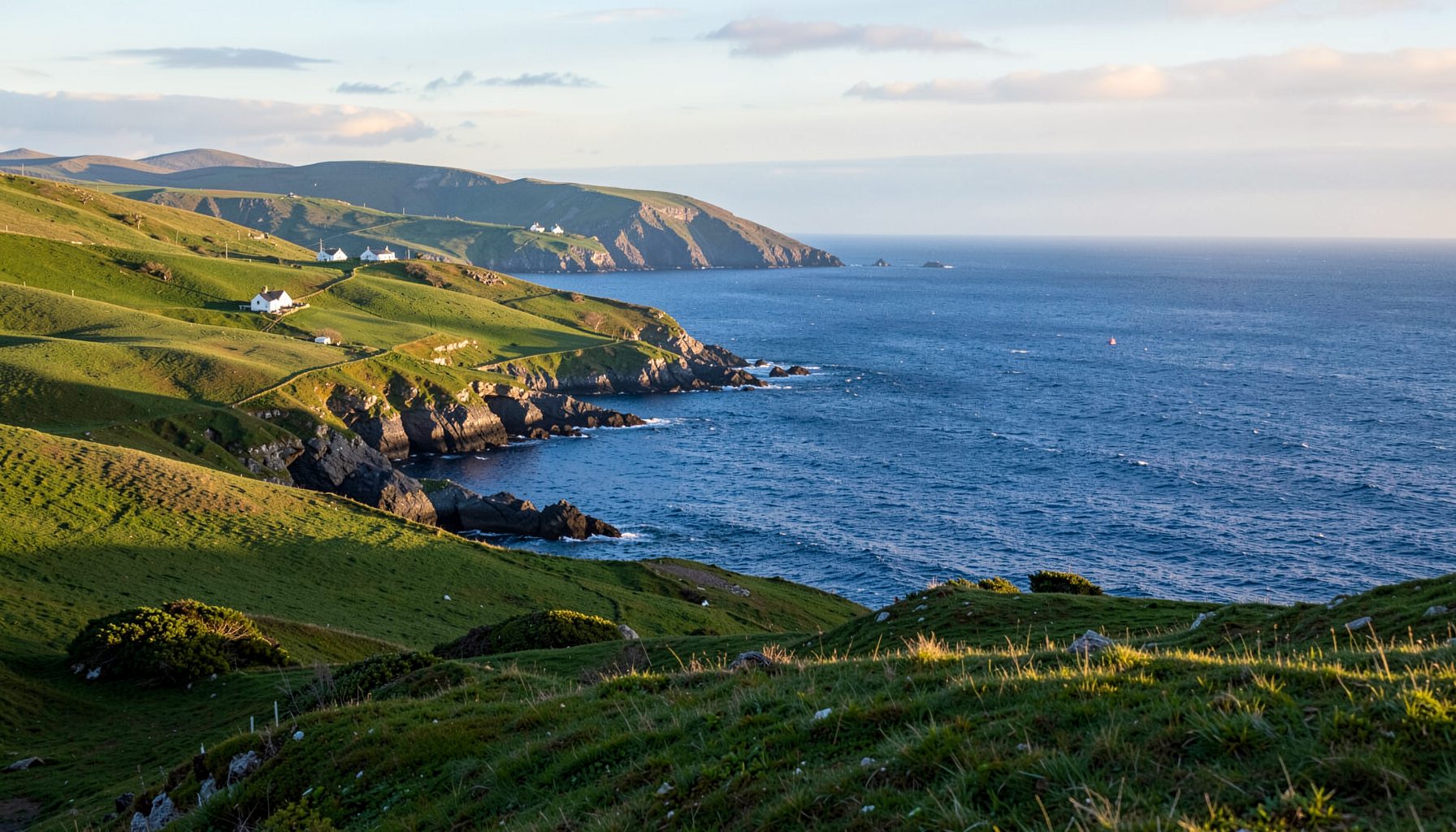
Lifeboat Rescue and Maritime Safety on the Skellig Coast
The Skellig Coast is shaped by the sea. From Valentia Harbour and Portmagee to Waterville Bay, boats, swimmers, anglers, surfers, divers and coastal walkers all share an environment that can change quickly. Strong tides, exposed headlands, Atlantic swell, fog and sudden weather shifts create risks that are familiar to local rescue crews.
The role of the RNLI lifeboat stations at Valentia and Waterville is sometimes described as though both places contain RNLI stations. Valentia does have an RNLI lifeboat station. Waterville, however, is served by its own independent local rescue organisation, Waterville Inshore Rescue Service, alongside the wider Irish Coast Guard emergency network. Understanding this distinction helps explain how maritime assistance is organised across the peninsula.
These services are more than emergency response teams. They are part of the social and maritime heritage of the Iveragh Peninsula, supported by volunteers, families, fundraisers, boat users and coastal communities. Their work connects modern safety practice with a long tradition of seamanship around the Skellig Coast.
Valentia’s long lifeboat tradition
Valentia Lifeboat Station has served the area since the nineteenth century and is among the best-known lifeboat stations in Ireland. Its location reflects the island’s position at the western edge of the Iveragh Peninsula, close to busy channels, offshore islands and some of the most exposed waters in the region.
The station’s lifeboat crews respond to people in difficulty at sea, including sailors, fishermen, recreational boaters and visitors. A callout may involve a mechanical failure, a medical emergency, a vessel taking on water, a person overboard or a search for someone reported missing. The crew’s local knowledge is particularly valuable in waters affected by reefs, tidal streams, narrow passages and rapidly changing Atlantic conditions.
RNLI volunteers train regularly in navigation, boat handling, search procedures, casualty care and teamwork. Their readiness depends on practice carried out before an emergency occurs. Launching a lifeboat is only one part of the operation; crews must assess weather, sea state, visibility and the safest route to those needing help.
Waterville’s independent rescue service
Waterville does not have an RNLI lifeboat station in the same sense as Valentia. Waterville Inshore Rescue Service is an independent voluntary organisation that provides a local search and rescue capability. Its crews understand the particular conditions of Waterville Bay, the coast near Hogs Head and the waters around nearby beaches and inlets.
An inshore rescue service is well suited to incidents close to the shore, in shallow water or around beaches, rocks and estuaries. Its boats and equipment can be deployed for local emergencies, searches and assistance to people who encounter difficulty in the water. The exact role at any incident depends on the nature of the call, available resources and direction from the relevant emergency coordination authority.
This does not make the Waterville service less important than an RNLI station. It reflects a different model of community rescue provision. Independent volunteers, the Irish Coast Guard, Gardaí, ambulance crews and nearby lifeboat stations can work together when an incident extends beyond one locality.
How the regional rescue network works
When someone is in serious difficulty at sea, the emergency call should go to 999 or 112 and the Coast Guard should be requested. The Irish Coast Guard coordinates maritime search and rescue in Irish waters, assessing the situation and tasking suitable resources. Those resources can include RNLI lifeboats, independent rescue boats, Coast Guard units, helicopters, naval assets or other emergency services.
Valentia’s location is significant within this system. The area is associated with maritime communications and coordination as well as lifeboat operations, giving the region a strong connection to national search and rescue arrangements. A rescue is therefore rarely the work of one crew alone. Information from callers, local witnesses, vessel tracking, weather services and emergency coordinators can all influence the response.
The distinction between an organisation and the wider emergency network also matters for visitors. Someone launching a kayak from Waterville, boarding a boat in Valentia Harbour or walking along a remote coastal section may not know which service will respond. That decision is made operationally, based on the incident and the resources best placed to help.
| Service or organisation | Main contribution | Local relevance |
|---|---|---|
| Valentia RNLI | Lifeboat response, search and rescue, casualty assistance | Valentia Harbour, offshore waters and the wider south-west coast |
| Waterville Inshore Rescue Service | Independent volunteer inshore rescue and local search support | Waterville Bay, nearby beaches and coastal waters |
| Irish Coast Guard | Maritime emergency coordination and tasking of rescue resources | Directs responses across the region and national search area |
| Community and harbour users | Early reporting, local information and prevention | Helps identify hazards and provide accurate details during incidents |
A practical role in prevention
Rescue organisations have a preventative role as well as a response role. Their presence encourages safer behaviour among commercial operators, recreational boaters and visitors. Public awareness campaigns regularly emphasise lifejackets, checking weather and tides, carrying communication equipment and informing someone of a planned route.
Prevention is especially important on the Skellig Coast because many activities take place outside formal harbours. A calm beach can become dangerous when swell increases. A sheltered-looking cove may have strong currents or limited access for emergency vehicles. Visitors can also underestimate the distance between viewpoints, beaches, islands and safe shelter.
Before going afloat, people should check marine forecasts, tide information and local notices. A phone should be kept in a waterproof pouch, although mobile coverage cannot be relied upon everywhere. Kayakers and small-boat users should carry appropriate flotation equipment, avoid travelling alone in exposed conditions and know how to raise an alarm.
Supporting local knowledge and heritage
Lifeboat stations are part of the cultural identity of coastal communities. Their histories record the dangers faced by earlier generations of fishermen, sailors and island residents, as well as the courage of volunteer crews. Around Valentia, maritime rescue is connected with the island’s harbour history, transatlantic communications, fishing activity and long relationship with the open ocean.
Waterville’s rescue tradition similarly reflects community responsibility. Independent services often grow from local awareness that a quick response can make a decisive difference in nearby waters. Volunteers bring knowledge of launch points, shore access, tides, reefs and local weather patterns that cannot be learned entirely from a chart.
Fundraising, open days, talks and community events help maintain this connection. They allow residents and visitors to learn how rescue boats are equipped, how crews train and why regular support is necessary. Donations, volunteer time and responsible behaviour all contribute to the resilience of the regional safety network.
What coastal visitors should remember
The safest approach is to prepare for the conditions that may develop, rather than relying on the conditions visible at the start of a trip. Coastal walks should account for daylight, slippery rocks, isolated sections and the possibility that rising tide can cut off a route. Water activities require a realistic assessment of experience, equipment and escape options.
Useful habits include:
- Check weather, tide and sea-state forecasts before leaving shore
- Wear a properly fitted lifejacket or buoyancy aid when on the water
- Carry a charged phone in a waterproof case and tell someone your plans
- Keep away from cliff edges, unstable rocks and breaking waves
- Call 999 or 112 and ask for the Coast Guard if someone is in danger
An emergency call should include the location, number of people involved, nature of the problem and any useful landmarks. What3words or a map reference may assist if available, but callers should describe visible features as clearly as possible. Staying on the line and following instructions can help rescuers reach the scene more efficiently.
A shared responsibility along the coast
The RNLI station at Valentia and Waterville’s independent inshore rescue service represent different organisations, yet they serve the same broad purpose: protecting people who use the sea and shoreline. Their effectiveness depends on training, equipment, coordination and the willingness of communities to take safety seriously.
For the Skellig Coast, this network is part of what makes maritime life possible. Lifeboat crews and rescue volunteers support fishermen, residents, island communities and visitors while preserving a living connection with the region’s seafaring past. Their work is often unseen until an alarm is raised, but preparedness begins long before a lifeboat leaves the harbour.
Learn more about Valentia, Waterville and the Skellig Coast’s maritime heritage through local community information, rescue service events and responsible visits to the coast. Supporting local fundraising initiatives, respecting safety guidance and sharing accurate information helps strengthen the people and organisations that stand ready when the sea becomes dangerous.