The Role of Local Clergy in the 1798 Rebellion
The rebellion of 1798 was shaped by national politics, international conflict and local grievances, but its effects were experienced in parishes and townlands. Along the Iveragh Peninsula, from Kells and Cahersiveen towards Waterville, Ballinskelligs and Castlecove, the local clergy occupied a position of unusual influence. Priests and ministers knew the people involved, understood the pressures placed upon families and often stood between rural communities and the authorities.
The clergy were not a single political group. Some Catholic priests sympathised with reform or republican ideas, while others feared violence, disorder and reprisals. Church of Ireland ministers generally supported the Crown, although their experiences and responses varied. The evidence from Kerry is less abundant than that from Wexford, Antrim or Dublin, so local history must distinguish between documented activity, later tradition and assumptions imported from other parts of Ireland.
In a region where roads were difficult and news travelled by word of mouth, a priest’s movements, sermons and private conversations could carry considerable weight. The parish church, chapel, schoolhouse and glebe became places where political tension was observed, discussed and sometimes contained.
Kerry Before The Rising
The Society of United Irishmen aimed to unite Catholics, Protestants and Presbyterians behind parliamentary reform and, increasingly, an independent Irish republic. Government repression, arrests and the suspension of civil liberties transformed a political movement into a clandestine network. In many parts of Ireland, the authorities associated Catholic chaplains with secret oaths and rebel organisation, whether or not individual priests were involved.
Kerry had a distinctive social and political landscape. Landlord authority remained strong, the county was predominantly Catholic and many rural families lived with economic insecurity. The major centres of rebellion were elsewhere, especially in Wexford, Wicklow, Kildare and parts of Ulster. Kerry did experience unrest, military searches and arrests, but the Iveragh Peninsula did not become a sustained battlefield on the scale of Wexford.
This difference matters. The absence of a large local rising does not mean that the peninsula was untouched by the rebellion. News of victories and defeats, stories of French assistance, reports of arrests and fear of government reprisals all affected parish life. Clergy helped communities interpret these events, sometimes encouraging caution and sometimes expressing sympathy with demands for justice.
Catholic Priests And Rural Communities
Catholic priests were among the few educated figures who regularly moved between isolated townlands. They heard family grievances in confession, encountered tenants at baptisms and funerals, and could communicate information during pastoral visits. These activities gave them influence, but they also made them vulnerable to suspicion. A priest carrying messages might be accused of conspiracy; a priest urging people to remain at home could be portrayed as an enemy of liberty.
Some priests became active participants in the rebellion. The best-known example is Father John Murphy of Wexford, who emerged as a military leader after government violence helped ignite the rising there. His experience influenced later historical memory, encouraging the image of the “fighting priest.” That image should not be applied automatically to Kerry, where most parish clergy did not lead armed forces.
Across the country, Catholic clergy performed several overlapping roles. They could provide moral support, mediate with magistrates, assist prisoners’ families and arrange burial for those killed. They might also condemn secret societies, discourage attacks on neighbours or advise parishioners to avoid military patrols. Such actions were political in their consequences even when they were presented as pastoral duties.
Protestant Ministers And Loyalty
Church of Ireland ministers generally occupied a different position within the local power structure. Their churches and glebe houses were linked to the established church, landlord society and the Crown. During the rebellion, many ministers preached loyalty, reported suspicious activity or supported local defence arrangements. Their congregations were often smaller than Catholic parishes but could include magistrates, landowners and officials.
This does not mean that every Protestant clergyman was enthusiastic about repression. Some supported reform or disliked the corruption associated with the old political system. Yet the danger posed by armed rebellion, attacks on property and sectarian violence made the preservation of order a central concern. In Kerry, where Protestant communities were scattered, ministers also had to protect parishioners from fear and isolation.
The contrast between Catholic and Protestant clergy could deepen distrust. A Catholic priest might be viewed by the authorities as a potential channel for rebel communication, while a Church of Ireland minister could be regarded by Catholics as part of the establishment. At the same time, both could act as mediators during raids, arrests and disputes, particularly when they had personal knowledge of the families involved.
Communication, Rumour And Surveillance
The rebellion unfolded in an information environment very different from the modern world. Newspapers were limited, official announcements were distrusted and oral reports could travel faster than reliable news. A sermon, a whispered account after Mass or a conversation at a wake might shape local opinion. Clergy were therefore part of the region’s communication network, whether deliberately or simply by being trusted listeners.
Government surveillance focused heavily on Catholic priests. Authorities wanted to know whether clergy administered oaths, concealed weapons, passed messages or encouraged resistance. In many cases, evidence was weak or based on informers seeking advantage. Accusations could arise from a priest’s refusal to identify parishioners, his criticism of military conduct or his attempt to secure humane treatment for prisoners.
The same networks could protect communities. Priests sometimes warned families about searches, encouraged people to surrender weapons or helped prevent retaliatory violence. Their authority depended on credibility. A clergyman who appeared too close to the government might lose the confidence of parishioners; one who openly supported rebellion could expose the entire district to punishment.
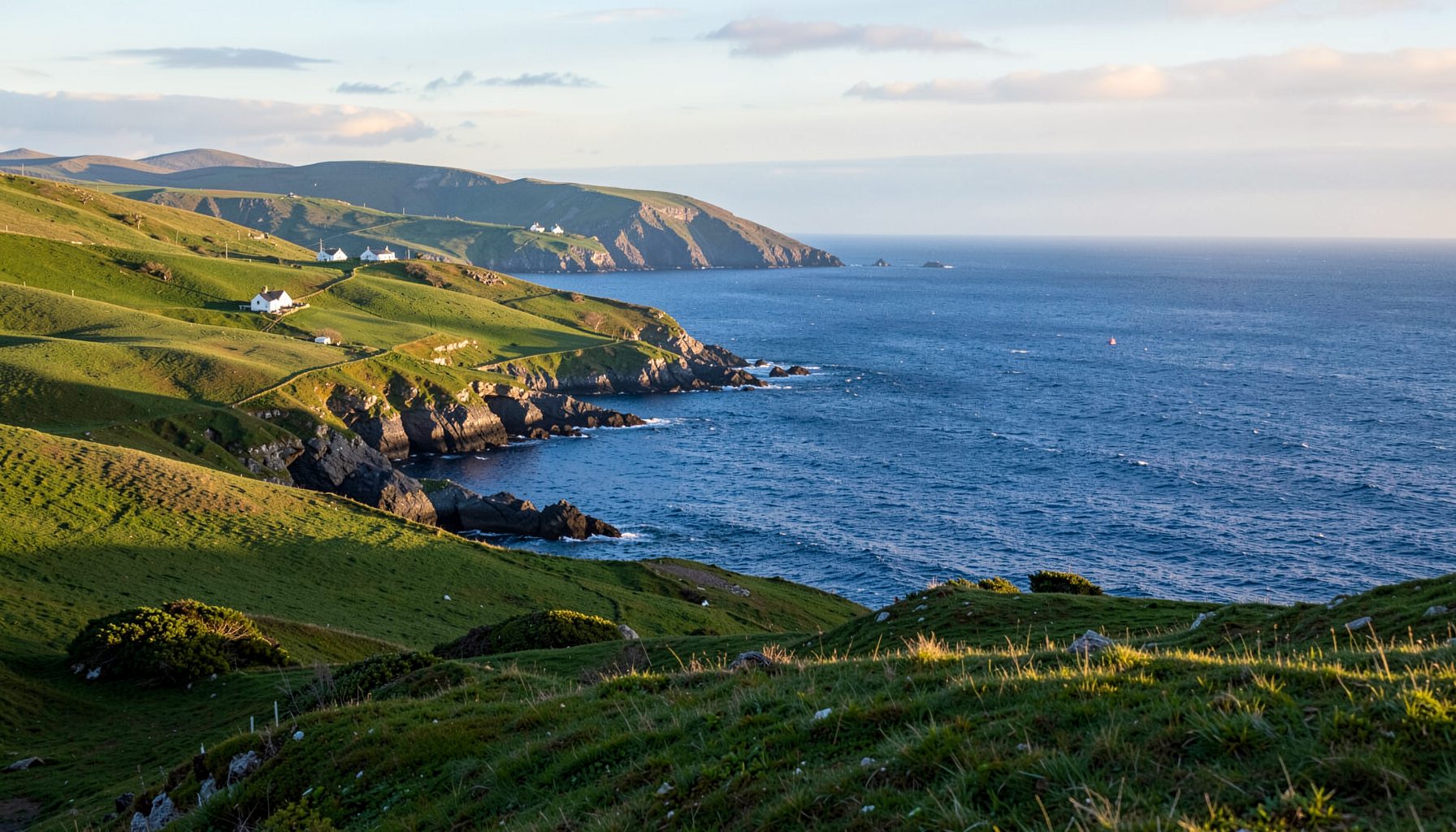
The peninsula’s scattered settlements made these networks especially important. Information passed between villages, market towns, ports and rural valleys. The landscape that later became associated with the Skelligs, pilgrimage, fishing and coastal travel was also a practical setting for movement and concealment. Even the management of shared coastal spaces has a long local history, reflected in discussions of coastal community care, though modern conservation concerns belong to a very different period.
Clergy As Mediators And Witnesses
The most immediate contribution of local clergy was often mediation. Families might seek a priest’s help when a relative had been arrested, when soldiers were billeted in a townland or when a neighbour faced accusations of treason. A minister might communicate with magistrates or military officers on behalf of parishioners. These interventions did not necessarily express political agreement; they reflected a responsibility to preserve life and reduce collective punishment.
Clergy also witnessed the human cost of repression. They encountered the injured, buried people killed in fighting and comforted families whose homes had been searched or destroyed. In an era when official records often described people as rebels, informers or loyalists, parish memory preserved more complicated identities. A man could have taken an oath, hidden from soldiers, protected a neighbour and still have feared the consequences of open revolt.
For historians, clerical records can therefore be valuable but difficult sources. Sermons, correspondence, parish registers, estate papers and government reports may reveal attitudes towards the rebellion, yet each source has its own purpose. A military report might exaggerate danger, while a later memoir might turn a cautious priest into a heroic rebel or a loyalist into a villain.
| Clerical role | Possible contribution during 1798 | Limits and risks |
|---|---|---|
| Parish priest | Pastoral care, mediation, warnings and support for families | Vulnerable to surveillance and accusations |
| Catholic chaplain | Access to prisoners and the injured; religious ministry | Could be suspected of carrying rebel messages |
| Church of Ireland minister | Loyalty preaching, local reporting and protection of parishioners | Association with landlords could reduce trust |
| Rural clergyman | Transmission of news between scattered communities | Dependent on rumour and imperfect information |
| Community mediator | Appeals against violence, searches or harsh punishment | Mediation could be interpreted as political allegiance |
Memory In The Iveragh Landscape
The memory of 1798 was carried through family stories, local names, graves and church traditions. In places such as Cahersiveen, Ballinskelligs and the wider coastal districts, remembrance was often connected to later struggles as well as to the rebellion itself. Stories could merge the United Irishmen with the 1803 rising, the Tithe War, the Young Ireland movement or the Land War.
This layering makes local interpretation essential. A ruined building or old burial ground may be associated with rebellion without providing clear evidence of a particular event. Oral history remains important, but it should be compared with estate correspondence, newspapers, parish registers, court records and government papers. The purpose is not to dismiss tradition, but to understand how memory changes as communities retell the past.
The clergy themselves became part of this memory. Some were remembered as protectors, others as informers or cautious figures who failed to act. Such judgements often reflect later political identities rather than the uncertainty of 1798. A priest deciding whether to shelter a fugitive had to consider the safety of an entire parish, while a minister supporting order might also have opposed unnecessary cruelty.
Reading The Evidence Carefully
A balanced account of local clergy must avoid two extremes: presenting priests as secret revolutionary commanders or treating them as passive observers. Their influence was real, but it was exercised through relationships, reputation and pastoral contact more often than through formal military leadership. The same action could be understood differently by different groups. Warning parishioners about soldiers might be compassion, concealment or both.
When researching the period, useful questions include:
- What was the clergyman’s denomination, parish position and relationship with local landlords?
- Does an account come from the time of the rebellion or from later family tradition?
- Is the source based on direct observation, hearsay or an official accusation?
- What happened to local families after arrests, searches or suspected involvement?
- Can parish records be compared with newspapers, military reports and estate papers?
These questions help place the Iveragh experience within the wider history of the 1798 rebellion. They also restore attention to people who rarely appear in national narratives: tenants, servants, fishermen, labourers, widows and children whose lives were shaped by decisions made in distant assemblies and local barracks.
The clergy were influential because they stood close to ordinary people at a moment when trust was fragile. Their actions could calm a district, spread a warning, reinforce loyalty or preserve a memory of injustice. On the Skellig Coast, the story of 1798 is therefore best understood through parish relationships and community experience as well as through battles and famous leaders.
Explore local church records, graveyards, estate archives and community histories to trace how the rebellion was remembered across the Iveragh Peninsula. By connecting national events with the villages and families that lived through them, regional research can give the clergy’s complicated role the careful attention it deserves.