Puffin Island’s Seabirds and How to See Them Responsibly
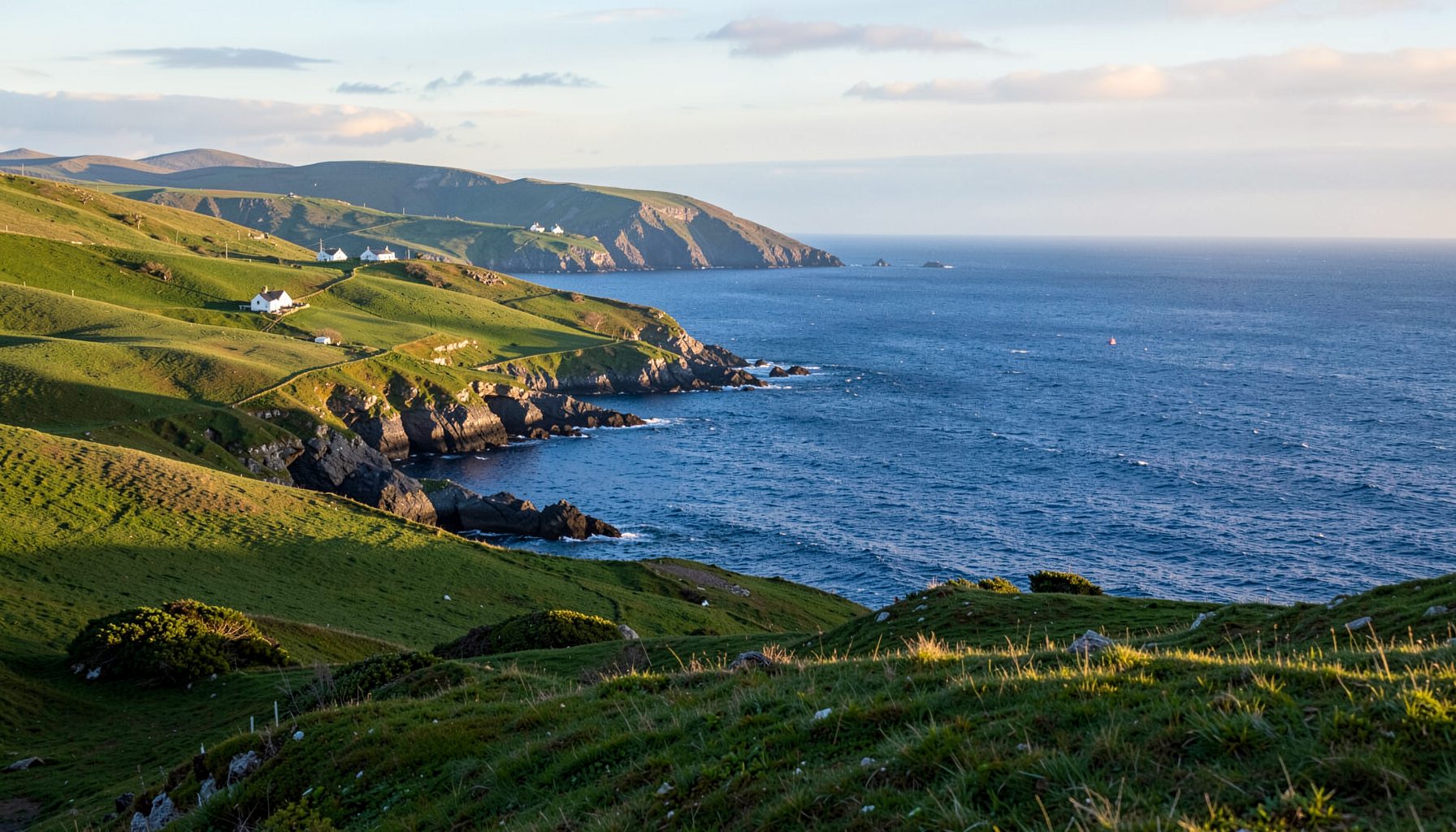
Off the coast of County Kerry, Puffin Island is one of the most memorable wildlife sites along the Skellig Coast. The uninhabited island lies near Valentia Island and the Portmagee Channel, within a coastal landscape shaped by cliffs, Atlantic swells and strong maritime weather. Its name reflects one of its most appealing seasonal visitors: the Atlantic puffin.
Puffins are only part of the story. During the breeding season, the island supports a lively seabird community that may include guillemots, razorbills, fulmars, kittiwakes, storm petrels, Manx shearwaters and other coastal species. The sight of birds moving between the sea and steep nesting ledges gives the island a character distinct from the larger Skellig islands nearby.
Seeing the colony is possible through suitable boat excursions and distant viewpoints, but Puffin Island is a protected wildlife site rather than an attraction designed for unrestricted access. The best experience combines realistic expectations, careful observation and respect for the birds’ breeding habitat.
Where Puffin Island lies
Puffin Island is situated off the northern side of Valentia Island, close to the waters linking the Iveragh Peninsula with the islands and headlands of the Skellig Coast. It is separate from Skellig Michael and Little Skellig, although the same boat journeys may pass through the wider island region. Clear weather can reveal a dramatic sweep of cliffs, sea stacks and distant mountains across the coast.
The island is uninhabited and has no visitor facilities, harbour or public trail. Its rugged shoreline and exposed cliffs make landing unsuitable for ordinary sightseeing. The value of the island lies in its role as a breeding site, with birds using cliff faces, grassy ledges, rock crevices and slopes that are difficult for people to reach.
Local sea conditions can change quickly. Wind, swell, fog and Atlantic rain may affect both visibility and whether a boat can approach the island safely. A trip that appears calm from the shore may encounter rougher water around the headlands and offshore islands.
The birds that gather there
Atlantic puffins usually return to their breeding colonies in spring after spending much of the winter at sea. On Puffin Island, the main viewing period generally runs from late spring through summer, with activity often strongest from May into July. Adults may be seen carrying small fish, flying low over the water or standing near burrows on the island’s upper slopes.
Puffins are compact seabirds with colourful bills, pale faces and rapid wingbeats. Their appearance changes through the year: the bright breeding plumage is most noticeable during the nesting season, while the bill and facial markings become less vivid after the birds leave the colonies. At sea, they can be surprisingly easy to miss because they sit low on the water and move quickly.
The wider colony is important because several seabird species share the island. Guillemots and razorbills may crowd narrow ledges, while fulmars glide close to the cliff face. Kittiwakes bring constant calls to the colony, and smaller species may remain hidden in crevices or visit after dark. A pair of binoculars helps reveal this activity without bringing a boat unnecessarily close.
When the colony is easiest to see
The most reliable time for puffin sightings is during the breeding season, especially from May to early August. In the first part of the season, adults are establishing nesting places and beginning to feed chicks. By midsummer, feeding flights can be frequent, although the exact pattern varies with sea conditions, food availability and the stage of the nesting cycle.
Morning and late afternoon can offer softer light and less glare on the water, but wildlife does not follow a fixed timetable. A calm day with good visibility is more important than choosing a particular hour. Overcast conditions can sometimes make the birds easier to distinguish against pale rock, while bright sunshine may produce stronger photographs but more reflective water.
Puffins are wild animals, not guaranteed performers. They may be offshore feeding, hidden in burrows or difficult to identify among larger groups of seabirds. A good wildlife trip treats the colony as a living habitat to observe rather than a sight that must be approached at close range.
| What to consider | Best approach | Why it matters |
|---|---|---|
| Season | Visit between late spring and early August | Puffins are generally present at the breeding colony during this period |
| Viewing method | Join a suitable local boat excursion or use distant mainland viewpoints | The island has no ordinary visitor facilities or public walking route |
| Equipment | Bring binoculars, a weatherproof layer and a camera with a moderate telephoto lens | Birds remain at a respectful distance and the weather can change quickly |
| Conditions | Check the marine forecast and follow the skipper’s decision | Wind, swell and fog can reduce safety and visibility |
| Behaviour | Stay quiet, avoid sudden movement and never feed wildlife | Disturbance can affect seabirds during nesting and feeding |
Ways to see Puffin Island
Boat trips are the most direct way to view the island. Excursions may depart from Portmagee, Valentia Island or other coastal locations, depending on the operator, tide and sea conditions. Routes differ: some focus on the Skellig Islands, while others include offshore wildlife viewing around the Iveragh coast. Before setting out, check that Puffin Island is part of the planned route rather than assuming every Skellig-related trip visits it.
The boat may circle at a careful distance or pause where passengers can look towards the cliffs. Responsible skippers understand how close they can approach without putting pressure on nesting birds, and they may reduce speed, cut the engine or change course when conditions require it. The crew’s instructions are part of the wildlife experience, not an interruption to it.
Land-based views may be possible from parts of Valentia Island, the Portmagee area or elevated coastal roads, depending on the exact location and visibility. These viewpoints are generally more distant, so binoculars are particularly useful. They also provide a calmer alternative for visitors who prefer not to travel offshore or who are exploring the community and heritage sites of the peninsula.
Preparing for a wildlife trip
Wear several light layers, waterproof outer clothing and secure footwear for getting on and off a boat. Even on a sunny day, the temperature at sea can feel much lower than on land. A hat with a chin strap, sunglasses and sun protection are practical additions, while a dry bag protects phones, binoculars and other equipment from spray.
Motion on the water can affect people who are not usually prone to seasickness. Eating lightly before departure, choosing a stable position on the vessel and following medical advice about seasickness remedies may make the journey more comfortable. Operators can explain what their boats provide, but passengers should expect an open Atlantic environment rather than a sheltered harbour cruise.
Bring binoculars instead of relying entirely on a phone camera. Puffins are small at viewing distance, and digital zoom often produces blurred images. A camera with a longer lens can record useful details without encouraging anyone to request a closer approach. Keep equipment ready before the boat reaches the colony, since sightings may last only a few minutes.
Protecting a sensitive seabird habitat
Breeding seabirds expend considerable energy defending nesting spaces, incubating eggs and carrying food to chicks. Loud noise, sudden boat movement and attempts to land can create unnecessary disturbance. Visitors should remain seated or in the position advised by the crew, keep voices low and avoid calling, whistling or playing music towards the cliffs.
Puffin Island should be viewed from the sea or an authorised distant location, not treated as an informal place to disembark. Regulations and access arrangements can change, and a local operator or wildlife authority can provide the current guidance. Never climb on rocks, approach nesting ledges or try to collect feathers, eggs or other natural material.
Responsible viewing also extends beyond the island. Keep litter with you, avoid disposable items that can blow overboard and do not feed gulls or any other wildlife. The coast is shared by residents, fishers, conservation workers and visitors, so courteous behaviour helps protect both the environment and the character of local communities.
Linking the island with the wider Skellig Coast
A visit to Puffin Island fits naturally into a broader exploration of the Iveragh Peninsula. Portmagee has strong connections with the offshore islands and the maritime history of the region, while Valentia Island offers geological, cultural and walking experiences on land. The coastline around Ballinskelligs, Waterville, Caherdaniel and Castlecove adds beaches, harbours, heritage sites and viewpoints to the same Atlantic story.
It is useful to distinguish the various islands before booking a trip. Skellig Michael is famous for its early monastic settlement and UNESCO World Heritage status, as well as its appearance in Star Wars films. Little Skellig is renowned for its gannet colony. Puffin Island is valued primarily as a seabird breeding site and is best appreciated through quiet, careful wildlife observation.
Local weather, conservation information and community notices can be more useful than a generic sightseeing schedule. Regional information hubs, visitor centres and qualified boat operators can help visitors understand departure points, seasonal access and current sea conditions while supporting the people who live and work along the coast.
Practical recommendations for seeing the birds
- Plan for the breeding season, with late spring to midsummer offering the strongest chance of seeing puffins.
- Confirm the exact route, departure point and wildlife-viewing arrangements with a local boat operator.
- Carry binoculars, waterproof clothing and a dry bag rather than relying on close-up photography.
- Follow all instructions from the skipper and keep a quiet, respectful distance from the cliffs.
- Use local information services to check weather, marine conditions and current conservation guidance.
Puffin Island rewards patience more than pursuit. A brief glimpse of a puffin skimming over the waves, a crowded ledge of guillemots or the sudden call of a kittiwake can become more memorable when the encounter has placed no pressure on the colony.
Use Skellig Coast’s regional information to connect a wildlife trip with the villages, heritage and outdoor experiences of the Iveragh Peninsula. By choosing responsible access and supporting local operators, visitors can experience the living Atlantic landscape while helping ensure that Puffin Island remains a secure breeding place for seabirds in the years ahead.