The Life Cycle of Grey Seals on the Skellig Coast Islands
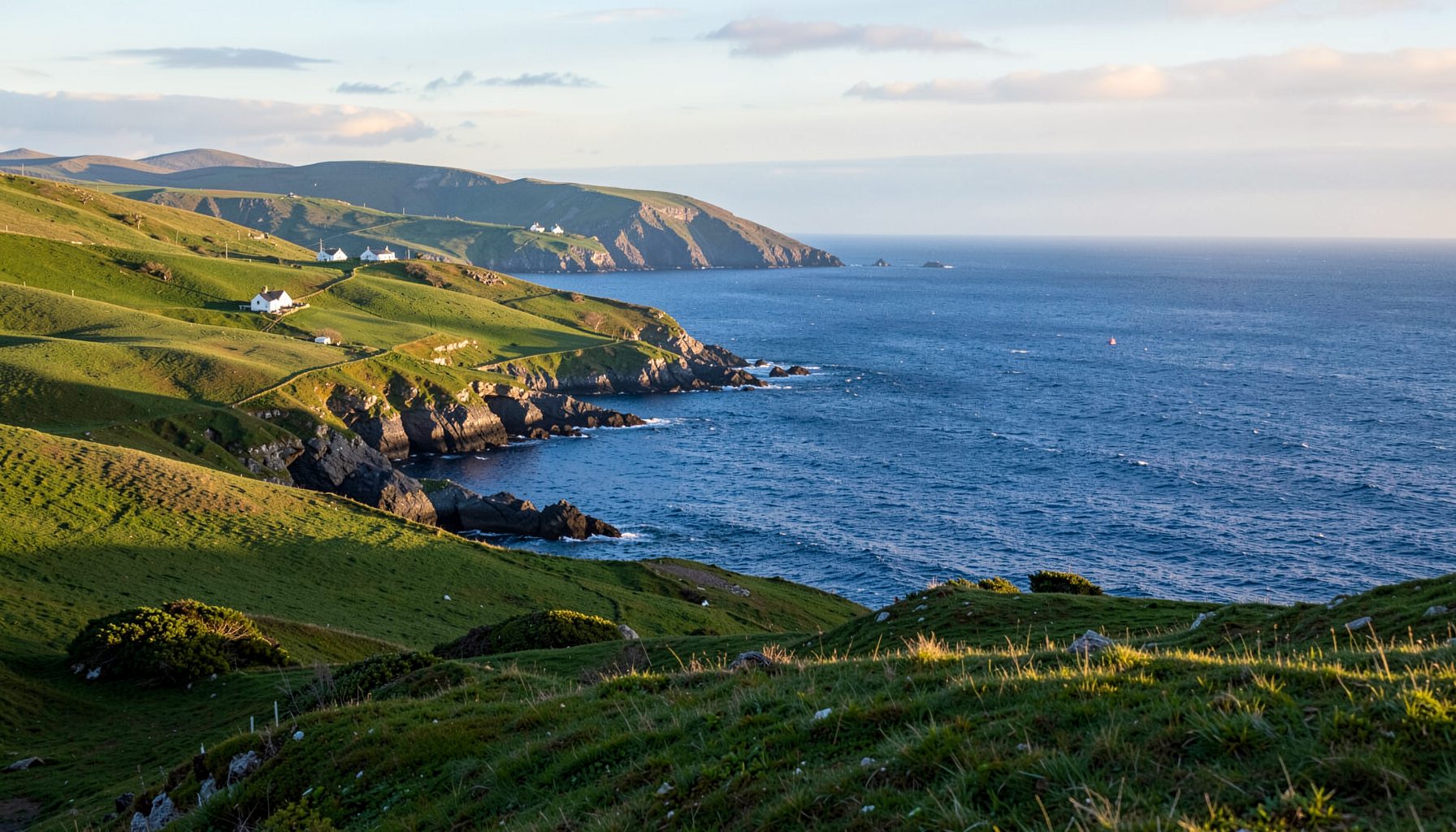
Grey seals are among the most recognisable marine mammals around Ireland’s south-western coast. Their broad heads, powerful bodies and expressive dark eyes can be seen in sheltered coves, on offshore rocks and along the rugged island shores of the Iveragh Peninsula. Around the Skellig Coast, their presence connects everyday coastal life with the wider Atlantic ecosystem.
The islands and reefs near Valentia, Portmagee, Ballinskelligs, Derrynane and Castlecove provide haul-out places where seals rest between feeding trips. These sites are valuable at different times of year, from the autumn breeding season through winter moulting and the busy months of spring and summer.
Understanding the seal life cycle helps residents and visitors recognise normal behaviour, keep a respectful distance and appreciate why quiet coastal habitats matter. A seal lying motionless on a rock may be resting, digesting food or caring for a young pup rather than being in distress.
Where grey seals live along the coast
The grey seal, Halichoerus grypus, is a native Atlantic species found around Ireland, Britain and the North Atlantic. It is Ireland’s larger seal species, with adult males sometimes reaching more than two metres in length and weighing several hundred kilograms. Females are generally smaller and have a more delicate, mottled coat.
Grey seals use a mixture of habitats. Rocky skerries, sea caves, beaches and low-lying islands can all serve as haul-out areas. The Skellig Coast is especially suitable because its exposed Atlantic islands are surrounded by productive waters, while cliffs and reefs offer places for seals to rest away from human activity.
They do not live permanently on land. Much of their time is spent at sea, where they hunt fish and other marine prey. Grey seals can travel considerable distances between feeding grounds and resting sites, following tides, seasonal food availability and the needs of their pups.
Around the Skelligs, a seal may be spotted from a boat, headland or coastal viewpoint. The best observations are usually brief and distant. Binoculars allow people to notice behaviour without encouraging the animals to enter the water or abandon a preferred resting place.
Courtship and the arrival of pups
The breeding season generally begins in autumn, although exact timing varies between colonies and individual animals. Mature males compete for access to females, using vocalisations, body displays and physical contests. A large male may defend a stretch of beach or shoreline, while females choose sheltered locations where they can give birth.
After mating, implantation is delayed for several months. This adaptation allows the pup to be born at a favourable time of year, even though the total period between mating and birth is close to a year. On Irish coasts, grey seal pups are commonly born from late September through December, with local variation.
A newborn grey seal has a thick, creamy-white coat known as lanugo. This soft fur provides insulation on land but is not suited to long periods in the water. The pup remains ashore while its mother provides rich milk, which allows it to gain weight rapidly.
The mother recognises her pup by smell and vocal sound. She stays close during the early nursing period, returning from short feeding trips or remaining near the pup on the shore. This is a sensitive stage, and disturbance from people, dogs, boats or drones can cause a female to move away before the pup is ready.
The vulnerable first weeks
Grey seal milk is exceptionally rich in fat. A pup can gain weight quickly during a nursing period that usually lasts around two to three weeks. The mother does not bring fish to the pup; instead, the pup depends entirely on her milk while developing strength and coordination.
When nursing ends, the female leaves. The pup must then live from stored body fat while its white birth coat is shed and replaced by a shorter, darker waterproof coat. This transition is known as weaning and moult. It is normal to see a young seal alone on a beach during this period.
A newly weaned pup may appear thin, sleepy or inactive. It may spend long hours lying on the shore before entering the sea. Once its adult-type coat has developed, it begins learning to swim and hunt. Young seals may remain in shallow water at first, gradually becoming more capable as they gain experience.
People should never push a seal into the water, feed it or attempt to return it to the sea. If a pup is alert, breathing normally and free from obvious injury, observation from a safe distance is usually the most appropriate response. Suspected emergencies should be reported to an authorised marine mammal rescue organisation rather than handled directly.
A year in the life of a grey seal
The annual cycle of grey seals is shaped by breeding, nursing, moulting, feeding and resting. These phases overlap because different animals within a population may be at different stages. A familiar rocky outcrop can therefore host adults, juveniles and pups at different points in the year.
| Period | Main activity | What observers may notice |
|---|---|---|
| Late winter to spring | Feeding, recovery and movement between haul-outs | Adults resting in groups and juveniles exploring shallow water |
| Spring to summer | Intensive foraging and raising strength in young seals | More seals at coastal rocks, with regular entries and exits from the sea |
| Late summer | Preparation for breeding and increased travel | Adults becoming more territorial and using traditional haul-out areas |
| Autumn to early winter | Courtship, births and nursing | White-coated pups, protective mothers and vocal males |
| Winter | Weaning, swimming development and moulting | Solitary young seals resting on beaches or rocks |
During the warmer months, grey seals may spend more time at sea because fish and other prey are widely available. They feed on species such as pollock, cod, herring and flatfish, along with squid and other marine animals. Their diet reflects what is available in local waters rather than a fixed menu.
After feeding, a seal needs time to rest and digest. Haul-outs are not optional conveniences; they are essential parts of the animal’s habitat. Repeated disturbance can reduce the time available for rest and may force seals to use less suitable locations.
Reading seal behaviour from a safe distance
A resting seal often lies with its head raised, eyes closed or body curved along a rock. It may yawn, scratch, roll slightly or lift a flipper to regulate temperature. These actions do not necessarily indicate illness. Seals can also appear clumsy on land because their bodies are adapted for swimming, not walking.
A healthy animal may enter the water quickly when approached, while another may remain still. A pup calling repeatedly, showing visible wounds, becoming entangled or being surrounded by flies may require professional advice. Even then, members of the public should avoid touching it or placing it in a box, boat or vehicle.
Responsible wildlife watching is particularly important during the breeding season. Boats should reduce speed near haul-out areas and maintain a wide distance. Visitors on shore should keep dogs under close control, avoid blocking access to the water and never gather around a seal for photographs.
The wider rhythm of coastal life can also help people learn about seasonal wildlife. Local talks, walks and nature-focused gatherings listed through coastal community events can provide opportunities to explore marine heritage without putting pressure on sensitive sites. Knowledge shared by residents, guides and conservation groups is often as valuable as what can be seen from a viewpoint.
Protecting the islands and their marine neighbours
Grey seals depend on clean water, healthy fish populations and undisturbed resting places. Marine litter presents a direct risk, particularly abandoned fishing line, rope and plastic materials that can wrap around a seal’s neck or flippers. Removing litter safely through organised coastal clean-ups can make a practical difference, provided wildlife areas are approached carefully.
Noise and boat traffic can also alter seal behaviour. Repeated close approaches may cause animals to leave a haul-out, while fast-moving vessels can increase the risk of collision. Seasonal awareness is essential around breeding beaches, where a frightened mother may enter the water and leave a young pup exposed.
Climate change adds longer-term pressure through changing sea temperatures, shifting fish distributions and increasingly severe weather. Coastal development and visitor pressure can reduce the number of quiet places available for resting and breeding. Protecting grey seals therefore involves caring for the whole marine landscape rather than focusing only on individual animals.
Useful habits for visitors and residents include:
- Watch from a distance with binoculars instead of approaching for a close photograph.
- Keep dogs leashed and away from beaches or rocks occupied by seals.
- Never feed, touch, chase or move a seal, even if it appears curious or alone.
- Report entanglement, serious injury or a distressed pup to a recognised wildlife rescue service.
- Take fishing line, food packaging and other waste home or place it in a suitable disposal point.
A living part of Skellig Coast heritage
Grey seals are part of the natural history that surrounds the Skellig Coast’s archaeological sites, fishing traditions and island communities. They have shared these waters with people for generations, and their movements remain connected to tides, weather and the abundance of the Atlantic. Watching them can bring a sense of continuity to a coastline where human and natural stories are closely intertwined.
The most rewarding encounter is often a quiet one: a distant seal surfacing beyond a reef, a group resting on an offshore ledge or a newly moulted juvenile testing the water. Such moments do not require closer access. Patience gives the animals space while allowing observers to see behaviour in a more natural form.
The seal season also encourages a broader understanding of place. The same shore may be a breeding ground in autumn, a resting site in winter and a feeding route in summer. Local knowledge, careful observation and respect for protected habitats help ensure that these patterns continue.
Learn about the coastline, attend community nature events and share responsible wildlife guidance with others visiting the islands. By giving grey seals room to breed, rest and feed, everyone can help preserve one of the Skellig Coast’s most compelling living treasures.