The Economic Legacy Of The Bonanza Gold Shipwreck
Along the rugged coast of County Kerry, shipwreck stories belong to both the landscape and the local economy. They are told beside harbours, in community halls, through family histories and during walks along cliffs where weather, currents and navigation once determined whether a vessel reached safety. The Bonanza Gold Shipwreck has become part of that coastal heritage, linking maritime history with questions about tourism, conservation and local identity.
The wreck’s appeal comes from the combination of danger, mystery and economic possibility. A vessel associated with gold naturally attracts attention, yet its importance for the Skellig Coast is broader than any rumoured cargo. The story provides a way to interpret the working coast, the risks faced by sailors and the communities that responded to shipwrecks through rescue, salvage, trade and remembrance.
Its economic impact should therefore be understood in two periods. The original wreck may have affected nearby communities through emergency activity and salvage, while the modern story creates value through heritage tourism, education, local research and cultural programming. These benefits are real, but they depend on accurate interpretation and responsible protection of the maritime environment.
A Maritime Story Shaped By Place
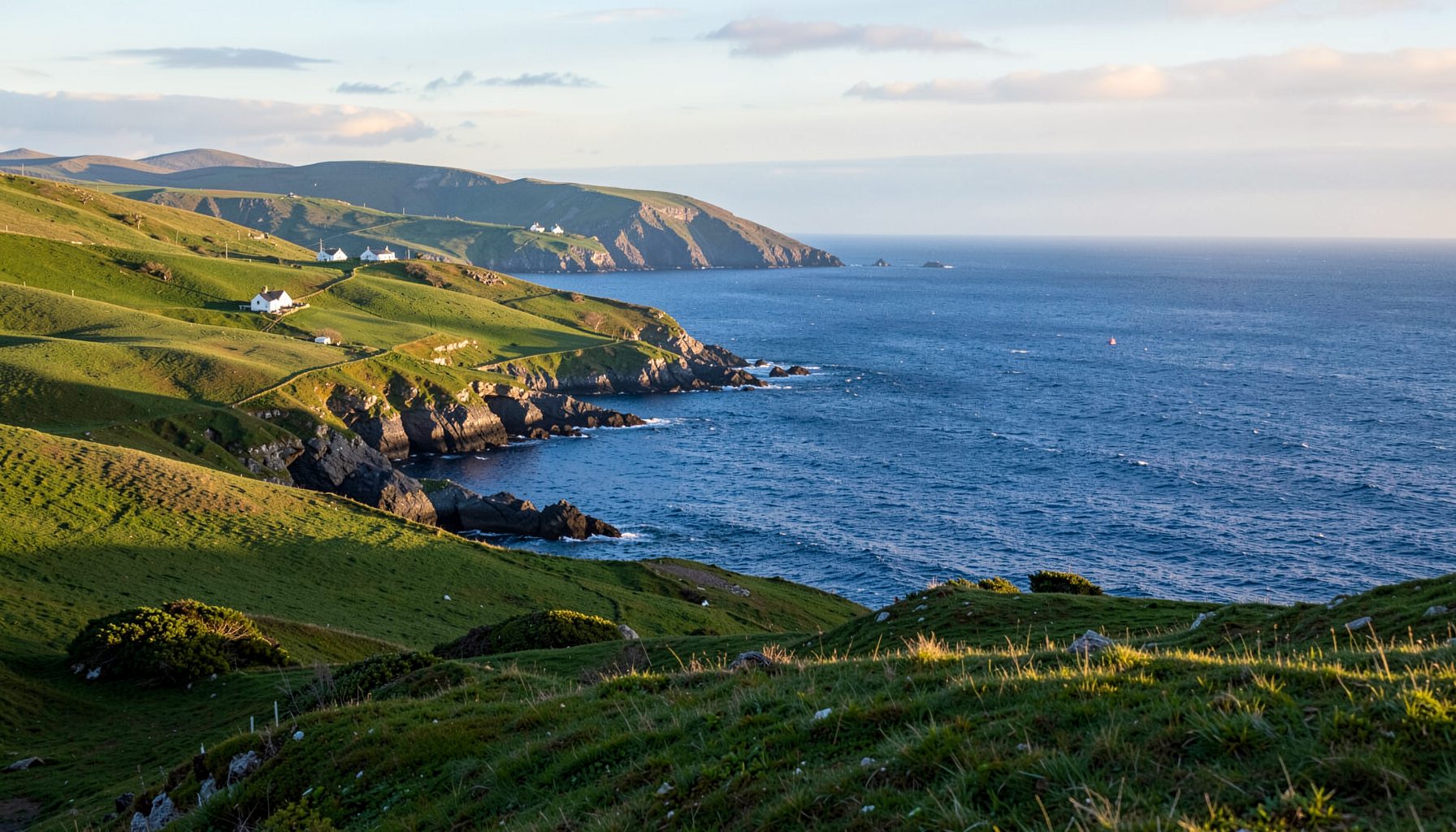
The Skellig Coast is a demanding maritime setting. The coastline between Kells, Waterville, Portmagee, Ballinskelligs and Castlecove includes exposed headlands, reefs, strong Atlantic weather and difficult approaches. For generations, local knowledge of tides, coves and prevailing winds was essential to fishing, transport and rescue.
A wreck in such waters was never an isolated event. It could bring local boats into action, draw people towards the shore and create urgent work for those involved in rescue or recovery. It could also place pressure on families and harbour communities, particularly when poor weather, injury or loss of life accompanied the incident.
The Bonanza story gains meaning from this setting. It can be presented as part of a wider history of maritime traffic around the Iveragh Peninsula rather than as a disconnected treasure tale. That approach gives visitors a better understanding of why the coast developed the customs, skills and stories that still influence local communities.
From Shipwreck Event To Local Economic Activity
In the immediate aftermath of a wreck, economic effects could be practical and short-lived. Boats might be hired, equipment supplied and workers called upon to assist with rescue, recovery or the handling of goods. Local inns, food providers, blacksmiths, boat builders and transport operators could also experience increased activity.
Salvage was governed by changing legal and maritime rules, so it would be misleading to assume that nearby residents simply gained ownership of anything recovered. The value of cargo, the authority of officials and the rights of owners or insurers all mattered. A careful account should distinguish between documented salvage, local oral tradition and later speculation about gold.
The longer economic effect is easier to see today. A compelling shipwreck narrative can encourage visitors to spend time in a village rather than passing through on a scenic drive. Heritage interpretation supports cafés, shops, guides, museums, transport providers and event organisers when the story is connected to the wider character of the coast.
That spending is usually distributed across many small businesses. A visitor who comes for maritime history may also attend a local exhibition, walk a coastal route, visit a cultural centre or explore nearby archaeological sites. The shipwreck becomes one part of a regional offer, helping extend visits and strengthen the connection between tourism and community life.
Measuring The Value Of Heritage Tourism
The economic value of the Bonanza story is not limited to ticket sales. It includes the employment created by research, guiding, conservation, publishing, interpretation and event management. It also includes the reputational value of being associated with a distinctive maritime landscape.
| Area of impact | How value may be created locally | Conditions for lasting benefit |
|---|---|---|
| Visitor spending | Food, transport, retail, guiding and cultural attractions | Clear interpretation and links between sites |
| Employment | Research, conservation, events, education and tourism services | Skills development and regular programming |
| Community identity | Oral history, archives, exhibitions and local storytelling | Participation by residents and families |
| Education | School visits, talks, mapping and maritime studies | Reliable sources and accessible materials |
| Place promotion | Greater recognition of villages and coastal heritage | Promotion that avoids exaggeration or overcrowding |
| Conservation | Funding and attention for maritime sites and archives | Respect for law, archaeology and the marine environment |
Small-scale heritage attractions rarely transform a regional economy on their own. Their contribution is cumulative. Several modest experiences can encourage longer stays, support seasonal employment and create reasons to return outside the busiest summer weeks.
This is particularly relevant on the Skellig Coast, where community groups and local enterprises often work with limited resources. A well-researched shipwreck display, guided talk or digital archive can add depth to the visitor experience without requiring a large new attraction. It can also give local residents a stronger role in presenting their own history.
The Role Of Storytelling And Community Knowledge
Shipwreck heritage is strongest when local people are treated as custodians and contributors rather than as background to a commercial product. Family accounts, place names, photographs, newspaper reports and harbour memories can reveal how a wreck was understood by people who lived nearby.
The people of the Skellig Coast offer an essential context for this kind of history. Their work, movement and knowledge help explain how maritime incidents affected communities over time. A gold shipwreck story becomes more meaningful when connected to fishermen, boat crews, shopkeepers, teachers, rescuers and families who shaped the coast’s social life.
Oral history should be recorded with care. Memories may change across generations, and stories can gather details as they are retold. That does not make them unimportant, but it does mean that interpretation should identify what is supported by documents and what belongs to folklore or community tradition.
Local involvement also helps keep economic benefits in the area. Talks by residents, craft demonstrations, guided walks and community exhibitions can create paid opportunities while preserving a sense of ownership. Visitors are more likely to value a place when its history is presented as lived experience rather than as a staged treasure hunt.
Protecting The Wreck And The Coast
The promise of gold can encourage irresponsible behaviour. Unauthorised diving, removal of artefacts or disturbance of the seabed can damage archaeological evidence and weaken the story that attracts visitors in the first place. Shipwreck material may also be protected under national heritage and maritime law, making casual salvage both harmful and potentially unlawful.
A sustainable approach keeps the wreck site safe while making its history accessible. This might involve archival research, underwater surveys by qualified specialists, non-invasive mapping, replica objects, photography and carefully designed interpretation on land. Visitors do not need to handle original material to understand the significance of a wreck.
Environmental protection is equally important. Coastal heritage tourism should not add pressure to nesting birds, dunes, cliffs, marine habitats or already crowded access points. Signage, timed activities and local guidance can help direct visitors to suitable places while protecting fragile sites.
Responsible presentation also avoids promising treasure that may not exist or cannot be verified. Accuracy builds trust. It allows the Bonanza narrative to support the local economy through education and cultural interest, rather than through sensational claims that could disappoint visitors or encourage damaging searches.
Turning Maritime Heritage Into Shared Opportunity
The strongest economic model is collaborative. Local authorities, historical societies, schools, tourism organisations, researchers, boat operators and businesses can each contribute something different. One group may hold records, another may provide a venue, while another can connect the story with walking routes or coastal activities.
Useful projects could include a travelling exhibition, a digital map of maritime sites, recorded interviews with residents, school learning resources and seasonal talks in nearby villages. A coordinated calendar would help visitors discover several experiences instead of concentrating all attention on a single location.
The story can also complement major attractions such as Skellig Michael without competing with them. Visitors who come for the UNESCO World Heritage Site may be encouraged to explore the wider peninsula’s communities, landscapes and historical connections. This spreads spending and gives smaller settlements a stronger place within the regional tourism economy.
Recommendations for developing the story responsibly include:
- Verify dates, cargo details and wreck location through maritime archives and qualified research.
- Record oral histories with permission and clearly separate memory, folklore and documentary evidence.
- Create interpretation that links the wreck to local work, rescue traditions and coastal geography.
- Use replicas, mapping and digital media instead of encouraging access to fragile underwater remains.
- Measure benefits through local participation, visitor spending and off-season activity.
A heritage project succeeds when it leaves knowledge, skills and confidence in the community. The Bonanza tale can support that outcome if its economic role is treated as a long-term cultural investment rather than a quick opportunity to market hidden treasure.
Explore the maritime history of the Skellig Coast through local stories, community-led interpretation and responsible visits. Support the people and organisations who preserve this heritage, share accurate accounts of the Bonanza wreck, and make the wider Iveragh Peninsula part of the experience.