Women of the Shore: Ballinskelligs’ Fishing Heritage
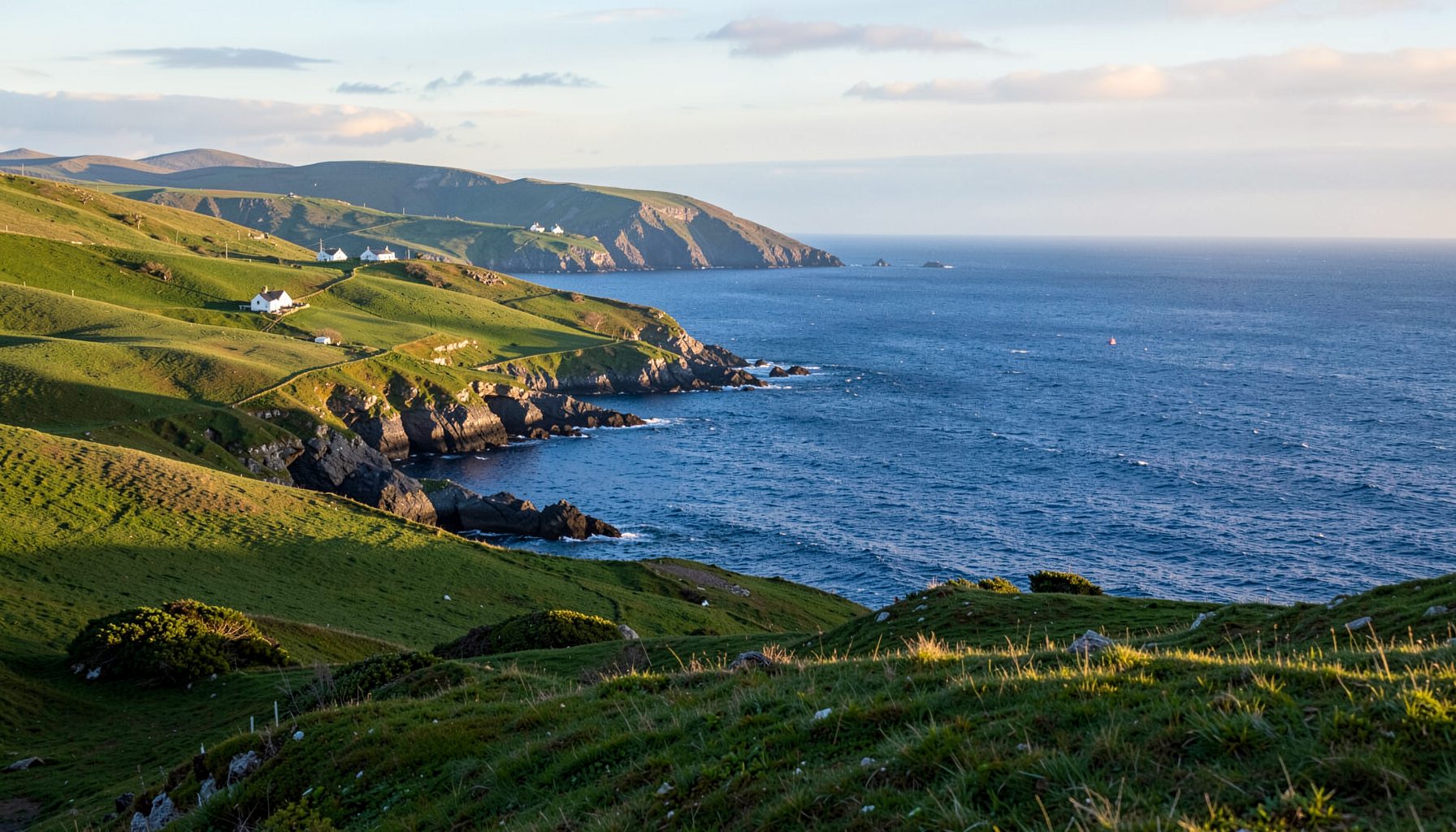
Ballinskelligs is often associated with its medieval abbey, broad Atlantic beach, and view towards the Skellig Islands. Yet the history of the coast is also held in quieter stories: women sorting catches, gathering shellfish, preserving food, carrying produce to market, and keeping households working when men were at sea.
The phrase “fisherwomen” can suggest women who regularly took boats out to fish. In Ballinskelligs, as in many coastal communities in southwest Ireland, women’s maritime work was usually broader. It included shore fishing, collecting seaweed and shellfish, preparing nets, managing fish, and sustaining the family economy connected to the sea.
Much of this history survives through oral tradition, local memories, parish records, photographs, maps, and the names of places along the shore. It is a story of labour that was essential to the community, even when it was rarely recorded in the same way as the voyages of male fishermen.
A Bay Shaped By Small-Scale Fishing
Ballinskelligs Bay provided a varied coastal environment. Beaches, rocky shores, small coves, tidal inlets, and nearby islands offered opportunities for different forms of fishing and gathering. Families adapted their work to the season, the weather, the tide, and the availability of local resources.
Small boats were used for inshore fishing, while shore-based activities were equally important. Women and children could gather limpets, mussels, periwinkles, and other shoreline foods when conditions allowed. Such work was not always carried out for commercial sale. It could provide valuable food for the household at a time when cash was limited.
The Atlantic coast was unpredictable. Storms could keep boats on land, damage gear, or reduce the amount of fish brought home. A household’s security therefore depended on several kinds of work rather than one occupation. Women’s knowledge of tides, weather signs, safe landing places, and the handling of food helped families respond to these uncertainties.
The Work Behind The Catch
Bringing fish ashore was only the beginning of the process. Fish had to be cleaned, divided, stored, and sometimes salted or dried. Women’s labour made it possible for the catch to feed a household over time or to travel beyond the immediate village. Where fish was sold, preparation affected its value and its condition in the market.
Women also helped maintain the equipment associated with fishing. Nets needed mending, lines required attention, and clothing had to be repaired after exposure to salt water and rough weather. These tasks were often carried out alongside childcare, cooking, care of livestock, and work in small fields.
The shore economy also included seaweed. Gathered seaweed could be used as fertiliser, fuel, or in local industries at different periods. Collecting it demanded a close understanding of tides and access points. Although this work may not appear in a narrow account of fishing, it belonged to the same coastal economy and often relied on women’s labour.
Shellfish, Shore Gathering, And Household Survival
Shore gathering was practical, skilled work. A person needed to know where shellfish could be found, when the tide exposed particular rocks, and how weather affected access. Knowledge was passed between generations through observation and participation rather than formal instruction.
For families living close to the Atlantic, this food source could make a real difference. Shellfish and shore-collected foods added variety to the diet and could reduce the need to buy provisions. In some cases, they could also be exchanged or sold locally. The scale of this trade was often modest, but its contribution to household survival was significant.
Women’s relationship with the shore was therefore economic and cultural. A beach or rocky strand was not simply a scenic setting. It was a workplace, a pantry, a route, and a place where children learned the habits of the coast. These everyday connections help explain why local coastal history cannot be measured only through boats, landings, or commercial records.
A Maritime Economy Built On Women’s Labour
The work associated with fishing can be understood across several stages. The following summary reflects patterns found in coastal communities around the Iveragh Peninsula, while recognising that individual families in Ballinskelligs had different experiences.
| Area of work | Typical activities | Contribution to coastal life |
|---|---|---|
| Shore gathering | Collecting shellfish, seaweed, and shoreline foods | Added food, fertiliser, fuel, or small income |
| Fish preparation | Cleaning, salting, drying, storing, and dividing catches | Extended the life and value of fish |
| Gear and clothing | Mending nets, repairing garments, preparing baskets and containers | Kept fishing households equipped for work |
| Local exchange | Selling or swapping fish, shellfish, eggs, produce, or preserved food | Connected households with neighbours and markets |
| Household management | Budgeting, childcare, cooking, farming, and caring for animals | Supported families during poor catches or bad weather |
| Cultural knowledge | Teaching tides, places, seasons, and weather signs | Preserved practical knowledge across generations |
This work was frequently unpaid or treated as part of domestic duty. That does not make it less skilled. The ability to preserve food, organise resources, and make decisions around tides and weather required experience. Women’s work often linked the sea with the farm, the kitchen, the market, and the wider community.
The Influence Of Migration And Change
Ballinskelligs, like many rural parts of Kerry, experienced migration and economic change. Family members left for work elsewhere, young people moved to towns, and new forms of employment gradually altered the traditional coastal economy. The arrival of improved roads, commercial food networks, modern boats, and changing fishing regulations also affected how households used the shore.
As these changes took place, some activities became less common or disappeared from daily life. Preserving large quantities of fish at home was less necessary when shops could supply food. Shore gathering continued in places, but it was increasingly influenced by conservation rules, safety concerns, and changing patterns of land and coastal access.
The decline of an activity does not mean the loss of its cultural value. Older residents may remember particular women for their knowledge of a beach, their skill in preparing food, or their ability to keep a family going through difficult years. Such memories provide a different kind of historical record, one centred on competence, endurance, and community relationships.
Recovering Women’s Voices
Researching local fisherwomen presents a challenge because official records often describe property, trade, boats, or male household heads more clearly than they describe women’s daily work. A woman may appear in a census, baptismal register, newspaper notice, or family photograph without any explanation of her role in the coastal economy.
Oral history is especially important. Conversations with older residents can reveal the names of beaches, fishing places, seasonal practices, family connections, and local expressions that do not appear in formal archives. Memories should be treated carefully and compared with other evidence, but they can point researchers towards overlooked stories.
Community groups, schools, historical societies, libraries, and local heritage projects can all contribute. Old photographs should be dated where possible, and the people shown should be identified with the agreement of families. Even a short caption can preserve valuable information: who gathered shellfish, who sold fish, who repaired nets, or which landing place was used by a particular generation.
Remembering The Women Of Ballinskelligs
A fuller account of Ballinskelligs’ fishing history places women at the centre of the story rather than at its edges. Their work connected marine resources with household survival and connected individual families with the wider life of the parish. It also demonstrates that maritime heritage includes much more than dramatic voyages or visible boats.
The history of local fisherwomen belongs alongside the story of the Ballinskelligs Abbey ruins, the Skelligs, traditional farming, emigration, and the changing communities of the Iveragh Peninsula. Each strand adds context to the others. The coast was shaped by people who lived with it every day, including those whose work took place on the shore or inside the home.
Visitors and residents can help keep this heritage alive by paying attention to local names and memories, supporting community archives, and treating oral history as a valuable source. A photograph, recipe, fishing term, or remembered tide mark may preserve part of a past that would otherwise remain invisible.
- Record the names and stories of older local residents with care and permission.
- Add dates, locations, and family information to photographs and community archives.
- Explore Ballinskelligs’ shore, heritage sites, and coastal landscape respectfully.
- Share memories of fishing, shellfish gathering, seaweed work, and food preservation with local history groups.
- Include women’s labour whenever coastal heritage is taught, displayed, or written about.
The story of Ballinskelligs’ fisherwomen is still being assembled from memories, landscapes, records, and family knowledge. If you have a photograph, story, place-name, or recollection connected with the women of the shore, consider sharing it with a local heritage or community initiative so that this important part of the Skellig Coast’s history can continue to be remembered.