The history of the Knight of Kerry and his influence
The Knight of Kerry is one of Ireland’s most distinctive hereditary titles. It belongs to the FitzGerald family, a powerful Anglo-Norman dynasty whose history became deeply connected with the Iveragh Peninsula, Kenmare, and the wider landscape of County Kerry.
The title is often grouped with Ireland’s other hereditary knighthoods: the Knight of Glin and the White Knight. These titles were not peerages in the formal sense. They represented lineage, landholding, military service, and social authority within a changing Irish society.
For communities along the Skellig Coast, the story matters because it links local places to wider events: the expansion of the FitzGerald earls, religious foundations, conflict between Gaelic and English powers, the plantation of Munster, and the transformation of landed society after the seventeenth century.
A title rooted in the FitzGerald dynasty
The FitzGeralds descended from Gerald of Windsor, an Anglo-Norman lord whose family became prominent in Ireland after the arrival of Strongbow and other Norman forces in the twelfth century. Over time, different branches of the family established themselves across Munster, including Desmond, Kerry, Limerick, and Cork.
The Knight of Kerry emerged from this wider FitzGerald network during the medieval period. The exact details of the title’s creation are difficult to separate from family tradition, but it is generally associated with the fourteenth-century FitzGerald presence in south-west Ireland. The hereditary knight served as a lesser but influential member of the dynasty, connected by kinship to more powerful lords such as the Earls of Desmond.
The title was sometimes known by the traditional nickname “the Green Knight.” Alongside the Black Knight of Glin and the White Knight, the three titles demonstrate how medieval noble families used hereditary offices and honourifics to preserve status across generations.
The FitzGerald presence in Kerry
The FitzGeralds did not rule every part of Kerry directly, and their influence existed alongside Gaelic lordships, including the O’Sullivans and MacCarthys. The political map was fluid. Alliances, marriages, fortified homes, religious patronage, and armed conflict all shaped the balance of power.
The Knight of Kerry became associated with estates around Templenoe and Kenmare. Templenoe House, near the head of Kenmare Bay, is particularly important in understanding the family’s local identity. The estate connected the hereditary title with a physical landscape of woods, fields, roads, waterways, and settlements.
Landownership gave the knight influence beyond ceremonial recognition. A substantial landholder could affect employment, rents, local administration, agricultural development, and relations between estate tenants and neighbouring families. This influence was practical and sometimes personal, extending into the everyday life of rural communities.
Religion, conflict, and changing loyalties
Medieval and early modern Kerry was shaped by religious institutions as well as castles and estates. The FitzGeralds supported churches and religious foundations in different periods, while local monasteries and parish sites provided lasting evidence of the region’s cultural landscape. The ruins, graveyards, and church sites around the Iveragh Peninsula reflect several centuries of interaction between Gaelic and Anglo-Norman traditions.
The family’s political position became more complicated during the Desmond Rebellions of the sixteenth century. The Earls of Desmond challenged the authority of the English Crown, and the conflicts devastated large areas of Munster. Members of the wider FitzGerald family did not always act in identical ways, so the history of the Knight of Kerry should not be reduced to a single political allegiance.
The Tudor reconquest, the Nine Years’ War, the Confederate period, and the Williamite conflict all weakened the old Gaelic and Old English order. Land changed hands, religious divisions sharpened, and many traditional families lost property or political authority. The hereditary knightly title survived, but its meaning gradually shifted from military service to social distinction and estate leadership.
A timeline of the title and region
The history of the Knight of Kerry makes most sense when placed beside the major developments that affected the Iveragh Peninsula and Munster.
| Period | Development | Importance for the Knight of Kerry |
|---|---|---|
| Twelfth century | Anglo-Norman families establish power in Ireland | The FitzGerald dynasty begins its rise |
| Fourteenth century | Hereditary FitzGerald knighthoods take shape | The Knight of Kerry becomes associated with a recognised family line |
| Sixteenth century | Tudor campaigns and the Desmond Rebellions transform Munster | Land, allegiance, and authority become increasingly contested |
| Seventeenth century | Confederate and Williamite wars reshape property ownership | Traditional noble influence is reduced and reorganised |
| Eighteenth century | Estate society becomes more formal and commercial | The title carries social standing more than independent military power |
| Nineteenth century | Land reform, famine, emigration, and political change affect Kerry | The relationship between landlords and local communities comes under pressure |
| Twentieth and twenty-first centuries | Hereditary titles become primarily cultural and historical | The Knight of Kerry is remembered as part of regional heritage |
This timeline also shows why the title cannot be understood as a continuous form of political control. The authority attached to a medieval knight, an eighteenth-century landlord, and a modern hereditary title was not the same. Each period gave the name a different public meaning.
Estate life and local influence
By the eighteenth and nineteenth centuries, the Knight of Kerry was part of the Protestant landed class that shaped estate life in south-west Ireland. Estate owners could support roads, schools, churches, and improvements to agricultural land, although these relationships were influenced by rent levels, evictions, poor harvests, and wider political tensions.
The landlord system brought order and investment in some settings, while placing tenants in a dependent and vulnerable position. During the Great Famine, the experiences of rural families exposed the serious imbalance between estate owners and those who worked the land. The history of the Knight of Kerry therefore belongs within the broader story of landlordism, tenant rights, emigration, and land reform.
The title’s influence was also social. A hereditary knight could act as a local patron, host visitors, support civic initiatives, and represent continuity for a particular district. Such influence should be viewed alongside the agency of tenants, clergy, merchants, teachers, and community leaders, whose work also shaped Kerry’s identity.
Memory, heritage, and the Skellig Coast
Today, the Knight of Kerry is best understood as a heritage figure rather than a political officeholder. The title provides a way to explore how families, estates, and local communities were connected to national events. It also encourages visitors and residents to look beyond famous monuments and consider the people who lived around them.
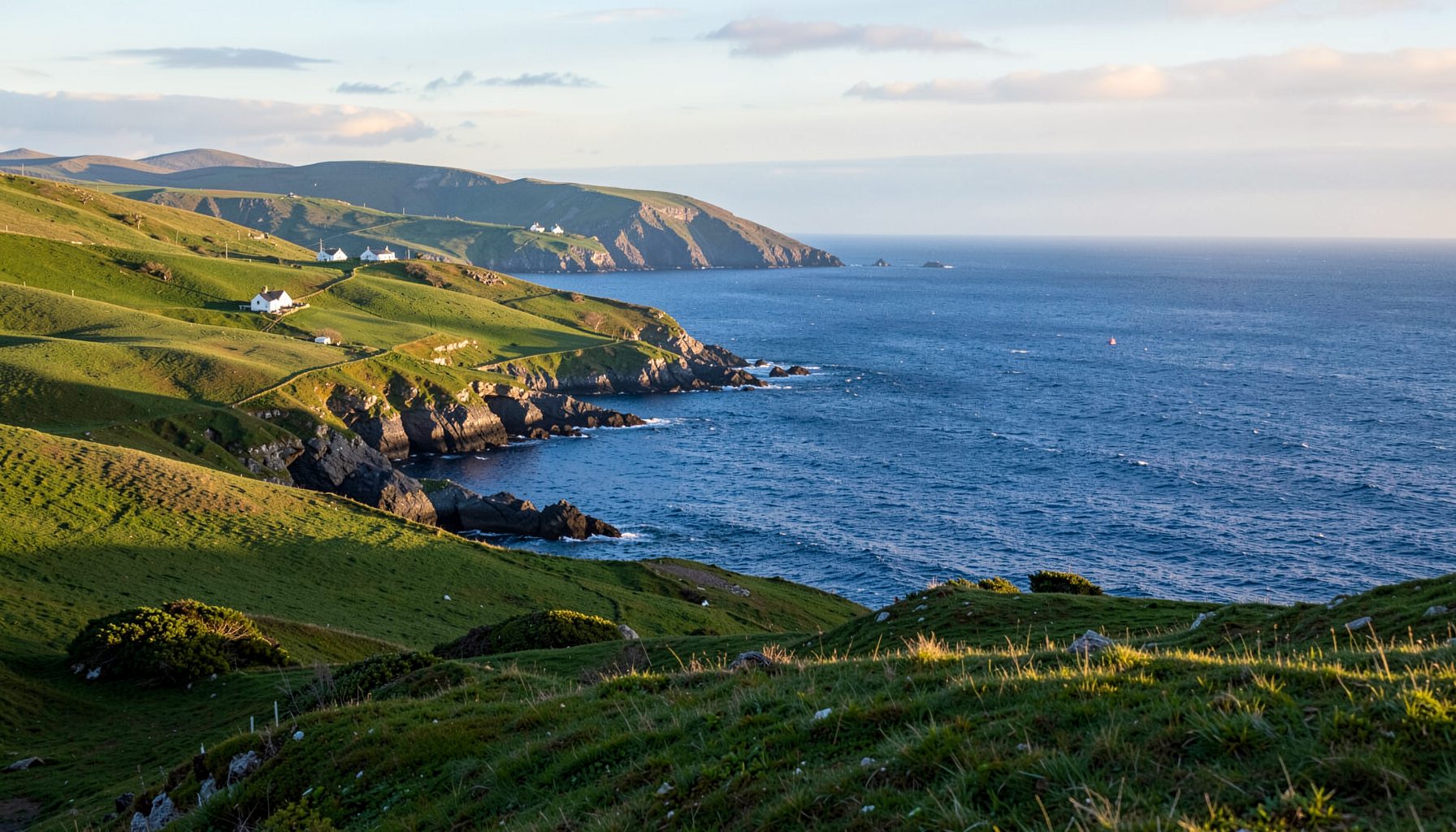
The landscape near Kenmare, Templenoe, Sneem, Castlecove, and the wider Iveragh Peninsula contains layers of history. Stone churches, old estate walls, graveyards, townland names, roads, and surviving houses can reveal changing patterns of settlement. These places should be interpreted carefully, since no single family represents the whole history of the region.
The Skellig Coast’s heritage is especially rich because medieval, Gaelic, early modern, maritime, and modern stories overlap. The nearby Skellig Islands and Skellig Michael belong to a much older monastic tradition, while the history of the Knight of Kerry belongs to the later aristocratic and estate landscape. Bringing these stories together creates a fuller picture of the region without treating them as interchangeable.
Ways to explore the story locally
A thoughtful visit can connect the title’s family history with the wider communities that lived alongside it. Local archives, graveyards, churches, estate landscapes, museums, and oral-history projects may each preserve a different part of the record. Family papers and official histories can provide valuable evidence, but local memory often adds details about work, migration, and community life that formal records overlook.
When exploring the subject, keep the following approaches in mind:
- Visit Templenoe and the Kenmare area with attention to landscape, townland names, and surviving estate features.
- Compare the FitzGerald story with the histories of Gaelic families such as the O’Sullivans and MacCarthys.
- Use local heritage centres, libraries, archives, and community historians to check family traditions against documentary evidence.
- Place the title within the wider history of the Desmond Rebellions, the Great Famine, land reform, and emigration.
- Treat castles, houses, churches, and graveyards as shared community heritage rather than evidence of one family’s story alone.
These approaches help explain the title’s influence without presenting the past as a simple sequence of noble achievements. The history of Kerry was made by landowners and tenants, clergy and fishermen, merchants and farmers, emigrants and returning families.
The Knight of Kerry remains a valuable doorway into that complex past. Its story reaches from medieval FitzGerald expansion to the social changes that transformed rural Ireland, while its strongest local associations remain tied to the landscapes around Kenmare and the Iveragh Peninsula.
Explore the Skellig Coast through its buildings, place names, community histories, and archaeological remains. Each site adds another perspective to the story of Kerry, helping preserve a regional heritage that belongs to residents, researchers, and visitors alike.