The Heritage of Derrynane National Historic Park
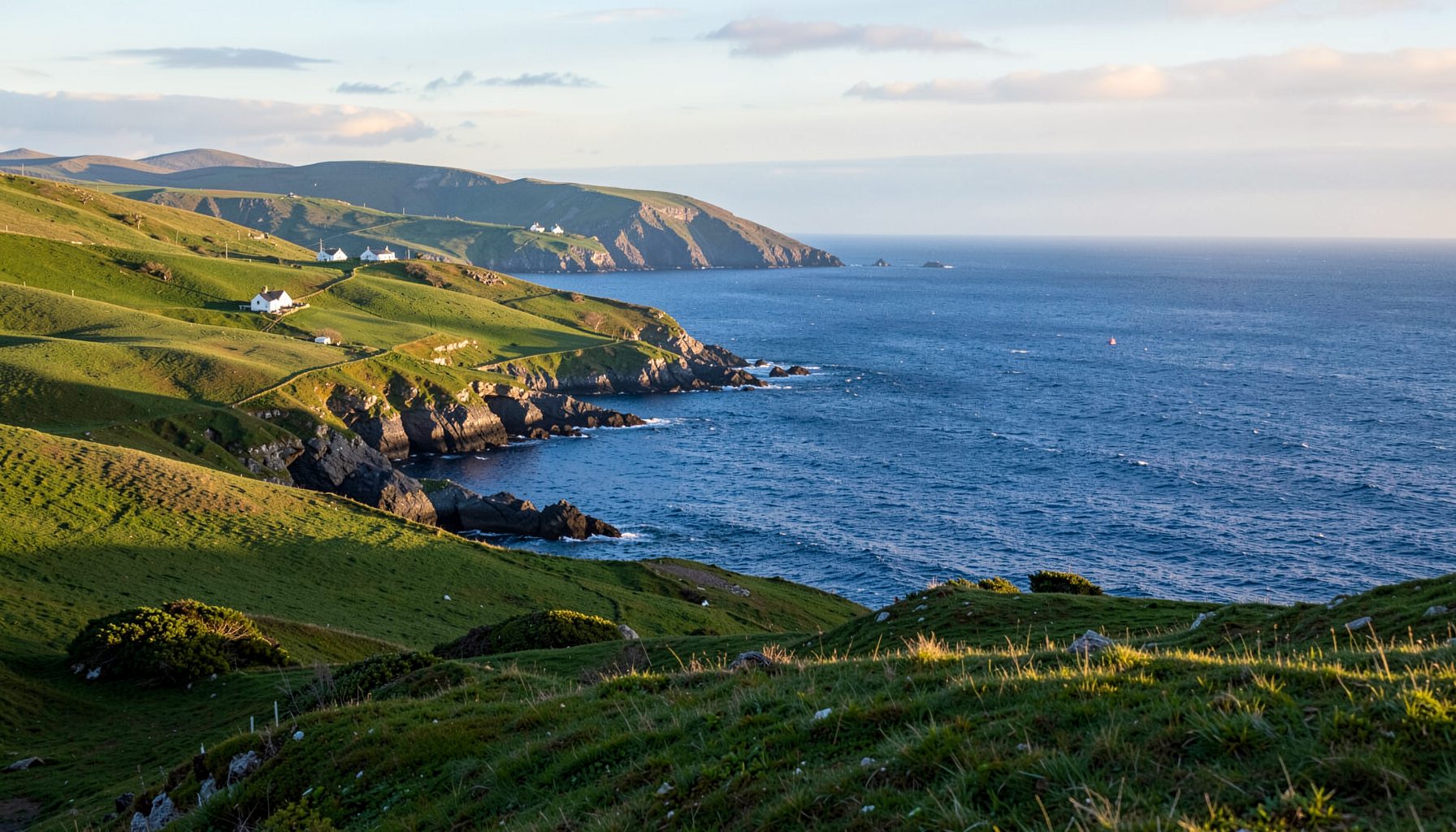
On the south-western edge of the Iveragh Peninsula, Derrynane National Historic Park brings together political history, archaeology, coastal landscape and living community memory. Its setting is as important as its buildings: the park looks across Derrynane Bay towards islands, headlands and the open Atlantic, while woodland, gardens and shoreline habitats surround the historic estate.
The park is closely associated with Daniel O’Connell, the nineteenth-century politician known as “The Liberator”. Derrynane House was his family home and remains the central historic building within the grounds. Yet the story of this place reaches beyond one individual. Monastic ruins, burial grounds, vernacular structures, cultivated landscapes and long-established routes all contribute to its cultural value.
For visitors travelling through the Ring of Kerry or exploring the heritage of the Skellig Coast, Derrynane offers a chance to see how national history developed within a distinctly local landscape. The park connects the public life of a major Irish political figure with the communities, families and environments of south Kerry.
A Coastal Estate With Deep Roots
Derrynane National Historic Park extends across approximately 120 hectares of varied terrain. Its position beside Derrynane Bay gives the estate a strong maritime character, with beaches, dunes, rocky shorelines and views across the Kenmare Bay area. The landscape is shaped by Atlantic weather, changing tides and the shelter provided by the surrounding hills.
The historic estate includes woodland paths, ornamental gardens, open parkland and access routes towards the coast. These features were not simply decorative. They reflect the way a large country house functioned, combining productive land, private gardens, estate management and access to natural resources.
The coastal setting also helps explain the area’s long human history. Derrynane was connected to seafaring, farming, fishing and movement between small settlements. The shore was a working environment as well as a scenic one, and the relationship between land and sea remains central to the park’s identity.
Derrynane House And The O’Connell Family
Derrynane House was the ancestral home of the O’Connell family and the place most strongly associated with Daniel O’Connell’s private life. O’Connell was born at Carhan near Cahersiveen in 1775, but Derrynane became his family estate and a significant base during his political career.
Known for his campaign for Catholic Emancipation and later efforts to repeal the Act of Union, O’Connell used public speaking, legal organisation and mass political mobilisation to influence the course of Irish history. His success in securing Catholic Emancipation in 1829 made him an important figure in both Irish and European political history.
The house museum presents this story through domestic interiors, family possessions, portraits, documents and objects linked to O’Connell’s career. Visitors can see how a political life was rooted in family relationships and estate life. The rooms also provide a sense of the material world of a landed Catholic family in nineteenth-century Ireland.
Derrynane House should therefore be understood as more than a memorial to one politician. It is also a record of changing social structures, Catholic identity, education, law and political organisation in Ireland before and after Emancipation.
Abbey Island And Early Christian Heritage
A short distance from the main estate, Abbey Island adds an older layer to the park’s history. The island is associated with an early Christian foundation traditionally linked with Saint Finan. Its ruined church and burial ground are reminders that Derrynane was a place of religious importance centuries before the O’Connell family occupied the house.
The surviving remains should be read as part of a wider ecclesiastical landscape rather than as an isolated monument. Early Christian communities often developed around coastal locations that offered access by sea, fertile ground and connections with other settlements. The island’s position near the bay reflects this combination of spiritual and practical advantages.
The ruins visible today represent the accumulated history of the site. Buildings were altered, repaired or replaced over time, while graves and memorials extended the use of the island beyond the life of any single church structure. Weathering and exposure have also become part of the monument’s character.
Abbey Island is especially valuable because it places modern visitors in direct contact with the peninsula’s medieval and early Christian past. The contrast between the quiet ruins, the Atlantic shoreline and the later country estate makes the chronological depth of Derrynane easy to appreciate.
Landscape, Gardens And Natural Heritage
The park’s heritage is inseparable from its natural environment. Coastal grassland, sand dunes, woodland, gardens and rocky shore provide habitats for plants, birds and insects. The mild maritime climate allows vegetation associated with the south-west to flourish, while shelter around the estate supports mature trees and garden planting.
The gardens near Derrynane House reflect the tastes and resources of the O’Connell family. Ornamental planting, avenues and managed grounds created a cultivated setting around the residence. At the same time, the wider park retains less formal areas where natural regeneration, rough grassland and coastal processes remain visible.
This combination of designed and wild landscape is important to the site’s historical interpretation. A historic park is not simply a collection of buildings placed in attractive scenery. Its paths, boundaries, trees, gardens and shorelines reveal how generations of people used and cared for the land.
The coastline also demonstrates the continuing force of nature. Wind, salt, rain and erosion affect both habitats and archaeological remains. Conservation at Derrynane therefore involves balancing public access with the protection of fragile dunes, vegetation, masonry and burial grounds.
| Heritage feature | Historical significance | What it reveals today |
|---|---|---|
| Derrynane House | Ancestral home of the O’Connell family and residence associated with Daniel O’Connell | Domestic life, political history and nineteenth-century Irish society |
| O’Connell collections | Personal, family and political objects linked with “The Liberator” | The relationship between private life and public leadership |
| Abbey Island | Early Christian and later ecclesiastical site near Derrynane Bay | The peninsula’s religious and medieval past |
| Gardens and estate grounds | Managed landscape connected with the country house | Social status, horticulture and historic land use |
| Beach, dunes and shoreline | Longstanding maritime setting shaped by natural processes and human activity | The connection between coastal ecology, settlement and heritage |
Daniel O’Connell And National Memory
Daniel O’Connell’s importance at Derrynane lies in the way local history connects with national change. He represented a political movement that challenged legal discrimination against Catholics and encouraged broader participation in public life. His methods were shaped by the realities of Ireland, including religious division, landholding patterns and the relationship between local communities and Westminster.
The house preserves the personal dimension of that story. Letters, furniture, portraits and family objects can make political history more tangible, showing the environment from which O’Connell worked. His achievements were not produced by public speeches alone; they depended on correspondence, organisation, travel, alliances and support from communities across Ireland.
The O’Connell name also remains visible in the wider region. Roads, monuments, schools and civic references continue to reflect his place in Irish memory. Derrynane provides a more complex setting than a formal monument because it shows the person within a family home and a lived landscape.
It is also useful to recognise that historical memory changes over time. O’Connell has been celebrated as a champion of civil rights and parliamentary politics, while his political compromises and the limits of nineteenth-century reform invite further examination. The park can support both admiration and careful historical study.
A Place For Community And Learning
Derrynane National Historic Park serves visitors, researchers, local residents and educational groups. Its value lies partly in the way different forms of learning can happen in the same place. A museum visit may focus on O’Connell’s career, while a walk can explore estate design, coastal habitats or the remains on Abbey Island.
The site also belongs to the wider cultural life of south Kerry. Local knowledge helps explain place names, family connections, traditional routes and changing patterns of land use. Community events, heritage programmes and educational activities can add detail that is not always visible from the formal displays.
For schools and learning hubs, Derrynane offers an unusually rich setting. Students can connect civics and history with architecture, archaeology, geography, biodiversity and conservation. The park demonstrates that heritage is interdisciplinary: a ruined church, a political document and a sand dune may all belong to the same story.
Visitors should allow time to move beyond the house itself. The relationship between the museum, the gardens, the shoreline and Abbey Island creates the strongest understanding of Derrynane as a historic landscape rather than a single attraction.
Ways To Experience The Park Respectfully
- Begin at Derrynane House to establish the O’Connell family and political context before exploring the wider grounds.
- Follow marked paths and observe access guidance around dunes, woodland, archaeological remains and burial areas.
- Treat Abbey Island as a sacred and historic site, leaving stones, plants and grave markers undisturbed.
- Read the landscape as carefully as the museum displays, noticing views, boundaries, trees, shoreline changes and estate features.
- Check seasonal opening arrangements and local visitor information before travelling, especially when planning a longer walk or island visit.
Derrynane’s heritage is strongest when its different layers are considered together. The political achievements of Daniel O’Connell, the religious history of Abbey Island, the design of the estate and the ecology of the Atlantic coast are all part of one connected place. None of these stories needs to be separated from the others.
A visit can begin with a house museum and end beside the sea, but the experience is really a journey through changing ideas of community, faith, power, landscape and memory. Explore Derrynane National Historic Park with time for both its documented history and its quieter details, and help sustain the respect and care that this remarkable corner of the Skellig Coast deserves.