The Haunted Tales of the Derrynane House Gardens
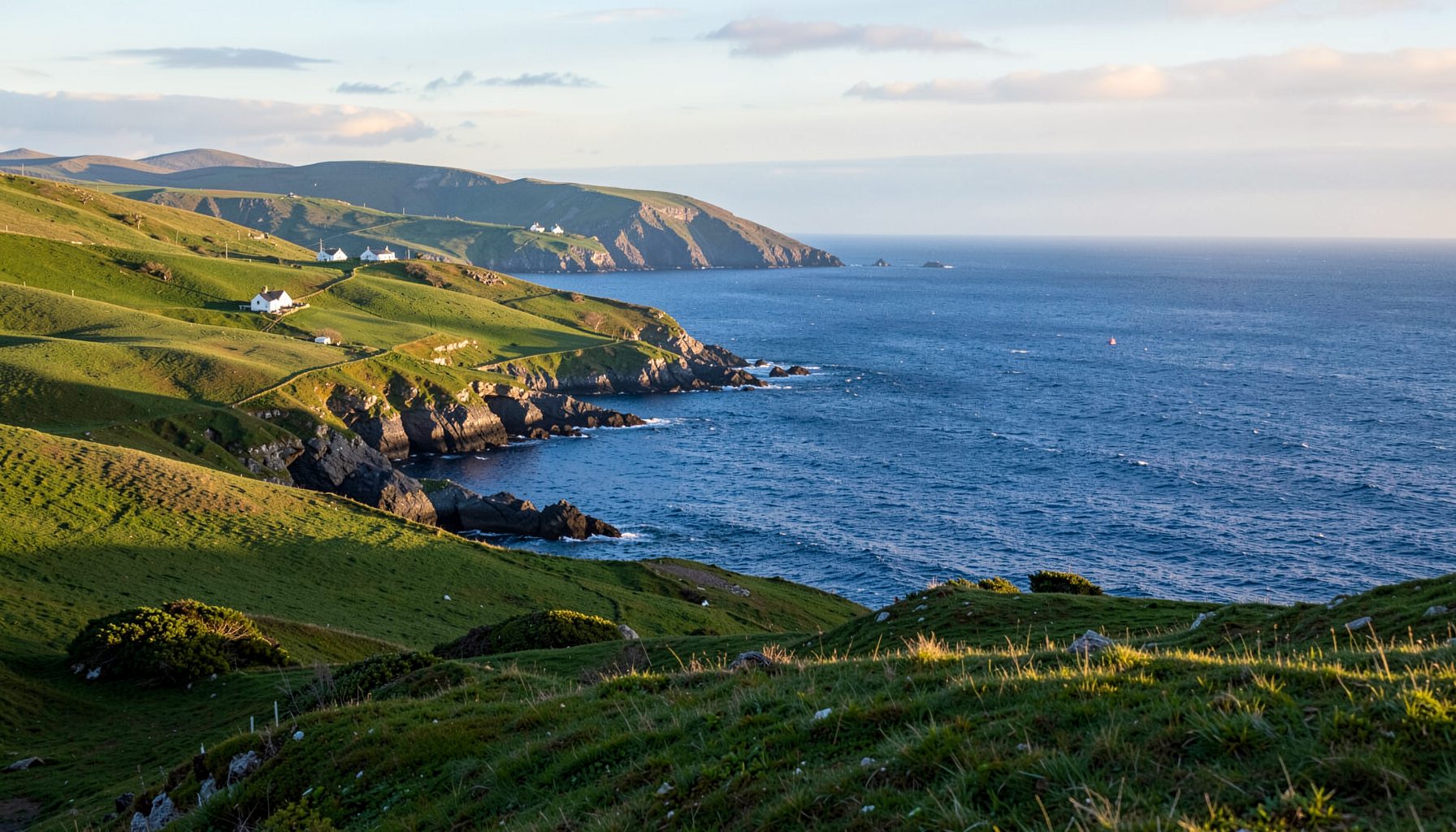
Derrynane House stands among some of the most evocative scenery on Ireland’s Iveragh Peninsula. Set within Derrynane National Historic Park, the former home of Daniel O’Connell looks across gardens, woodland, shore, and distant Atlantic islands. Its beauty is gentle by day, yet the same paths can feel strangely charged when mist settles over the lawns or evening light reaches the old trees.
Stories connected with the estate belong to the rich tradition of Irish folklore, where houses, ruins, burial grounds, and coastlines often gather memories over generations. Some accounts speak of apparitions, unseen footsteps, mournful sounds, or a lingering presence associated with the O’Connell family. These tales are best understood as local legends rather than documented paranormal events.
The atmosphere of Derrynane encourages such storytelling. The house carries political and family history, while the surrounding landscape contains an ancient abbey, old graves, wooded paths, and the restless Atlantic. Together, these features create a place where history and imagination meet.
A historic house surrounded by memory
Derrynane House was the ancestral home of Daniel O’Connell, the nineteenth-century political leader known as “The Liberator”. O’Connell spent much of his life connected with the estate, and the house remained an important centre for the O’Connell family. Today, its rooms and collections help visitors understand the domestic world behind his public career.
The gardens extend that story beyond the walls. Trees, paths, boundary features, and views towards Derrynane Bay preserve the sense of a lived-in estate rather than an isolated museum. The grounds have witnessed family gatherings, servants’ work, political conversations, religious observance, and the ordinary movement of people through the house over many decades.
That long human presence is central to the haunted reputation. A ghost story attached to an old mansion rarely concerns a single frightening incident. Instead, it develops from repeated impressions: a room that feels cold, a path that seems watched, or a familiar figure glimpsed at the edge of sight. At Derrynane, the landscape gives those impressions plenty of room to grow.
The shadow of The Liberator
One of the most persistent ideas associated with historic Irish houses is that an important former resident remains connected to the place after death. At Derrynane, this role is naturally linked with Daniel O’Connell. Visitors and local storytellers have sometimes imagined his presence in the house or gardens, particularly around the spaces associated with his family life.
There is no reliable evidence that O’Connell’s ghost has been formally recorded at Derrynane. The claim belongs to oral tradition and the imaginative response to a powerful historical figure. His name is so closely tied to the estate that it is easy to picture him returning along a garden path, appearing near the house, or watching over the landscape he knew so well.
The legend reflects a broader idea in Irish heritage: places connected with a celebrated person can seem to retain their character. A historical figure may become part of the atmosphere, even when no apparition is described consistently. In this sense, the “ghost” of O’Connell can represent memory itself, giving an emotional presence to the story of the house.
The abbey, graves, and older voices
Near Derrynane House are the remains generally known as Derrynane Abbey. The ruins and burial ground add a much older layer to the estate’s history. Weathered stone, enclosed graves, and the changing light of the Atlantic coast create an atmosphere that is markedly different from the formal gardens.
Religious ruins often attract supernatural stories because they suggest interrupted lives and forgotten communities. At Derrynane, the abbey’s presence encourages tales of shadowy figures, distant prayers, or unexplained movement among the stones. Such images are common motifs in Irish ghost lore, though individual versions may vary between families and generations.
The burial ground also invites respect rather than sensationalism. Many people visit these places to consider the continuity of local life, from early Christian settlement through the O’Connell era and into the present. The quietness of the site can feel uncanny, especially beneath low cloud, but its significance is historical and spiritual before it is supernatural.
Sounds carried through the gardens
The most convincing ghost stories often begin with sound. Coastal wind can move through dense branches, rattle old windows, and produce tones that resemble voices. In a large estate, footsteps may echo from gravel, stone, or hard ground, while birds and animals can create sudden cries after dark.
At Derrynane, the sea adds another layer. Waves breaking along the shore, wind crossing the bay, and shifting weather can make the gardens feel acoustically unsettled. A visitor walking beneath trees may hear movement that cannot immediately be traced. By the time the source is found, the moment has already acquired a supernatural quality.
Local tales sometimes refer to footsteps or movement around old buildings, especially as daylight fades. These accounts cannot be treated as proof of a haunting, yet they show how landscape shapes folklore. A darkening path, an empty window, and a sound carried from the shore can become a memorable story when repeated often enough.
| Place or feature | Why it feels mysterious | Historical or natural explanation |
|---|---|---|
| Derrynane House | Old rooms and family associations encourage stories of a lingering presence | The house preserves the atmosphere of a long-occupied family residence |
| Woodland paths | Rustling leaves, shifting shadows, and limited visibility can suggest movement | Wind, birds, small animals, and changing light |
| Derrynane Abbey | Ruins and graves evoke lost communities and old religious traditions | The site reflects the layered history of the local landscape |
| Coastal edge | Waves and wind produce distant voices and unexpected sounds | Atlantic weather and natural echoes across the bay |
| Garden boundaries | Walls, trees, and corners create brief glimpses and blind spots | Historic estate design and ordinary visual perspective |
Why Irish gardens gather ghost stories
Gardens have a special place in Irish supernatural tradition. They are neither fully wild nor entirely domestic. A designed garden may contain carefully planted borders, paths, and lawns, while older trees and overgrown edges introduce a sense of nature reclaiming the estate. That tension makes gardens ideal settings for tales of wandering figures and hidden memories.
The Irish imagination also treats certain landscape features with caution. Ancient trees, wells, ruins, boundary stones, and burial places may be approached respectfully because they are seen as points where the visible and invisible worlds come close. This does not mean that every visitor believes in fairies, spirits, or banshees. It means that local customs preserve a language for describing places that feel unusually powerful.
At Derrynane, the gardens connect the public history of O’Connell House with the older coastal landscape. The house represents family and politics; the abbey suggests faith and ancestry; the shore brings weather, distance, and uncertainty. Their closeness helps explain why supernatural stories feel natural here, even when they remain unverified.
Separating folklore from historical fact
A responsible account of Derrynane’s haunted reputation should keep documented history and storytelling distinct. The house, O’Connell family connection, national historic designation, gardens, abbey remains, and coastal setting belong to the historical record. Claims about apparitions, ghostly footsteps, or mysterious presences belong to folklore unless supported by clear evidence.
This distinction does not make the tales less valuable. Folklore reveals how communities interpret their surroundings and preserve emotional connections to the past. A story may tell us more about local memory, landscape, and family identity than about an actual supernatural event.
Visitors should also remember that the grounds include sensitive heritage features and burial places. Ghost hunting should never involve trespassing, touching monuments, disturbing graves, or entering closed areas. The most meaningful experience comes from observing the site carefully and allowing its history to lead the imagination.
Experiencing the grounds with care
A visit during daylight provides the clearest way to appreciate Derrynane House and its setting. Look beyond the idea of a haunted house and notice the relationship between the building, the gardens, the wooded areas, the abbey, and the bay. Each element contributes to the atmosphere that inspired generations of stories.
Weather can change quickly along the Skellig Coast. Mist may soften distances, rain can darken stone, and strong wind can transform familiar paths within minutes. Sensible footwear, warm clothing, and attention to official opening information are important, particularly outside the main visitor season.
For a thoughtful folklore walk, consider these approaches:
- Read about Daniel O’Connell and the O’Connell family before visiting.
- Explore only paths and buildings open to the public.
- Spend time near the gardens and shoreline during changing weather, without entering unsafe areas.
- Treat the abbey and burial ground as places of heritage and remembrance.
- Listen for natural sounds before deciding that an experience is mysterious.
The strongest impression may come without any apparition. A sudden silence among the trees, a glimpse of the bay through branches, or the outline of the old house in evening light can be enough to understand why Derrynane has inspired supernatural tales. Atmosphere does not need to be exaggerated to be memorable.
Derrynane House Gardens are part of a wider cultural landscape linking local history, Irish political heritage, coastal ecology, and oral tradition. Visit the house and grounds through the appropriate official channels, learn the stories connected with the estate, and share the place with the care its history deserves.