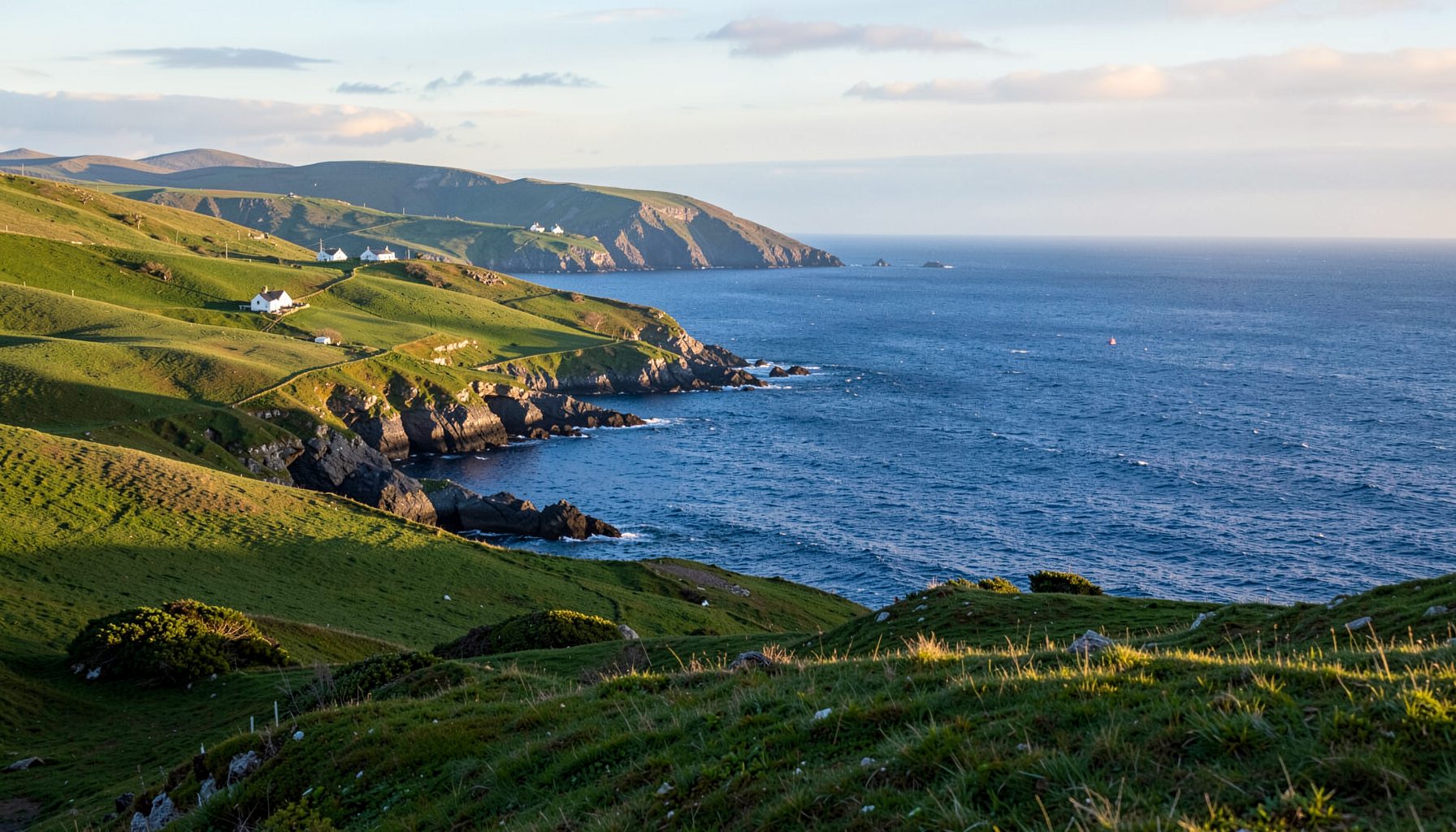
Finding the Best View of Humpback Whales on the Skellig Coast
The Skellig Coast offers some of Ireland’s most rewarding opportunities to look for whales, dolphins and other marine wildlife. Humpback whales are occasional visitors to the waters around the Iveragh Peninsula, and sightings depend on season, sea conditions, food availability and simple luck. There is no guaranteed viewing point, but several locations give observers a strong chance of scanning the open Atlantic.
For the closest experience, a responsible wildlife boat trip from the Portmagee and Valentia area is usually the strongest option. Boats can reach productive offshore waters and provide a moving viewpoint across a much wider area. From land, elevated headlands such as Bray Head, Bolus Head and the Kerry Cliffs offer dramatic vantage points, although whales may appear as distant blows or brief dark shapes on the horizon.
The best approach is to treat whale watching as part of a wider coastal experience. Bring time, patience and suitable clothing, and combine the search with the landscape, seabirds, island heritage and communities that make this stretch of Kerry distinctive.
Why Humpback Whales Visit These Waters
Humpback whales pass through Irish coastal waters while feeding and travelling between seasonal habitats. The Atlantic waters around the Skellig Coast can provide rich feeding grounds, particularly when shoals of small fish are present. Their arrival is not tied to a single dependable date, so sightings vary from year to year.
A humpback is often identified first by its blow: a tall, bushy plume rising above the surface. The whale may then show a broad back, a long pectoral fin or, if it dives deeply, its distinctive tail flukes. A breach is spectacular but uncommon. Most encounters consist of a few blows followed by a long disappearance beneath the waves.
The same waters may also hold minke whales, fin whales, common dolphins, bottlenose dolphins and occasional porpoises. Watching for the wider marine environment improves the experience, since a quiet sea can still reveal gannets, shearwaters, fulmars and groups of dolphins travelling close to a boat.
The Strongest View From the Water
A boat trip is generally the best way to search for humpback whales off the Skellig Coast. Departures from Portmagee and nearby coastal harbours can place visitors closer to offshore feeding areas than any land viewpoint. Experienced skippers also understand local currents, seabird activity and signs that may indicate whales below the surface.
A marine wildlife trip is different from a sightseeing cruise focused solely on Skellig Michael. Operators may adjust their route according to sea state, wildlife reports and conservation guidance. That flexibility can increase the chance of an encounter, although no ethical operator can promise a whale sighting.
Sea conditions matter as much as location. Calm or moderate weather makes it easier to see a blow, while wind-driven waves can hide a whale even when it is nearby. The most comfortable trips usually involve an early check of the forecast, warm waterproof layers and sensible expectations about time spent scanning the horizon.
Land-Based Whale Watching Along the Coast
Visitors who prefer to remain ashore can use the Skellig Coast’s high headlands as natural observation platforms. Bray Head on Valentia Island, Bolus Head near the western end of the peninsula and the Kerry Cliffs above Portmagee all provide wide views over the Atlantic. Their height gives observers more horizon to inspect than a low harbour or beach.
These places are not guaranteed whale-watching stations. A distant humpback may surface far offshore, and its blow can be difficult to distinguish from spray. Binoculars are useful, but they should never replace attention to footing, weather and the exposed nature of the cliffs. Keep well back from edges and follow local access guidance.
Valentia Island can be particularly rewarding for a patient land-based watch because it combines elevated coastal scenery with accessible village facilities and cultural attractions. The western headlands offer a wilder outlook, while the Kerry Cliffs provide a broad panorama towards the Skellig Islands. On any of these routes, the landscape itself remains worthwhile when the sea stays empty.
| Viewing location | Best feature | What to expect | Practical note |
|---|---|---|---|
| Portmagee and Valentia area | Access to marine wildlife excursions | The closest opportunity for a focused search | Check departure details, sea conditions and wildlife policies |
| Bray Head, Valentia Island | High coastal outlook and broad Atlantic views | Distant blows, backs or seabirds indicating activity | Use marked paths and take care in exposed weather |
| Bolus Head | Remote, open perspective towards the ocean | Quiet observation with little visual obstruction | Allow extra time for access and bring appropriate clothing |
| Kerry Cliffs | Elevated panorama near Portmagee | Wide horizon views and dramatic scenery | Stay behind safety barriers and avoid cliff edges |
| Lower coastal viewpoints and beaches | Easy access and peaceful surroundings | Less range, but occasional views in calm conditions | Better for a general sea watch than a dedicated whale search |
Choosing the Right Time of Year
There is no single guaranteed humpback whale season for this coastline. Sightings can occur at different times, with spring, summer and autumn each offering different advantages. Late summer and autumn may bring active marine life and changing seabird movements, while calmer summer days can make scanning the water more comfortable.
The best day is usually defined by visibility and sea state rather than the calendar alone. A clear, calm morning can be more productive than a windy day during a traditionally promising period. Low glare also helps, so observers may find early or later daylight easier than the brightest part of the afternoon.
Local wildlife reports, harbour information and updates from reputable boat operators can provide useful context. They may indicate recent activity without treating it as a promise. Whales move over large distances, and yesterday’s sighting does not mean today’s animals will remain in the same area.
A Respectful Way to Watch
Responsible whale watching protects the animals and improves the quality of the encounter. Boats should keep a safe distance, avoid cutting across a whale’s direction of travel and reduce speed when wildlife is nearby. If an animal dives or changes course, the boat should give it room rather than pursue it.
On land, avoid loud noise and sudden movement when watching from a cliff or headland. Do not use drones near whales, seabird colonies or protected coastal areas. Feeding, attracting or attempting to touch marine wildlife is unsafe and harmful, even when an animal appears curious.
The Skellig Coast sits within a valuable marine environment that also supports fishing, seabirds and island habitats. Visitors can help by carrying rubbish home, keeping dogs under control where required and following access notices. A good wildlife encounter leaves the animal undisturbed and the shoreline as it was found.
Planning a Comfortable Coastal Watch
A successful whale-watching outing begins with practical preparation. Waterproof outerwear, warm layers, a hat and gloves are useful even in summer because wind can make the coast feel cold. Binoculars, a charged phone, water and a small notebook can help turn a brief sighting into a memorable record.
Anyone joining a boat should consider motion sickness before departure and follow the operator’s advice about food, medication and clothing. Trips may be cancelled or changed when conditions become unsafe. That is a normal part of working on the Atlantic and should be treated as evidence of responsible operation rather than inconvenience.
Land-based observers should allow more time than they expect to need. Scan slowly in sections, pause between sweeps and look for seabirds gathering over bait fish. Several people can watch different parts of the horizon, but avoid mistaking every splash, wave crest or piece of floating debris for a whale.
Practical Priorities for a Wildlife Outing
- Choose a licensed, conservation-minded boat operator when going to sea.
- Check the marine forecast and access conditions before travelling to exposed headlands.
- Bring binoculars, waterproof clothing, water and footwear suitable for uneven ground.
- Watch the whole seascape for blows, fins, seabird activity and travelling dolphins.
- Keep a respectful distance and record sightings without sharing sensitive wildlife locations irresponsibly.
Making the Most of the Wider Skellig Coast
Whale watching fits naturally into a day exploring the communities and heritage of the Iveragh Peninsula. Portmagee provides a useful base for learning about the sea routes to the Skellig Islands, while Valentia Island combines coastal walks, geological interest and local history. Nearby villages and learning hubs add context to a landscape shaped by fishing, farming, migration and island life.
The Skellig Islands themselves are internationally significant, with Skellig Michael recognised as a UNESCO World Heritage Site. Access is controlled and weather-dependent, so a visit to the islands should be planned separately from a marine wildlife outing. Even when the sea prevents a landing, the islands remain part of the wider cultural and natural setting viewed from the mainland.
A day that includes a coastal walk, a heritage stop and time scanning the ocean may be more rewarding than a rushed attempt to find one species. Humpback whales are wild, mobile animals, and their unpredictability is part of what makes a sighting meaningful.
For current local information, explore Skellig Coast’s guides to villages, outdoor programmes, heritage places and community events. Use the site to shape a responsible visit around the people, stories and landscapes of the region, then give yourself an unhurried stretch of coastline in which to watch the Atlantic.