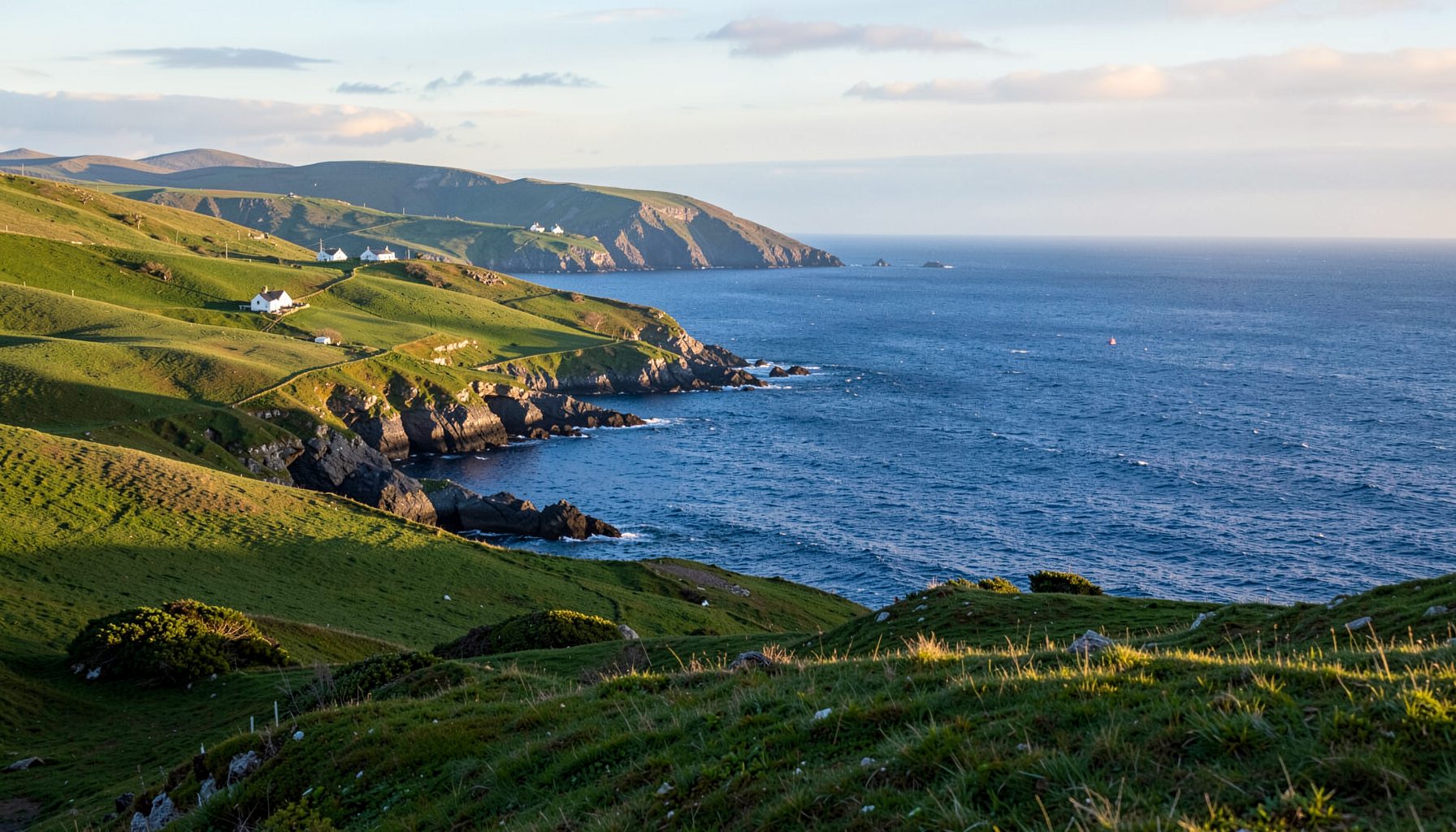
The Best Photography Spots for the Skellig Islands
The Skellig Islands rise from the Atlantic several kilometres off the Iveragh Peninsula, their dark stone silhouettes shaped by weather, distance and changing light. Skellig Michael is the better-known island, with its early monastic settlement and UNESCO World Heritage status, while Little Skellig is famous for its dramatic profile and large gannet colony. Together, they create one of Ireland’s most recognisable coastal scenes.
The finest photographs do not all come from a boat landing on Skellig Michael. Some of the strongest viewpoints are on the mainland, where the islands can be framed with cliffs, beaches, harbours, stone walls or the open Atlantic. This also makes mainland photography valuable when sea conditions prevent a landing or when the islands need to be photographed as part of the wider Skellig Coast landscape.
Light changes quickly here. A clear morning may reveal sharp details in the island rock, while Atlantic haze can reduce the Skelligs to soft silhouettes by evening. Exploring several viewpoints around Portmagee, Valentia Island, Ballinskelligs and the coast towards Castlecove gives photographers a wider range of compositions.
Reading the Skellig Coast Light
The Skellig Coast faces west into the Atlantic, making it especially rewarding around sunrise and sunset. Evening light can fall across the islands from behind the photographer, illuminating the mainland foreground while leaving the Skelligs in strong relief. In summer, sunset arrives late, allowing plenty of time to work from an accessible viewpoint.
Low cloud and sea mist are common features rather than photographic failures. Haze can add depth by separating the foreground cliffs from Little Skellig and Skellig Michael. After a passing shower, the atmosphere may become particularly clear, with richer colours in the sea and greater definition in the island ridges.
A telephoto lens is useful for compressing the distance between the coast and the islands, while a wide-angle lens helps place the Skelligs within a broader landscape. A sturdy tripod, lens cloths and protection against salt spray are practical essentials. Conditions can change within minutes, so equipment should be packed for wind and rain even during a bright spell.
Viewpoints on Valentia Island
Valentia Island offers some of the most varied land-based views of the Skellig Islands. From the western end of the island, photographers can look across the sea towards the distinctive peaks, often with rocky foregrounds and open water leading the eye towards the horizon. The island’s elevated viewpoints are particularly effective when the sea is calm enough to reflect patches of sky.
Bray Head is a strong location for expansive coastal compositions. The headland provides a sense of scale, with cliffs and grass-covered slopes in the foreground and the Skelligs placed beyond the Atlantic. Walking routes can be exposed, so photographers should stay on marked paths and allow enough time to return before conditions deteriorate.
Geokaun Mountain and the surrounding viewpoints provide high-level perspectives across Valentia and the coast. From here, the Skelligs may appear smaller, but the wider setting becomes the subject: headlands, bays, islands and changing cloud formations combine in a single frame. These locations are best suited to landscape images rather than close studies of the monastery.
Portmagee And The Western Approach
Portmagee is the main mainland gateway for boat trips to Skellig Michael. Its harbour, bridge and waterfront provide opportunities to photograph working boats, reflections, sea walls and the distant islands. The village is useful for photographers who want to combine a Skellig image with the character of a coastal community rather than presenting the islands in isolation.
The bridge linking Portmagee with Valentia Island is a recognisable local viewpoint. From suitable public areas nearby, it can be used as a leading line towards the open sea. Early or late in the day, the structure may create a strong foreground shape, while boats and changing tides add movement to the scene.
Boat photography offers a different perspective. From the water, Skellig Michael’s steep rock faces become more imposing, and Little Skellig can be seen in relation to its larger neighbour. A fast shutter speed is helpful on a moving vessel, and a zoom lens allows flexibility without requiring photographers to move around the boat. Follow the crew’s instructions at all times, particularly near wildlife and landing areas.
| Location | Strongest Subject | Useful Conditions | Access Notes |
|---|---|---|---|
| Bray Head, Valentia Island | Wide coastal landscape with the Skelligs offshore | Clear air, sunset, broken cloud | Exposed walking terrain; use marked routes |
| Geokaun area | Elevated view of islands, bays and headlands | Dramatic cloud and changing light | Check local access and weather before walking |
| Portmagee harbour | Boats, bridge, village life and distant island views | Calm water, early morning or evening | Photograph from safe public areas |
| Kerry Cliffs | Skelligs framed by high Atlantic cliffs | Clear visibility and low evening light | Keep well back from cliff edges |
| Ballinskelligs beach and coast | Island silhouettes, surf and foreground texture | Low tide, sunset, mist | Watch tides and slippery rocks |
| St Finan’s Bay | Beach, mountains and open Atlantic | Soft light, calm sea, atmospheric haze | Respect private land and coastal access |
Kerry Cliffs And The Atlantic Edge
The Kerry Cliffs near Portmagee provide one of the most dramatic mainland perspectives of the Skellig Islands. From the cliff-top paths, the islands sit beyond a rugged foreground of dark rock and green Atlantic pasture. A medium telephoto lens can isolate Skellig Michael and Little Skellig, while a wider composition can show the scale of the cliffs.
This is a location where safety must take priority over composition. The cliff edge is exposed, and wind can be unexpectedly strong. Keep away from unstable ground, avoid stepping backwards while looking through a viewfinder and give other visitors sufficient space. The best photograph is never worth approaching an unsafe position.
The cliffs work well in changing weather. Sunbreaks can spotlight the islands while the surrounding sea remains deep blue or grey. In softer conditions, try placing the horizon high in the frame and using the foreground rock to create a layered image. A polarising filter may deepen the sea colour, although its effect can vary depending on the direction of the light.
Ballinskelligs And St Finan’s Bay
Ballinskelligs offers a more intimate coastal setting than the high cliff viewpoints. The beach, ruined stone structures and surrounding headlands can create a strong foreground for images of the Skelligs. At low tide, wet sand and rock pools may reflect the sky, while breaking waves provide movement around the lower edge of the frame.
The shore near Ballinskelligs is especially effective when the islands are partly softened by haze. Rather than relying on distant detail, use the beach, seaweed, stones or architectural remains to establish a sense of place. Long exposures can smooth the water, but changing tides and slippery surfaces require careful positioning.
St Finan’s Bay, between Ballinskelligs and the western coast, provides another broad Atlantic viewpoint. The beach and surrounding mountains can balance the distant islands, giving the photograph a layered composition from sand to sea to sky. This is a quieter setting, but photographers should be aware of private property, narrow roads and limited parking.
Choosing The Right Time And Tide
The season affects both the quality of light and the practical experience of photographing the Skelligs. Summer usually offers longer evenings and boat access, while spring and autumn can bring clearer air, stronger weather patterns and fewer visitors. Winter landscapes may have powerful surf and moody skies, but daylight is short and coastal conditions can be severe.
For sunrise, elevated viewpoints on Valentia Island can provide a quiet start with soft side light across the mainland. For sunset, Ballinskelligs and the Kerry Cliffs allow the islands to remain visible against warm or deepening skies. Check the actual direction of the light before setting out, since the ideal viewpoint changes throughout the year.
Tides influence beach compositions and access to rocks. Consult a reliable local tide forecast, observe the waterline and never assume that a route will remain passable. If travelling by boat, remember that landings on Skellig Michael depend on sea conditions, operational decisions and authorised arrangements. A boat tour does not guarantee a landing, and the island’s steep steps and exposed terrain require good mobility.
Plan A Responsible Shoot
The Skellig Islands are a fragile natural and cultural landscape. Skellig Michael’s monastic remains are protected, and the surrounding waters support important seabird colonies. Keep wildlife at a respectful distance, avoid disturbing nesting birds and follow instructions from boat operators, conservation staff and local land managers. Do not remove stones, climb on historic structures or leave any trace of a visit.
A considered photography plan also helps reduce pressure on busy viewpoints. Arrive early, park legally, keep access routes clear and avoid blocking paths while setting up a tripod. At popular locations, move aside between exposures so other visitors can enjoy the view. Local shops, cafés, guides and community facilities are part of the experience of the Skellig Coast, so allow time to support the places that make the landscape accessible.
A Practical Field Checklist
- Carry a wide-angle lens for landscapes and a telephoto lens for distant island details.
- Pack waterproof layers, spare batteries, lens cloths and a secure tripod.
- Check marine forecasts, tide times, daylight hours and road conditions.
- Use marked paths and safe public viewpoints instead of seeking risky cliff-edge positions.
- Follow wildlife, heritage and boat-access regulations throughout the visit.
The strongest photographs of the Skellig Islands usually combine atmosphere with a clear sense of location. A distant silhouette from Portmagee, a high view from Valentia, surf at Ballinskelligs or a carefully framed image from the Kerry Cliffs can each tell a different story. Explore the Skellig Coast at a steady pace, respect its communities and protected landscapes, and let the changing Atlantic light shape the final image.