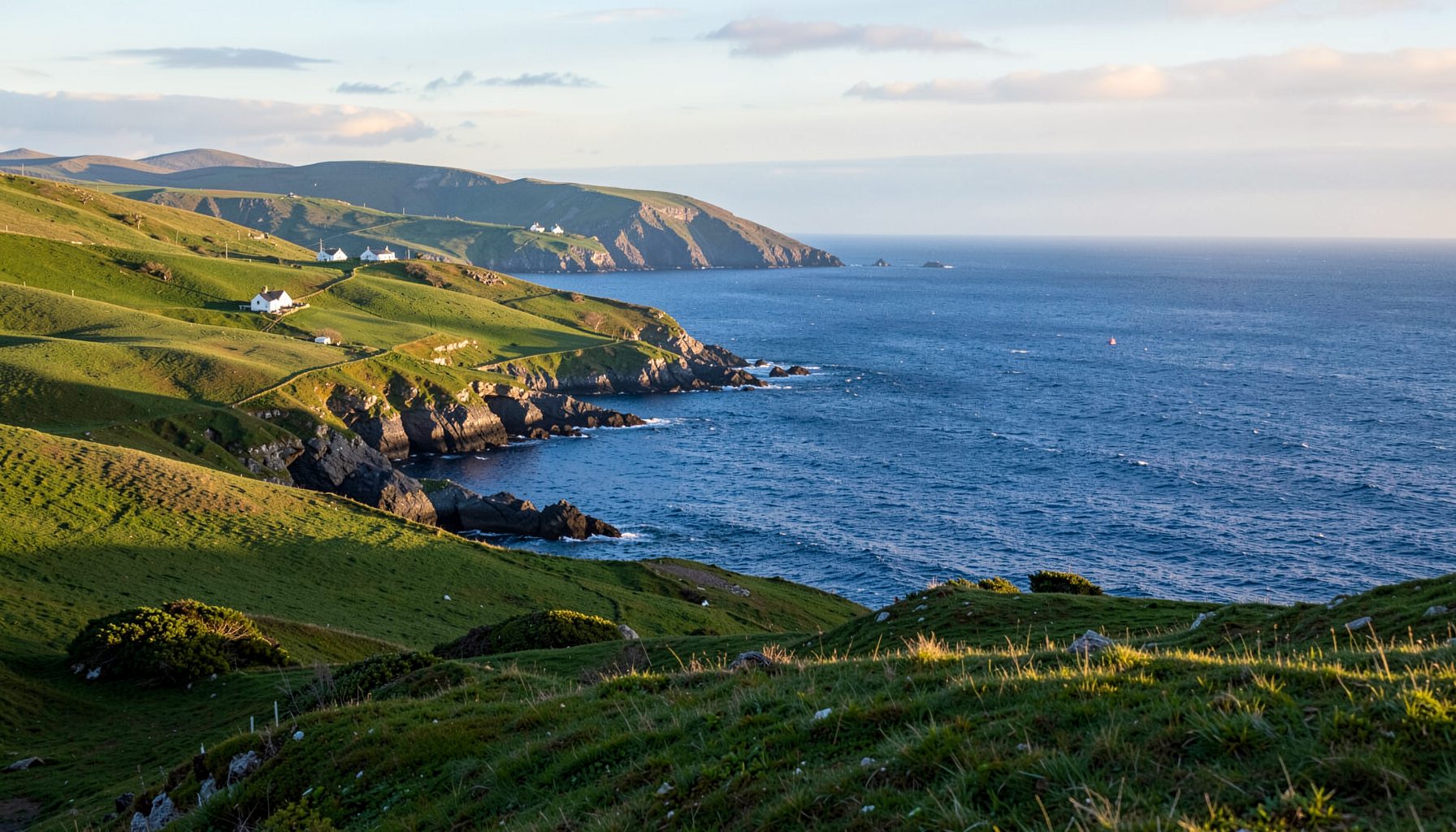
The best beaches for swimming between Kells and Castlecove
The coastline between Kells and Castlecove brings together sheltered coves, broad strands and beaches backed by some of Kerry’s most memorable scenery. The route follows the southern edge of the Iveragh Peninsula, where the Atlantic, Kenmare Bay and the surrounding mountains create very different swimming conditions from one beach to the next.
For a relaxed dip, the most important factors are shelter, tide, water entry and the day’s weather. Some beaches are suitable for confident swimmers who understand local currents, while others are better for paddling, family play and enjoying the shoreline from dry land. Even on a calm morning, conditions can change quickly.
This guide focuses on the beaches most useful for swimming and sea bathing along this stretch of coast. It also gives practical context for visitors exploring the villages, heritage sites and outdoor life of the Skellig Coast, with local information available through the Skellig Coast guide.
Kells Beach And Kells Bay
Kells Beach is one of the most convenient starting points for a sea swim. The shore curves around Kells Bay, offering wide views towards the Dingle Peninsula and the Atlantic horizon. Its setting feels open and rural, yet it remains close to the local community and the road connecting the coast with Cahersiveen.
The beach is a good choice for swimmers who like space and a natural setting. Water conditions can vary with wind direction and tide, so the broad strand should not be mistaken for a fully sheltered bathing area. Walk the shoreline first, look for any warning signs, and choose a shallow entry point before swimming further out.
Kells also works well for a mixed outing. One person can swim while others explore the sand, watch seabirds or enjoy the coastal views. Parking and access can be busy during sunny periods, so keeping entrances clear and respecting nearby homes and farmland helps preserve the area for the community.
Reenroe Beach Near Caherdaniel
Reenroe Beach, close to Caherdaniel, is a beautiful sandy stretch with views across Kenmare Bay. It is often quieter than the better-known Derrynane shoreline, making it attractive to swimmers seeking a peaceful setting. The beach’s position on the bay can provide calmer-looking water than exposed Atlantic beaches, though local wind and tide still matter.
The sand is well suited to walking into the water gradually, and the surrounding landscape gives the beach a strong sense of place. Nearby Caherdaniel is associated with Daniel O’Connell and the historic Derrynane estate, so a visit can combine bathing with an appreciation of the area’s political and cultural heritage.
Reenroe is best approached as an unpatrolled natural beach unless current local information states otherwise. Do not swim alone, especially outside the warmer months, and avoid entering the water when waves are breaking heavily across the shoreline. A short swim close to shore is the sensible choice when conditions are uncertain.
Derrynane Beach And Blue Flag Waters
Derrynane Beach is one of the most popular swimming locations on the route from Kells to Castlecove. It is divided into several sandy areas around Derrynane Harbour, with low headlands and offshore islands adding shelter and visual interest. The beach is especially appealing for families because there are shallow sections, plenty of room and a range of places to sit above the tide line.
The water can be invitingly calm within the harbour, although no beach should be treated as risk-free. Rocky edges, submerged changes in depth and moving water around channels require care. Swimmers should stay within their ability, keep children close and follow any seasonal lifeguard instructions or beach notices.
Derrynane National Historic Park makes this more than a beach stop. Visitors can walk through the grounds associated with Derrynane House, learn about Daniel O’Connell and explore paths near the shore. Combining a swim with a short heritage walk gives the visit a stronger connection to the history of the Iveragh Peninsula.
| Beach | Best suited to | Main strengths | Points to check |
|---|---|---|---|
| Kells Beach | Confident swimmers and shoreline walkers | Spacious strand, open views, easy coastal setting | Wind, wave direction and changing tide |
| Reenroe Beach | Quiet sea bathing and gentle paddling | Sandy shore, Kenmare Bay scenery, peaceful atmosphere | Lack of shelter in poor weather and local access signs |
| Derrynane Beach | Families, casual swimmers and mixed-age groups | Sheltered sections, shallow water, nearby heritage attractions | Crowding, channels and seasonal safety arrangements |
| Castlecove Strand | Short swims and sheltered bathing | Small cove, attractive village setting, clear sense of place | Limited space, slippery rocks and tide movement |
Castlecove Strand And The Final Cove
Castlecove Strand is a small, scenic bathing place near the eastern end of this coastal section. Its compact shape and surrounding headlands give it a sheltered character in suitable weather. The beach is particularly attractive for a quick dip, a quiet paddle or a short stop while touring the Ring of Kerry.
Because the cove is smaller than Derrynane or Kells, space can be limited when the weather is warm. The shoreline may also include rocks and uneven surfaces, so sturdy footwear is useful when walking to the water’s edge. Enter slowly, especially if the sea has stirred up sand or visibility below the surface is poor.
Castlecove is close to Staigue Fort, one of the region’s best-preserved early medieval stone forts. A visit to the strand can therefore fit naturally into a wider day of archaeology, coastal scenery and local history. The beach is best enjoyed at a relaxed pace rather than treated as a guaranteed swimming stop in every condition.
Choosing The Right Beach For The Day
Beach choice should follow the forecast rather than a fixed itinerary. Wind from the south or west can make exposed strands uncomfortable, while a sheltered bay may remain manageable. Swell, rainfall, visibility and the state of the tide all influence whether a swim is sensible.
The sea around Kerry is cold for much of the year. Cold-water shock can affect even strong swimmers, particularly when entering quickly or swimming farther than planned. A wetsuit can improve comfort but does not remove the risks associated with currents, fatigue or changing weather.
Look for local signs and follow instructions from lifeguards where present. The Irish Water Safety guidance to call 112 or 999 in an emergency should be kept in mind, and a phone should be carried in a waterproof pouch rather than left unattended on the sand. Avoid alcohol before swimming, never rely on inflatables in open water and keep a clear line of sight to children.
Practical Beach Etiquette And Access
The beaches between Kells and Castlecove are part of working communities, not isolated resort facilities. Park only in marked or suitable areas, never block gates or narrow roads, and leave room for emergency vehicles. Dogs should be managed according to local signs, particularly during busy periods and around nesting birds or grazing animals.
Take all rubbish home, including food packaging and wet wipes. Shells, stones and seaweed form part of the coastal habitat, so collecting should be kept to a minimum. Rinse water sports equipment away from sensitive dunes and avoid walking over vegetation that helps protect the shore from erosion.
Facilities differ significantly. Some beaches have nearby toilets, cafés or parking, while smaller coves may have none. Bring drinking water, sun protection, a towel, warm clothing and a basic first-aid kit. Mobile coverage can be inconsistent along rural sections of the coast, so download directions and tell someone where you intend to swim.
A Simple Swimming Day Along The Coast
A practical itinerary could begin at Kells Beach, continue through Caherdaniel for Reenroe and finish with a longer stop at Derrynane. Castlecove Strand can then provide a final short swim or a peaceful coastal pause. This sequence allows visitors to compare the open bay, the quieter sandy shore and the more sheltered harbour beaches.
Allow time between stops rather than trying to visit every strand quickly. Tide times may affect access, water depth and the appearance of the beaches, while traffic on the Ring of Kerry can make short distances take longer than expected. Early starts usually offer easier parking and a calmer atmosphere during the main visitor season.
The best swim is the one that matches the conditions and the people in your group. A confident open-water swimmer may prefer Kells or Reenroe, while families and occasional bathers may find Derrynane more comfortable. When the sea looks unsettled, a shoreline walk and heritage visit are safer ways to enjoy the coast.
Keep these points in mind when planning a beach day:
- Check the weather, tide and local beach notices before leaving.
- Choose a sheltered location and stay close to shore when conditions are unfamiliar.
- Swim with another person and tell someone your intended location.
- Bring warm layers, drinking water, sun protection and suitable footwear.
- Respect residents, wildlife, access rules and the cleanliness of every beach.
The coastline from Kells to Castlecove offers memorable sea bathing without needing a single definitive favourite. Each beach has its own character, from the wide openness of Kells Bay to the sheltered sands of Derrynane and the intimate setting of Castlecove. Use local advice, take conditions seriously and make time for the history and communities that give these shores their meaning. Explore the Skellig Coast, plan a responsible swim and experience the beaches at a pace that suits the sea.