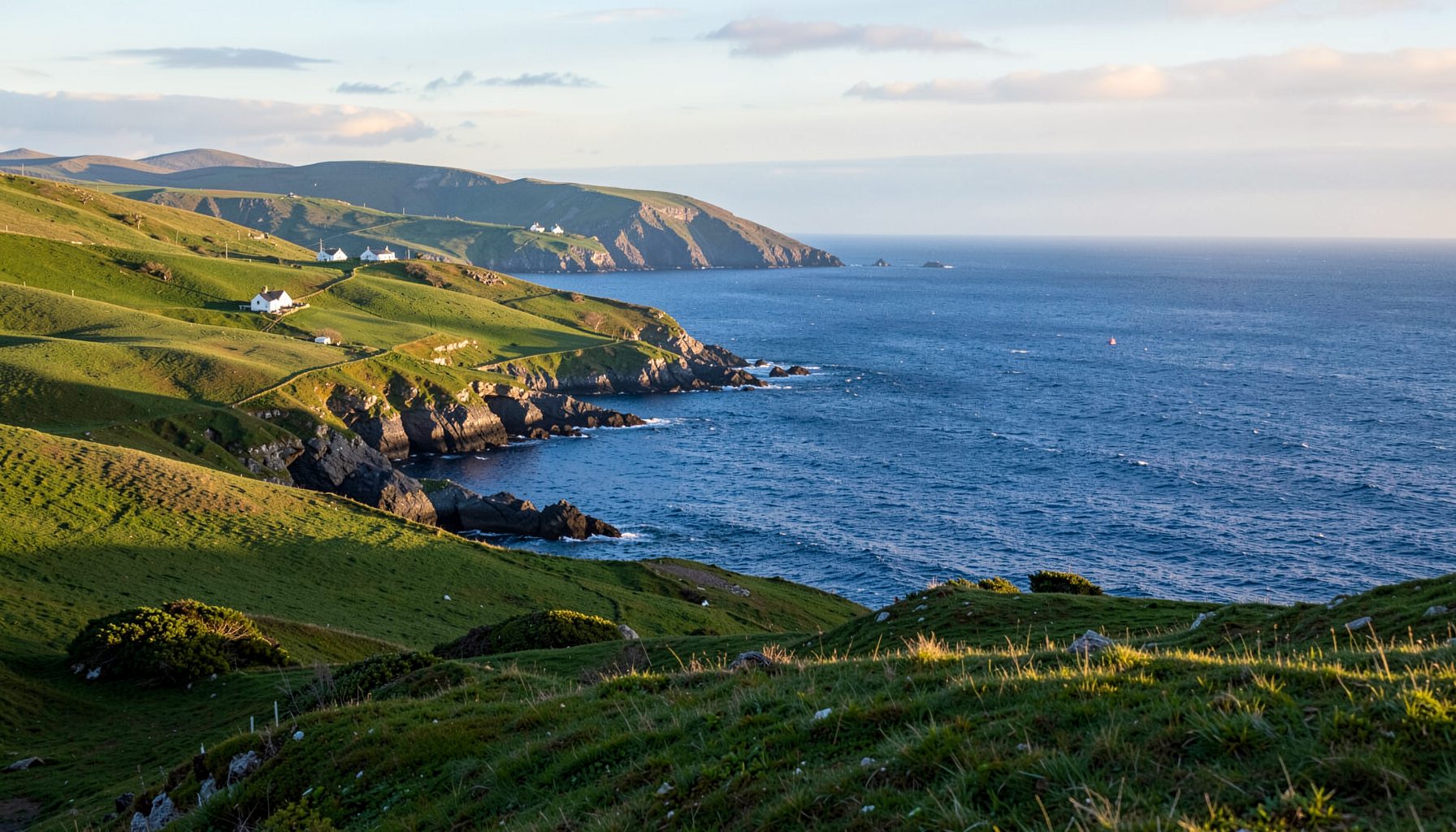
Walking the wild edge of the Skellig Coast
The annual Skellig Coast Walking Festival brings people into the landscapes, stories and communities of south-west Kerry. Across the Iveragh Peninsula, walking routes pass through quiet lanes, coastal hills, mountain passes, farmland and villages shaped by centuries of work, migration and local tradition.
From Kells to Castlecove, the festival offers a way to experience the Skellig Coast at a human pace. Walkers can explore the shore near St Finan’s Bay, look towards the islands from elevated viewpoints, or follow routes that connect natural scenery with archaeology, folklore and community life.
The programme can vary from year to year, so anyone planning to attend should check current festival announcements and local listings for dates, meeting points, route grades and booking details. The information published through Skellig Coast helps visitors understand the wider region before setting out.
A festival rooted in the Iveragh Peninsula
The walking festival is distinctive because its routes are closely tied to the character of the peninsula. This is a region where the Atlantic is always present, whether it appears as a distant blue line beyond a ridge or breaks directly against a rocky shoreline. Weather, terrain and daylight all influence the experience.
Walks may take place around villages, beaches, headlands, boreens and upland areas. Some routes are suitable for a relaxed day outdoors, while others require stronger fitness, steady footing and experience on uneven ground. Route descriptions should be read carefully rather than judged by distance alone.
The festival also gives visitors an opportunity to discover places that can be missed when travelling quickly along the Ring of Kerry. A local guide can explain the meaning of a townland name, identify a ruined structure or describe how a landscape supported farming, fishing and settlement.
Landscapes shaped by sea, stone and weather
The Skellig Coast has a dramatic visual identity, but its appeal extends beyond scenic viewpoints. Dry-stone walls divide fields, old roads follow contours through the hills, and exposed rock reveals the forces that have shaped the peninsula. Coastal walking can shift quickly from sheltered green land to open ground with strong winds and Atlantic spray.
Views of the Skellig Islands are among the region’s great attractions. Skellig Michael, a UNESCO World Heritage Site, rises from the ocean as both a natural landmark and a remarkable record of early monastic settlement. The island is also known internationally as a filming location for Star Wars. From the mainland, its outline connects the walking experience with a much older story of faith, seafaring and isolation.
Other walks may focus on valleys, mountain slopes or inland heritage. The landscape often rewards close attention: a ruined church, a holy well, a standing stone or a change in vegetation can tell as much about the area as a wide coastal panorama.
How to choose a suitable walk
Festival routes generally differ in length, ascent, surface and exposure. A short village or coastal walk may still include slippery rocks, narrow paths or steep sections. A hill route can be demanding even when the mileage appears modest, particularly in rain or strong wind.
Before joining a walk, check whether it is graded easy, moderate or strenuous, and look for information about estimated duration. Ask about steep climbs, road sections, stream crossings and transport arrangements if the published description does not make them clear. Organisers may also provide guidance on age suitability and whether dogs are permitted.
| Walking experience | What to expect | Useful preparation |
|---|---|---|
| Village, heritage or low-level route | Lanes, paths, roads and gentle ground, with regular opportunities to pause | Comfortable walking shoes, water, a light waterproof |
| Coastal route | Uneven surfaces, wind exposure, changing tides or narrow sections | Grippy footwear, waterproof layers, food and a charged phone |
| Hill or mountain walk | Sustained ascent, rough ground, limited shelter and changing visibility | Walking boots, warm layers, navigation equipment and suitable fitness |
| Family-oriented activity | A shorter pace with stops for stories, nature or local history | Child-appropriate clothing, snacks and a clear meeting plan |
| Guided heritage walk | Measured walking combined with interpretation and discussion | Comfortable footwear, weather protection and time for questions |
A good clothing system matters on the Kerry coast. Waterproof outer layers, warm mid-layers and a hat can make a significant difference when conditions change. Even on a bright morning, cloud can gather quickly on higher ground. Walkers should carry water and avoid relying entirely on mobile phone coverage for navigation.
Local stories along the route
The festival’s cultural value comes from the people who know the landscape intimately. Local historians, walkers, environmental groups and community organisers can add detail that is difficult to find in a standard guidebook. A route becomes more memorable when a field, bridge or ruined building is connected to a name and a story.
The Skellig Coast contains layers of heritage from prehistoric monuments and early Christian sites to famine-era structures, abandoned settlements and working landscapes that remain in use. The route itself may follow an old road once used by neighbours, schoolchildren, farmers or pilgrims. These paths are part of a living cultural geography rather than scenery set apart from everyday life.
Visitors should listen respectfully and avoid treating local traditions as performances. Ask before photographing people, homes or private land, and remain aware that some heritage places may be fragile or located beside working farms. Responsible curiosity helps protect the welcome that makes community-based events possible.
Walking with care for the coast
The beauty of the peninsula depends on careful treatment. Stay on marked paths where possible, close gates, keep dogs under control and take all litter home. Do not remove stones, plants, shells or archaeological objects. Wet ground and cliff edges can be hazardous, so shortcuts are rarely worth the risk.
Some coastal areas support nesting birds, grazing animals and sensitive habitats. Follow guidance from walk leaders and landowners, particularly during the spring and summer months. A quiet approach can reveal skylarks, choughs, seals or seabirds without disturbing them.
Road safety is important too. Parts of the walking network use public roads or narrow lanes with limited visibility. Walk in a group where appropriate, follow the leader’s instructions and wear visible clothing in poor weather or low light. If a route is cancelled or changed because of conditions, treat that decision as a safety measure rather than an inconvenience.
Making a festival day part of a wider visit
The walking festival can be combined with time in nearby towns and villages. Before or after a route, visitors may explore local cafés, community spaces, galleries, heritage sites or small businesses. Checking opening times in advance is sensible, particularly outside the main summer season and on Sundays.
The wider Skellig Coast offers many ways to continue learning. Information hubs and community initiatives can provide context about local projects, walking resources and cultural events. A visit becomes more meaningful when it supports the communities that maintain the routes and share their knowledge.
Travel planning should include realistic time for narrow roads, weather delays and rest stops. Public transport options may be limited in rural areas, and some walks require a meeting point away from a main village. Follow the festival’s transport guidance and avoid blocking gateways or parking on passing places.
Practical recommendations for participants
- Read the current programme closely, including route grade, distance, meeting time, booking requirements and cancellation notices.
- Wear sturdy footwear with good grip and bring waterproof clothing, water, food, a small first-aid kit and a fully charged phone.
- Tell the walk leader about relevant medical conditions or concerns before setting off, and stay with the group throughout the route.
- Respect landowners, residents, wildlife and archaeological sites by following marked paths, closing gates and carrying out all litter.
- Allow extra time to explore local villages and heritage attractions without turning the walking day into a rushed schedule.
The annual Skellig Coast Walking Festival is an invitation to see the Iveragh Peninsula through its paths: coastal, communal, historic and alive. Check the latest local information, choose a route that matches your experience, and set out ready for the weather and the stories that make each walk distinctive. Visit Skellig Coast for regional updates, event information and a deeper connection with the communities and heritage of this remarkable part of Kerry.