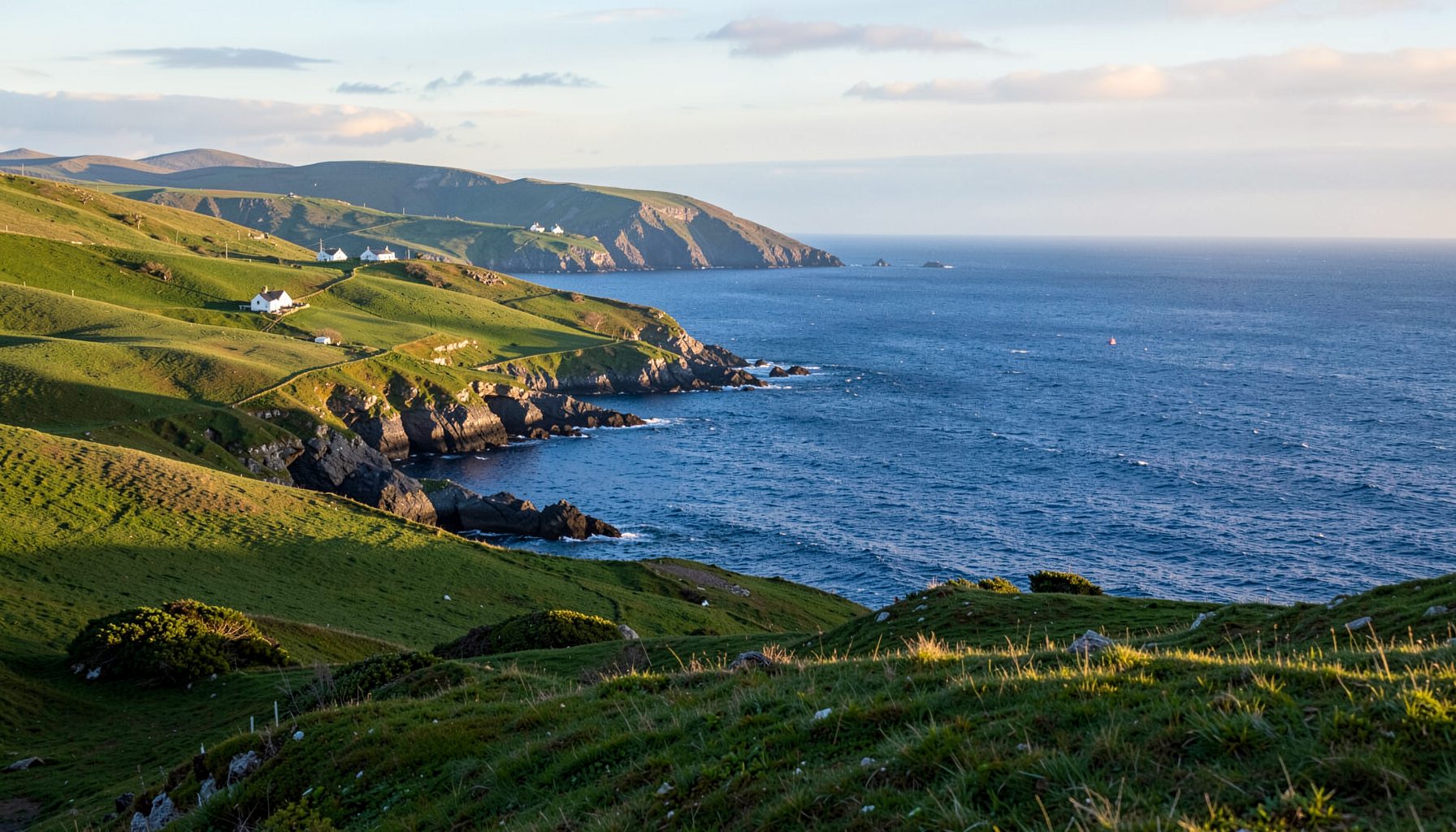
Boat trips to Beginish Island for memorable birdwatching
Beginish Island lies in the sheltered waters around Valentia Island, close to the western edge of the Iveragh Peninsula. Reached by boat rather than road, it offers a quiet perspective on the Skellig Coast, where rocky shorelines, sea cliffs, offshore reefs and changing Atlantic weather create valuable habitat for marine birds.
A trip to Beginish is especially rewarding for visitors who enjoy slow observation. The crossing can reveal diving birds, seals and passing seabirds, while the island itself provides a peaceful setting away from busy roads and crowded viewpoints. Sightings vary with season, tide, wind and sea conditions, so every boat journey has its own character.
The island is also part of a wider coastal landscape shaped by fishing, farming, island life and centuries of movement across Valentia Harbour. Birdwatching here is best approached as a respectful encounter with a living environment, rather than a search for a guaranteed list of rare species.
Where Beginish Island sits on the Skellig Coast
Beginish is a small island in the Valentia Harbour area, near Valentia Island and the communities associated with Knightstown and Portmagee. Its position places it within a rich coastal network that includes coves, rocky islets, beaches and open Atlantic waters. The sheltered harbour can make the approach calmer than an exposed sea crossing, although conditions can change quickly.
Boat access is generally arranged locally and may depend on the season, weather, tides and the availability of skippers. Some excursions focus on wildlife, while others form part of a broader harbour or island tour. Departure points and routes can vary, so visitors should check current information with a local boat operator before setting out.
The journey itself is part of the experience. Keep watch as the boat leaves the harbour, particularly around headlands and rocky outcrops where birds may rest or feed. A calm crossing can offer clear views towards Valentia Island, Beginish and the surrounding coastline, while a livelier sea may bring close views of birds riding the wind.
Birds and wildlife to look for
The waters around Beginish can support a wide range of coastal and pelagic birdlife. Depending on the time of year, visitors may see gannets plunging into deeper water, fulmars gliding close to the waves, or cormorants and shags drying their wings on exposed rocks. Guillemots, razorbills and kittiwakes may also appear around suitable coastal habitat.
Manx shearwaters and storm petrels are more difficult to identify from a moving boat, but patient observers may encounter them offshore, especially during the appropriate season and in favourable conditions. Commoner species such as herring gulls, great black-backed gulls, oystercatchers and various terns add to the variety. A local skipper or experienced guide can often identify birds that pass quickly or remain distant.
Marine mammals are another attraction. Grey seals may surface near reefs or rest on rocks, while dolphins occasionally travel through the wider waters of the Kerry coast. Sightings are never guaranteed, and responsible operators should keep a suitable distance from wildlife. Binoculars are more useful than trying to approach animals closely.
| What to watch for | Where it may appear | Best viewing approach |
|---|---|---|
| Gannets | Open water and areas where fish are concentrated | Scan the horizon and watch for dramatic dives |
| Guillemots and razorbills | Rocky ledges, reefs and coastal waters | Look for compact dark birds moving in groups |
| Fulmars and shearwaters | Offshore water and windy stretches | Watch birds gliding low over the wave tops |
| Cormorants and shags | Rocks, reefs and harbour edges | Check for birds standing with wings spread |
| Terns and gulls | Beaches, coves and feeding areas | Listen for calls and follow groups near the boat |
| Grey seals | Sheltered rocks and shallow coastal waters | Use binoculars and avoid encouraging a closer approach |
Choosing the right time for a boat trip
Late spring and summer often provide the most comfortable conditions for a boat excursion, with longer daylight and increased activity among many seabirds. Breeding-season behaviour can make the coastline especially interesting, although birds should never be disturbed at nesting sites. Early morning trips may bring softer light, less boat traffic and calmer observation conditions.
Autumn can be excellent for watching migration and seabirds moving along the coast. Stronger winds may produce exciting sightings of birds travelling close to the surface, but rough seas can also lead to cancellations or a less comfortable crossing. Winter has its own appeal, with dramatic skies and hardy coastal species, yet daylight hours are shorter and operators may offer fewer departures.
The best time is therefore a balance between wildlife hopes and practical conditions. Check the marine forecast, confirm the departure time on the day and allow flexibility in case weather affects the route. A trip that does not land on the island can still be a worthwhile harbour wildlife tour.
What to bring for comfortable wildlife watching
Dress for exposure rather than for the weather at the departure point. Waterproof outer layers, warm clothing and footwear with good grip are useful even on a sunny day. Wind on the water can feel considerably colder, and spray is common when the boat is travelling at speed.
Compact binoculars make a major difference, particularly for birds on distant rocks or open water. A waterproof notebook or phone case can help with recording sightings, while a camera with a zoom lens is preferable to relying on a phone. Avoid using flash around wildlife, and keep equipment secure when the boat is moving.
Food and drink arrangements vary between trips. Carry water and a small snack if permitted, but pack all waste out with you. Anyone prone to seasickness should consider suitable preparation in advance, following medical advice where necessary. Families should check age restrictions, lifejacket arrangements and the level of shelter available on the boat.
Reading the island’s landscape
Beginish is more than a birdwatching location. Its shores belong to the cultural landscape of the Iveragh Peninsula, where island communities historically depended on fishing, small-scale agriculture, boat transport and close knowledge of the sea. The absence of roads and permanent urban development gives the island a distinctive sense of space.
From the water, look beyond individual landmarks. Notice how stone, grassland, beach and cliff meet at the shoreline, and how the island relates to Valentia, the harbour and the larger Atlantic horizon. The view helps explain why sea routes have always been important in this part of Kerry.
A boat trip to Beginish can also complement visits to other heritage and nature locations along the Skellig Coast. The area includes Valentia Island, Portmagee, the Skellig Islands and coastal sections of the Ring of Kerry. Each place has its own character, and responsible tourism helps protect the environment and supports the communities that keep local knowledge alive.
Respectful practices on and around Beginish
Birdwatching is most rewarding when it leaves no visible impact. Follow the instructions of the skipper, remain within permitted areas and do not climb towards nesting birds or seals. Even apparently empty cliffs may support breeding wildlife that is easily disturbed by noise or close approach.
Landing arrangements can differ, and a boat trip does not necessarily include permission to walk freely across the island. Visitors should never assume that a beach or rocky shore is open for unsupervised access. Ask about landing conditions, local sensitivities and any seasonal restrictions before leaving the boat.
These simple habits protect both wildlife and the quality of the experience:
- Keep a generous distance from seabirds, seals and any nesting area.
- Use binoculars instead of approaching animals for a closer photograph.
- Take every item of litter home, including food packaging and tissue.
- Follow the skipper’s safety guidance and remain seated when requested.
- Record sightings carefully without sharing precise locations of sensitive colonies.
Build a coastal day around the crossing
A Beginish boat excursion can fit naturally into a wider day on the Valentia and Portmagee coast. Allow time before or after the trip for local walks, harbour views, heritage sites and community facilities. The Skellig Coast rewards visitors who move at a considered pace, with time to notice changing light, sea conditions and the relationship between settlements and the landscape.
It is worth checking practical details in advance, including the departure harbour, parking, accessibility, cancellation arrangements and whether the trip is dedicated to wildlife or combined with other sightseeing. Some boats have limited shelter or seating, while others may suit families and visitors looking for a gentler harbour experience.
Local knowledge adds depth to what you see. A skipper may recognise feeding grounds, explain the names of headlands or describe how weather shapes the crossing. Treat those stories as part of the heritage of the place, alongside the birds, seals and open Atlantic views.
Beginish Island offers a rewarding glimpse of the Skellig Coast’s natural richness without requiring a demanding expedition. Check current boat information, choose a suitable weather window, bring binoculars and leave plenty of room for unexpected sightings. Explore the local resources on Skellig Coast to connect this island journey with the villages, heritage and outdoor experiences of the wider Iveragh Peninsula.