A History Of Valentia Island Lighthouse Keepers
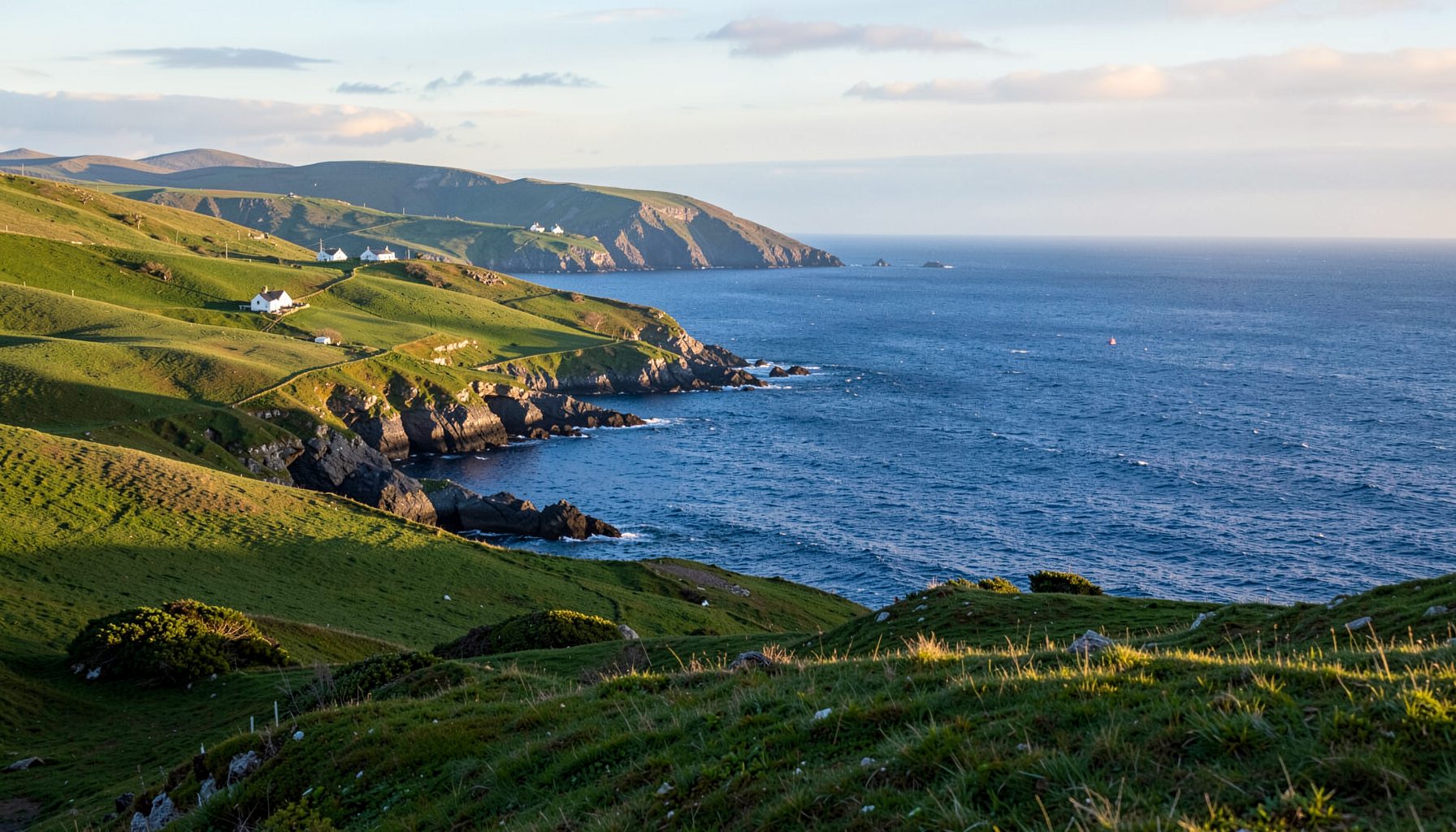
On Valentia Island, the lighthouse at Cromwell Point stands where the Atlantic meets Valentia Harbour. Its white tower, keeper’s houses, boundary walls and coastal setting preserve more than the story of navigation. Together, they reveal how generations of lighthouse keepers lived, worked and served ships approaching the south-west coast of Ireland.
The station formed part of a wider network managed by the Commissioners of Irish Lights. Keepers watched the lantern, maintained the machinery, recorded weather conditions and responded to the demands of a dangerous maritime landscape. Their work was often quiet and repetitive, yet the safety of ships depended on its precision.
The lighthouse is also connected to the social history of the island. Keeper families formed part of the local community, while the station’s routines reflected changes in technology, transport, employment and communications across the Iveragh Peninsula.
The Origins Of Cromwell Point Lighthouse
The lighthouse at Cromwell Point was built in the nineteenth century during a period when Ireland’s coastal lighting system was expanding. Valentia Harbour was an important shelter on the south-west coast, and the waters around the island included reefs, headlands and shifting weather that could challenge sailing vessels and steamships.
The station was first lit in 1841. Its position at the northern entrance to Valentia Harbour allowed the light to guide vessels near the island and toward the sheltered waters beyond. The building was designed as a complete lighthouse station, combining the tower with accommodation and working spaces for the resident staff.
The name Cromwell Point reflects the location rather than the island as a whole. Valentia’s maritime importance was already established through fishing, coastal trade and communication routes, and the lighthouse added a permanent marker to a coast where visibility could change rapidly with rain, mist and Atlantic storms.
The Keeper’s Working Day
A lighthouse keeper’s central responsibility was to ensure that the light was ready every night and reliable throughout the hours of darkness. Before automation, this involved cleaning optical equipment, checking the lantern, tending fuel or power systems and inspecting the tower. A small fault could reduce the light’s effectiveness at a critical moment.
Keepers also maintained the station itself. Salt air attacked metalwork, wind damaged roofs and walls, and the exposed location required constant attention. Painting, gardening, repairing fences, clearing paths and caring for stores were practical necessities rather than optional chores.
Weather observation formed another important part of the job. Keepers watched wind direction, cloud, visibility and sea conditions, recording information that could support maritime services. At stations equipped with fog signals, they also operated and maintained equipment intended to warn ships when the light could not be seen.
The work required discipline because the station could not simply close during bad weather. A keeper might be responsible for a night watch, an equipment inspection or an emergency repair while the island was being struck by strong winds. The regularity of the routine helped protect ships from the unpredictability of the sea.
Families And Community Life
Lighthouse keeping was commonly a family occupation in which the keeper’s household shared the realities of station life. The accommodation at Cromwell Point was designed to support a resident keeper and family, giving the station the character of a small domestic community as well as a workplace.
Life could be isolated, particularly before improved roads, telephones and dependable transport made communication easier. Families had to manage supplies, schooling and medical needs within the limits of island life. The keeper’s wife and children often contributed to the daily running of the household and station, even when their work did not appear in official job descriptions.
The station was not entirely separate from Valentia’s villages. Keepers collected supplies, exchanged news and maintained relationships with neighbours. Their presence connected the lighthouse to local fishing families, boat crews, farmers, shopkeepers and clergy. In this way, the light became part of the island’s shared landscape and memory.
Stories about former keepers often survive through local tradition. Some describe storms, difficult rescues or equipment failures; others recall ordinary details such as the garden, the tower stairs or the sound of the fog signal. These personal memories give texture to institutional records and help explain what the station meant to the people who lived nearby.
From Oil Lamps To Automation
The history of the Valentia station reflects the broader development of lighthouse technology. Early keepers worked with lantern systems that required careful cleaning and regular attention. Improvements in optics made the beam more powerful and distinctive, while changes in fuel and machinery gradually reduced some of the most laborious tasks.
The introduction of electricity transformed lighthouse work. Reliable electrical systems removed the need for certain fuel-handling duties, although they created new requirements for wiring, generators and mechanical maintenance. Radio and telephone communication also reduced the isolation of coastal stations and allowed warnings or technical problems to be reported more quickly.
Automation eventually changed the keeper’s role most dramatically. Once the light could operate without a permanent resident staff, the station no longer depended on a family living at Cromwell Point year-round. Maintenance became periodic and specialised, carried out by visiting personnel rather than by a resident keeper.
| Period | Main lighthouse work | Wider significance |
|---|---|---|
| Nineteenth century | Tending the lantern, cleaning optics, maintaining buildings and recording weather | A resident family provided continuous care |
| Early twentieth century | Managing improved fuel, machinery and fog-warning equipment | Technical skill became increasingly important |
| Electrification era | Checking power systems and modern lantern equipment | Routine fuel work declined while mechanical duties remained |
| Automation era | Remote monitoring and scheduled maintenance | Permanent keeper residence came to an end |
| Present day | Conservation, interpretation and visitor management | The station is valued as maritime and cultural heritage |
The Station In A Changing Valentia
Valentia Island has a remarkable place in the history of communication as well as navigation. The transatlantic cable station at Knightstown connected the island to global communications from the nineteenth century, bringing new technology and international attention to the region. The lighthouse belonged to the same age of expanding maritime networks, when reliable signals were essential to ships, ports and commercial routes.
These developments changed the rhythm of island life. Ships passing offshore were part of a wider system linking Ireland with Britain, Europe and North America. Lighthouse keepers occupied a small but vital position within that system, ensuring that a visual signal remained dependable at the edge of the Atlantic.
The station also forms part of the wider heritage of the Skellig Coast. Its history sits alongside fishing traditions, monastic landscapes, geological features and the cultural life of communities from Kells to Castlecove. For local residents, the lighthouse is a familiar landmark; for visitors, it provides a direct way to understand how people worked with the sea.
Community knowledge remains important in preserving this history. Local archives, oral histories, schools and cultural projects can connect technical records with family memories. Regional learning centres provide useful settings for exploring how maritime heritage can be studied alongside language, landscape and community history.
Reading The Lighthouse Landscape
A visit to Cromwell Point can reveal the practical design of a working station. The tower was placed for visibility, while the keeper’s houses offered shelter close to the lantern. Boundary walls helped define the site and provided protection from wind. Paths, entrances and outbuildings formed part of a functional arrangement shaped by weather and duty.
The tower itself is more than a scenic viewpoint. Its height, lantern room and position explain how a light could be seen from the sea. Looking outward from the station also helps visitors understand the navigational problem faced by ships approaching a coast of islands, rocks, bays and headlands.
The remaining architecture should be read with care. A lighthouse station is a workplace, home and public safety installation in one. Its significance comes from the relationship between buildings, equipment, shoreline and the people who maintained them. Removing any one element makes the story less complete.
The setting also encourages reflection on the difference between historical and modern travel. Today, visitors can reach the site with maps, mobile phones and organised information. Former keepers relied on observation, written logs, mechanical instruments and local knowledge. Their work demanded close attention to conditions that modern technology often makes invisible.
Ways To Explore The Keepers’ Story
A meaningful visit or local history project can focus on the everyday evidence left by the station rather than treating the lighthouse only as a photogenic monument. Useful approaches include:
- Examine the relationship between the tower, keeper’s cottages, harbour and surrounding coastline.
- Look for information about the Commissioners of Irish Lights and the development of Irish lighthouse technology.
- Compare lighthouse history with Valentia’s transatlantic cable, fishing and boat-building heritage.
- Record family memories or local stories connected with Cromwell Point and former keepers.
- Support responsible heritage visits that respect the buildings, landscape and surrounding community.
The story also benefits from comparison with other Irish lighthouses. Each station had its own geography and working conditions, yet many shared the same pattern: resident families, demanding maintenance, changing technology and eventual automation. Valentia’s distinctive character comes from its island setting and its connection with one of Ireland’s most historically active maritime regions.
The former keeper’s home should be imagined as a place of routine rather than romance alone. Meals, schooling, repairs, weather logs and supply runs occupied much of the day. Storms and emergencies were memorable because ordinary work had prepared the station to meet them.
Today, the lighthouse offers an opportunity to connect maritime safety with community heritage. Its story belongs to the keepers who maintained the light, the families who shared their isolated lives, the islanders who supported them and the visitors who continue to learn from the site.
Explore Cromwell Point with time to notice its buildings, harbour views and coastal setting, then connect what you see with the wider history of Valentia Island and the Skellig Coast. Share local memories, support heritage interpretation and help keep the story of the lighthouse keepers visible for future generations.