A Guide to the Early Christian Churches of the Iveragh Peninsula
The Iveragh Peninsula contains some of Ireland’s most remarkable early Christian monuments, from remote island monasteries to small mainland churches surrounded by pasture, mountains and Atlantic shoreline. These places were centres of prayer, burial, craft and learning, built within a landscape that shaped how communities travelled and worshipped.
The phrase “early Christian” usually refers to the period from around the fifth to the twelfth century. On Iveragh, surviving evidence ranges from austere dry-stone oratories and monastic cells to later medieval churches built on older sacred ground. A ruined church may therefore preserve several layers of history rather than belonging to one precise date.
The sites are best understood together. Their locations around Skellig Michael, Valentia Island, Waterville, Caherdaniel and the coast show how religious communities used islands, lakeshores and sheltered valleys as places for retreat while remaining connected to local settlements. The wider Skellig Coast communities provide the cultural setting for exploring these monuments today.
Landscape And Sacred Settlement
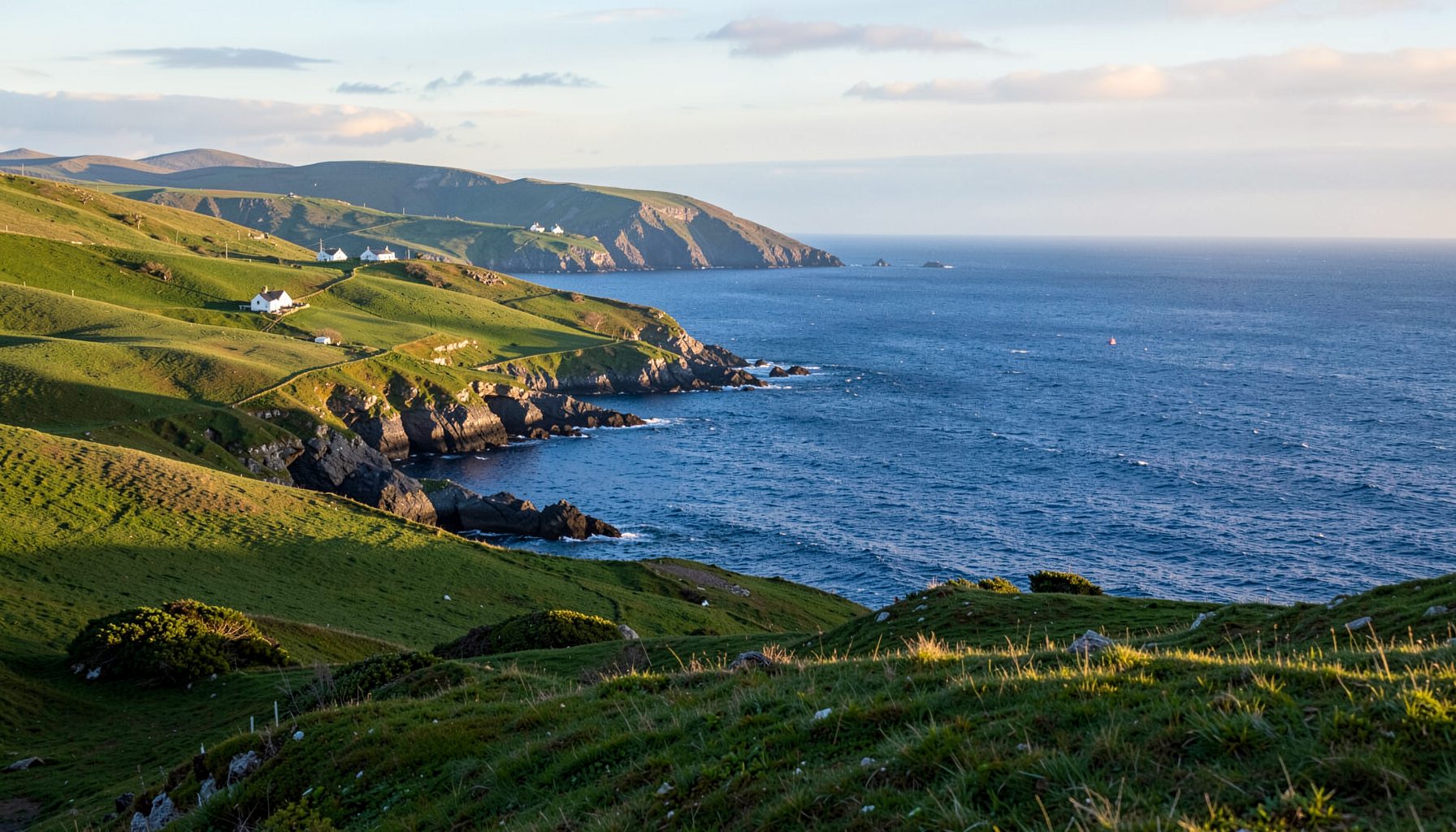
Iveragh’s geography encouraged distinctive forms of Christian settlement. The peninsula is marked by high mountains, exposed headlands, offshore islands, lakes and narrow valleys. Early monks could seek solitude on an island or in a remote cove, while fishing, farming and seasonal movement supported contact with mainland communities.
Stone was plentiful, and many structures were made from carefully fitted local rock without mortar. The familiar beehive-shaped cell, known in Irish as a clochán, used corbelled courses of stone to create a narrow, stable roof. These cells were practical buildings, but their shape also reflects the disciplined and enclosed character associated with ascetic monastic life.
The sites were not isolated in the modern sense. Monastic communities required food, water, tools, books, boats and human connections. Burial grounds, field systems, ancient roads, ringforts and later parish churches reveal a long relationship between religious foundations and the people living around them.
Skellig Michael And Its Monastic World
Skellig Michael is the best-known early Christian site on the peninsula and one of Europe’s most dramatic monastic landscapes. The monastery stands on a steep Atlantic island west of the Iveragh coast, where monks constructed stone cells, an oratory, terraces, stairways, cisterns and retaining walls. The settlement is generally associated with the early medieval period, although its exact foundation date remains uncertain.
The monastery’s location demanded careful engineering. Terraces were built into the mountainside, and steep flights of steps connected the landing areas with the upper settlement. The monks cultivated small plots in protected pockets and collected rainwater in stone cisterns. The surviving buildings show how a community adapted spiritual ideals to an exceptionally demanding environment.
Skellig Michael is also a UNESCO World Heritage Site and a familiar screen location from the Star Wars films. Its cinematic appearance has brought new attention, yet the island’s religious history remains its central importance. Weather, sea conditions and conservation limits mean access is controlled, and the site should be approached as a fragile monument rather than simply as a scenic viewpoint.
Mainland Churches And Island Foundations
Church Island on Lough Currane, near Waterville, preserves the remains of an early medieval monastic foundation in a quieter inland setting. The island church and associated burial ground are commonly linked with St Fionán, a saint whose name appears in several local traditions. Its position on the lake demonstrates that early Christian settlement was not limited to the open Atlantic.
The church is modest compared with Skellig Michael, but that is part of its value. The surviving stonework, enclosure and island setting help visitors imagine a small community organised around prayer and burial. Boat access and changing weather can affect visits, so the monument is best experienced with local guidance and respect for private land and conservation needs.
Illaunloughan, near Portmagee, adds another important piece to the story. Archaeological investigation has identified an early medieval monastic settlement with ecclesiastical remains, burials and evidence of everyday activity. The site illustrates how religious communities combined devotion with practical work, and how island foundations could have complicated histories of occupation, abandonment and reuse.
Along the southern coast, places such as St Crohane’s Church near Caherdaniel belong mainly to the later medieval tradition rather than the earliest monastic period. They still matter because they show the development of parish worship after the first island and small-community foundations. Their presence helps distinguish an early oratory, a monastic settlement and a later parish church.
Sites At A Glance
The following comparison helps place the main sites within their historical and geographical settings. Dates are approximate because many buildings were altered, rebuilt or reused over long periods.
| Site | Setting | Main Features | Historical Character |
|---|---|---|---|
| Skellig Michael | Offshore Atlantic island | Beehive cells, oratory, terraces, cisterns and steps | Early medieval monastery, later pilgrimage and heritage site |
| Church Island | Lough Currane near Waterville | Small stone church, enclosure and burial ground | Early Christian foundation associated with St Fionán |
| Illaunloughan | Island near Portmagee | Monastic remains, burials and domestic evidence | Early medieval island community |
| St Crohane’s Church | Caherdaniel area | Ruined stone church and cemetery | Later medieval church connected with parish worship |
| Local holy wells and burial grounds | Villages, valleys and coast | Wells, graveyards, crosses and reused sacred spaces | Folk devotion and long continuity of Christian practice |
These places should not be treated as identical examples of “Celtic Christianity,” a popular phrase that can blur important differences. Archaeologists work with masonry, artefacts, burials, inscriptions, landscape patterns and documentary references. Local tradition is valuable, but it needs to be considered alongside physical evidence and the changing history of each site.
Understanding The Stonework
Visitors often notice the dramatic setting first, yet small architectural details can reveal how a church functioned. A narrow doorway, inward-leaning wall, corbelled roof or carefully shaped window may indicate a compact oratory or monastic cell. A larger rectangular nave, cemetery and traces of later additions are more consistent with a church serving a wider community.
Dry-stone construction is especially important on Iveragh. Builders selected and positioned stones so that each course helped support the one above it. On Skellig Michael, this technique survives in structures exposed to Atlantic winds, while mainland examples may appear more weathered or incorporated into later walls.
Burial grounds deserve close attention. Early Christian cemeteries could remain sacred after buildings fell out of use, and later communities often continued to bury their dead beside older churches. Cross slabs, carved stones, ogham inscriptions and fragments of architectural decoration may be difficult to see, so visitors should avoid touching, climbing or moving stones.
The setting itself is archaeological evidence. A church beside a lake, at the end of a valley or within sight of a mountain pass was connected to movement, water, farming and memory. Looking outward from a ruin can reveal why a particular place was chosen and how it may have related to neighbouring settlements.
Visiting With Care
Conditions on the peninsula can change quickly. Wind, rain, mist and rough seas affect offshore journeys, while uneven ground and steep approaches can make mainland ruins challenging. Check current access information through official heritage sources, local visitor services and landowners before setting out.
Skellig Michael requires particular preparation. Landing trips depend on sea conditions, and a boat journey does not guarantee that visitors will be able to go ashore. The island’s steps are steep, guardrails are limited in places and there are no ordinary visitor facilities at the summit. Suitable footwear, warm waterproof clothing and realistic expectations are essential.
Mainland churches and burial grounds may be easier to reach, but they are not automatically public parks. Gates should be closed, livestock respected and private driveways kept clear. Some islands and monuments can only be visited with permission or by arranged boat transport. Local knowledge is often the most reliable way to understand access, tides and seasonal restrictions.
Photography is welcome where permitted, but drones, amplified sound, fires and unauthorised digging are inappropriate. A quiet visit protects the atmosphere of these places and helps preserve them for worshippers, researchers and future generations.
A Thoughtful Way To Explore The Sites
A short heritage programme can combine a major monument with smaller and less heavily visited places. Allow time for the landscape between sites, since the roads, lakes and coastlines are part of the historical experience rather than merely routes from one attraction to another.
- Begin with background research on early medieval Ireland, monastic settlement and the geography of Iveragh.
- Visit a mainland church or burial ground before attempting a remote island site, allowing time to recognise common architectural features.
- Treat local stories about saints, holy wells and sacred places as living heritage while comparing them with archaeological evidence.
- Use official access arrangements for Skellig Michael, Church Island and other offshore locations instead of attempting unapproved landings.
- Record observations through notes and photographs taken from permitted areas, leaving stones, graves and artefacts undisturbed.
A local guide, museum display, heritage centre or community event can add context that is difficult to obtain from the ruins alone. Oral history often preserves details about seasonal worship, place names and customary routes, connecting the visible monument with the living culture of the peninsula.
The early Christian churches of Iveragh are valuable because they bring several histories together: monastic discipline, maritime travel, local farming, pilgrimage, medieval parish life and modern conservation. Skellig Michael may command the greatest attention, but the smaller sites reveal how widely religious practice was rooted across the peninsula.
Plan a respectful visit, learn the story of each place and explore the villages, landscapes and heritage initiatives that surround the monuments. By giving time to both the celebrated sites and the quieter mainland ruins, visitors can experience Iveragh as a connected cultural landscape rather than a collection of isolated stones.