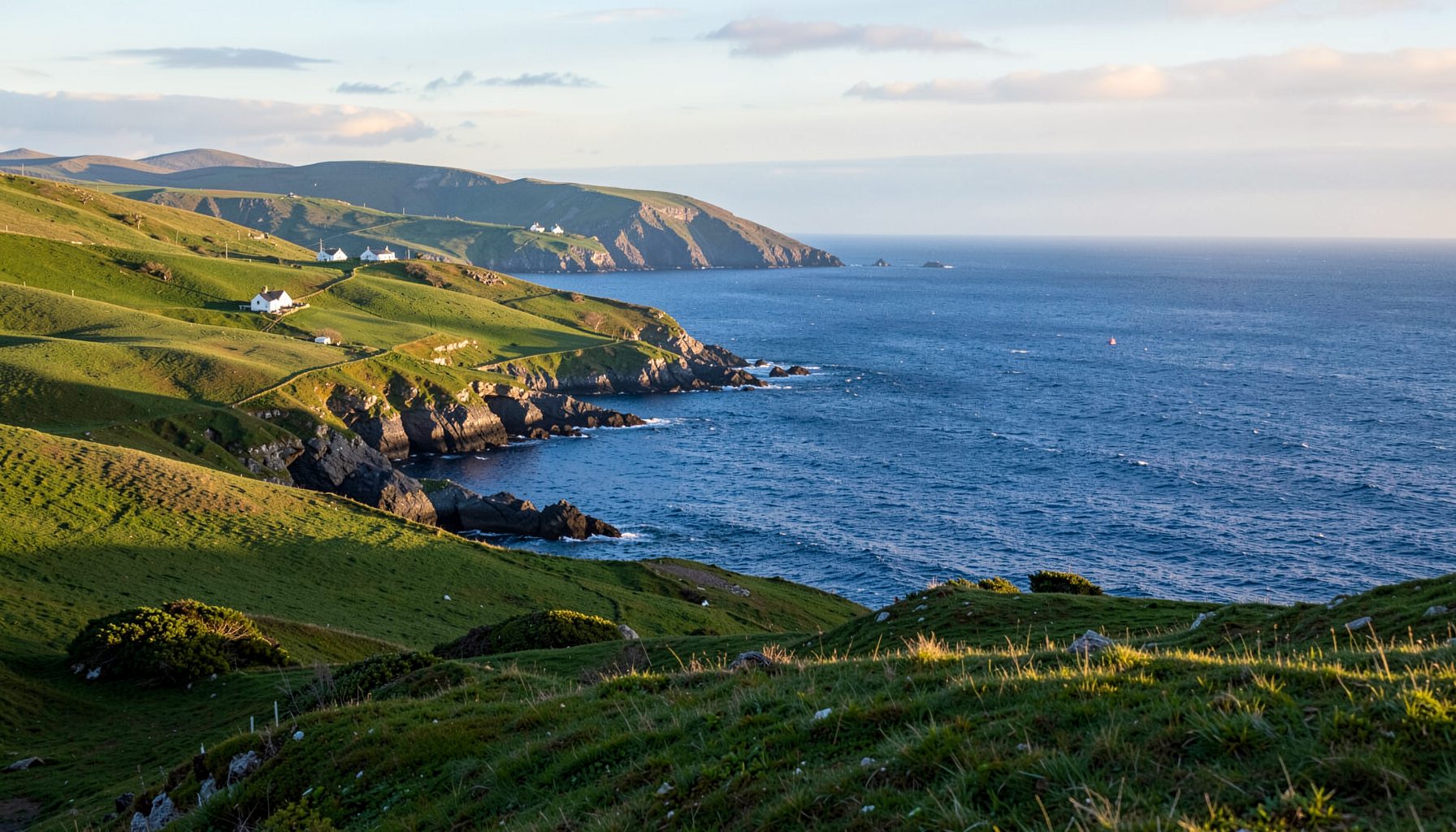
A Day Trip to the Lighthouses of the Skellig Coast
A lighthouse day along the Skellig Coast is less about ticking off a long list of towers and more about understanding how a small number of maritime landmarks fit into a dramatic Atlantic landscape. From Kells to Castlecove, the route passes sheltered bays, exposed headlands, island channels and villages shaped by generations of seafaring.
The main destination is Cromwell Point Lighthouse on Valentia Island, a historic light station overlooking the entrance to Valentia Harbour. The wider journey also brings the offshore Skellig Islands, the Blasket-facing coast and the many natural viewpoints that explain why navigation lights were essential here.
With an early start, a flexible itinerary and attention to seasonal opening arrangements, visitors can combine lighthouse heritage with island history, coastal walking, local museums and village stops. The result is a rewarding day for anyone interested in maritime history, photography, geology or the living communities of the Iveragh Peninsula.
Begin Along The Iveragh Coast
Kells makes a practical starting point for a westbound coastal drive. The road towards Glenbeigh and Cahersiveen opens onto broad views of Dingle Bay before reaching the quieter roads around Valentia Island. Allow time for viewpoints rather than treating the journey as a direct transfer. Weather can change quickly, and a clear morning may give way to sea mist by afternoon.
Cahersiveen is a useful place to pause for supplies, local information and a sense of the region’s history. The town stands close to the Valentia Harbour waterway and has strong connections with Daniel O’Connell, coastal trade and the wider heritage of the Iveragh Peninsula. From here, continue towards the bridge at Portmagee or use the ferry from Reenard, depending on the season and operating timetable.
Portmagee is closely associated with boat trips to the Skellig Islands, though landing trips to Skellig Michael require advance booking and suitable sea conditions. Even without an island excursion, the village provides a strong visual link between the mainland and the offshore navigation landscape. Look across the channel towards Valentia Island before continuing to Knightstown and Cromwell Point.
Cromwell Point And Valentia Island
Cromwell Point Lighthouse is the principal lighthouse stop for a day exploring the Skellig Coast. Located on the northwestern side of Valentia Island, it was established in the nineteenth century to guide vessels through the entrance to Valentia Harbour. Its setting combines a stone light station, coastal woodland, rocky shore and wide views across the Atlantic.
The lighthouse is associated with the Commissioners of Irish Lights, the body responsible for aids to navigation around Ireland’s coast. Its purpose was practical: to mark dangerous waters and help ships identify their position. Today, the site also illustrates how isolated lighthouse communities functioned, with keepers, families, stores and maintenance routines all forming part of the station’s daily life.
Visitor access can vary by season, weather and operating arrangements, so check current details before setting out. If the grounds or interior are open, allow enough time to appreciate the buildings and surrounding shoreline rather than making a brief photographic stop. If access is restricted, the approach roads and nearby coastal viewpoints still provide excellent views of the station and Valentia Harbour.
Knightstown is worth including before or after the lighthouse. This planned village has a distinctive relationship with the water, and its streets, harbour frontage and heritage attractions offer a more settled contrast to the exposed headland. A short stop here can add local context to the isolated character of Cromwell Point.
The Offshore Lights Of The Skelligs
From the mainland, the Skellig Islands appear as steep, rugged silhouettes rising from the Atlantic. Skellig Michael is famous for its early Christian monastery, dramatic stone beehive huts and UNESCO World Heritage status. It was also used as a filming location for the Star Wars series, bringing new international attention to a place already central to Irish maritime and monastic history.
The island’s navigation structures are part of this wider story, although Skellig Michael is not a conventional lighthouse day-trip destination. Landing visits are tightly controlled, physically demanding and dependent on sea conditions. A boat tour that circles the island can offer a valuable perspective from the water, but it should be treated as a separate activity from a land-based lighthouse itinerary.
Little Skellig rises nearby as an important seabird sanctuary, and the waters around both islands can be rough. Their appearance changes constantly with light, cloud and swell. Even from viewpoints on Valentia Island or the mainland, the offshore rocks help explain why navigational knowledge, reliable charts and coastal lights mattered so much to sailors approaching the Iveragh coastline.
| Location | What It Offers | Access Considerations | Best Place In The Day |
|---|---|---|---|
| Cromwell Point Lighthouse | Historic light station, coastal scenery and harbour views | Check seasonal opening times and visitor arrangements | Main heritage stop |
| Knightstown | Harbour village, local history and refreshments | Generally easy to reach by road | Before or after Cromwell Point |
| Portmagee | Views towards Valentia and the Skellig Islands | Boat trips operate separately and depend on weather | Midday harbour stop |
| Skellig Michael | Monastic remains, sea cliffs and offshore heritage | Landing requires advance booking, fitness and calm conditions | Separate full-day excursion |
| Cahersiveen | Town heritage, services and regional context | Convenient road access | Start or finish of route |
A Route With Time For Coastal Views
A relaxed route can begin in Kells, continue through Cahersiveen, cross to Valentia Island, visit Knightstown and finish at Cromwell Point. The return journey can follow the same route, or continue through Portmagee and over the bridge, with stops around St Finan’s Bay and Ballinskelligs before reaching Waterville or Castlecove.
This wider loop makes the day longer, particularly when roads are busy or visibility is poor. It is better to choose a few meaningful stops than to rush between every viewpoint. The coast rewards patience: a break beside the harbour, a short walk near the lighthouse or ten minutes watching the changing sea can be as memorable as a formal attraction.
Ballinskelligs is a natural addition for visitors interested in coastal heritage. The beach, ruined abbey and castle give the area a strong sense of place, while the surrounding shoreline points towards the same Atlantic environment that shaped the lighthouses. Waterville offers another convenient pause, with a broad seafront and links to local history, arts and outdoor activities.
Those travelling towards Castlecove can continue along the southern side of the Iveragh Peninsula, where small roads pass beaches, stone walls and headlands. This section should be approached as a scenic extension rather than an essential lighthouse stop. It works well for visitors who want to connect maritime heritage with the broader Ring of Kerry landscape.
Reading The Landscape Safely
Lighthouse locations are often exposed, and Cromwell Point is no exception. Wear sturdy footwear if exploring uneven ground, keep away from cliff edges and follow signs around protected areas. Wind can be much stronger near the shore than in nearby villages, while rain can make stone surfaces slippery.
Navigation landmarks also sit within sensitive natural environments. Valentia Island and the Skellig region support seabirds, marine life and fragile coastal vegetation. Keep dogs under control where required, avoid disturbing nesting birds and take all rubbish away. Responsible visits protect the character that makes these places worth seeing.
Driving requires equal care. Some roads are narrow, with bends, stone walls and limited passing places. Large vehicles should plan their route carefully, and drivers should avoid stopping in locations that block local traffic or access for residents. A paper map or downloaded directions can be useful where mobile coverage is intermittent.
Photography is especially rewarding around Cromwell Point at low sun, when the stone buildings and headland stand out against the water. Fog can conceal the Skelligs entirely, but it often creates an atmospheric view of the nearby coast. There is no need to wait for perfect blue skies; changing conditions are part of the Atlantic experience.
Plan Around The Season
A lighthouse visit is most straightforward between late spring and early autumn, when daylight lasts longer and visitor facilities are more likely to be operating. Opening hours, ferry services and boat excursions can change, so consult official sources and local tourism information before travelling. Do not rely on an island landing or a lighthouse interior visit without checking availability.
Pack food, water, warm layers and waterproof clothing even on a sunny morning. Services are available in towns and villages, but not every coastal stop has a shop or café. Binoculars are useful for identifying seabirds and viewing the Skelligs, while a camera with a wide lens can capture the scale of the headland.
A day trip should leave room for local businesses and community attractions. Buy supplies in Cahersiveen, Knightstown, Portmagee or another village along the route, and take time to explore museums, galleries or heritage projects when they are open. These places provide the human story behind the landscape and help keep coastal tourism connected to the communities that live there.
Make The Day Work Well
- Check lighthouse opening arrangements, ferry times and sea conditions before departure.
- Begin early and allow extra time for narrow roads, viewpoints and unplanned stops.
- Bring layered clothing, walking shoes, water, food and sun protection.
- Treat Skellig Michael as a separate excursion unless you have a confirmed landing booking.
- Leave wildlife, historic structures and coastal habitats undisturbed.
A lighthouse journey from Kells towards Castlecove offers a compact way to experience the maritime character of the Skellig Coast. Cromwell Point provides the central heritage visit, while Valentia Island, Portmagee, Ballinskelligs and the Skellig Islands place that light within a much larger story of navigation, faith, trade and Atlantic weather.
Before setting out, check the latest local access information and build your route around the communities along the way. Use the Skellig Coast as a guide to its villages, heritage sites, outdoor programmes and seasonal events, then make time to experience the coast at its own unhurried pace.